5 Best GPS Telescopes: Your Star Gazing Buying Guide
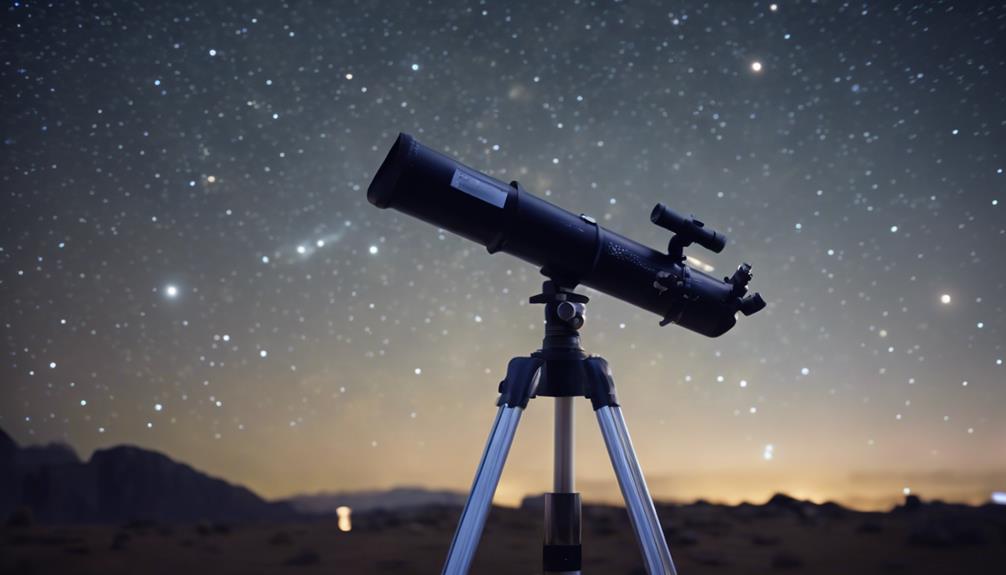
Stargazing swiftly shifts from a simple pastime to a passionate pursuit with the right tools in your toolkit. If you're venturing into the vast velvet void above us, equipping yourself with a GPS telescope can transform your celestial observations.
This guide meticulously maps out the five best GPS telescopes, blending beginner-friendly functionalities with features that fascinate the seasoned astronomer. Each model is scrutinized for its stellar performance, innovative features, and how they cater to different levels of skywatching savvy.
Before you set your sights on the stars, let's make sure you have the best companion for your cosmic journey, leaving you excited to uncover which telescope aligns with your astral aspirations.
Key Takeaways
- GPS telescopes greatly simplify stargazing by offering automatic alignment and precise celestial tracking.
- Key considerations include built-in GPS accuracy, alignment capabilities, and the telescope's ability to cater to various skill levels.
- Top brands like Celestron and Meade Instruments lead in GPS telescope technology, offering models suited for a range of budgets and experiences.
- Balancing quality with budget involves weighing factors such as aperture size, optics quality, and mount stability against cost.
Understanding Telescope GPS Technology
Delving into the world of telescope GPS technology, you'll discover it revolutionizes stargazing by providing pinpoint accuracy in celestial tracking and alignment. This cutting-edge advancement uses satellite signals to determine your precise location, current time, and where your telescope is pointing. It's a game-changer for both beginners and advanced users, offering a seamless experience that greatly reduces setup time.
With the incorporation of GPS technology, telescopes automatically align themselves with celestial objects, making it easier and faster to start your stargazing adventure. This feature is particularly beneficial for beginners who may not have the knowledge or patience to manually find and track stars, planets, and other celestial bodies. Advanced users, on the other hand, will appreciate the enhanced object location accuracy, which allows for more precise observations and study.
Telescopes equipped with GPS technology provide a convenience that was once unimaginable. Whether you're setting up in your backyard or at a remote dark sky site, the automatic alignment and tracking features make sure that you're quickly and accurately positioned to explore the universe. This leap in technology offers an enriched stargazing experience, allowing more time for observation and less time fussing with equipment.
Key Features to Consider
Understanding the revolutionary impact of GPS technology on telescopes sets the stage for exploring which features you should prioritize when selecting your star-gazing companion. GPS telescopes have transformed the way we engage with the cosmos, offering features that cater to both the novice and the seasoned astronomer.
Here's what you need to look out for:
- Built-in GPS Technology: Essential for automatic tracking of celestial objects, ensuring you spend less time setting up and more time enjoying the skies.
- Precise Alignment Capabilities: Look for models that offer precise alignment based on your specific location and the current time, for an accurate stargazing experience.
- Convenient Setup and Navigation: A hassle-free setup is essential. Opt for telescopes that eliminate the need for manual star alignment, making your stargazing sessions more enjoyable.
- Suitability for All Skill Levels: Whether you're a beginner or an experienced astronomer, make sure the telescope meets your needs by offering a balance between simplicity and advanced features.
- Capability to Explore a Wide Range of Celestial Targets: Your telescope should enhance your ability to discover and track a diverse array of celestial objects, enriching your exploration of the night sky.
Choosing the right GPS telescope with these features in mind will definitely elevate your stargazing experience, making every celestial discovery a memorable one.
Reviewing the Top Brands

Exploring the top brands in GPS telescopes will guide you toward making an informed decision that suits your stargazing needs perfectly. The evolution of GPS technology and Wi-Fi connectivity has revolutionized the way we experience the night sky, offering precision in target viewing and ease of use through smartphone control.
Here's a quick look at some of the leading names in the field:
| Brand | Key Features | Advanced Technology |
|---|---|---|
| Celestron | GPS-assisted alignment, NexStar Evolution series | Precise tracking |
| Meade Instruments | LX90 ACF series, GPS technology | Automate alignment |
| Sky-Watcher | Star Discovery P150i, built-in Wi-Fi | Smartphone control |
| Vaonis | Vespera Observation Station, Wi-Fi connectivity | Singularity app |
| Unistellar | eVscope 2, new Sony camera sensor | Real-time image stacking |
These brands, including Celestron, Meade Instruments, Sky-Watcher, Vaonis, and Unistellar, are at the forefront of integrating advanced technology into their products. Whether it's through GPS technology for precise alignments, innovative applications for target viewing, or utilizing new sensor technology for enhanced image quality, they're paving the way for amateur astronomers to explore the cosmos with unparalleled clarity and convenience.
Balancing Quality and Budget
While top brands offer advanced GPS telescopes that enhance your stargazing experience, it's equally important to weigh the quality against your budget to find the perfect match for your astronomical pursuits. GPS telescopes, with their precise alignment and tracking capabilities, offer an unparalleled window to the cosmos. Yet, the journey to picking the right one involves understanding the delicate balance between high-quality features and what you're willing to spend.
Consider these factors to guide your choice:
- Aperture size: A larger aperture allows more light, enhancing the clarity and detail of celestial objects. However, it can significantly impact the price.
- Optics quality: Superior optics provide crisp, clear images, but they come at a higher cost.
- Mount stability: A stable mount is essential for accurate tracking and alignment but adds to the expense.
- GPS functionality: Basic GPS features might suffice for beginners, while advanced users may seek more sophisticated capabilities.
- Trade-offs: Sometimes, compromising on certain features can lead to substantial savings without drastically affecting your stargazing experience.
Balancing quality and budget means making informed decisions about which features are must-haves versus nice-to-haves, ensuring you get the best value GPS telescope for your money.
Making Your Purchase: Tips and Tricks

Armed with the knowledge of what makes a GPS telescope powerful, it's time to plunge into the practical tips and tricks that'll guarantee you make a savvy purchase. When you're on the hunt for the perfect GPS telescope, remember its core strength lies in accurately aligning with the night sky, enhancing your stargazing journey. Opt for a model with a thorough database of celestial objects, ensuring a rich stargazing experience with diverse celestial targets at your fingertips.
Prioritize telescopes that boast efficient alignment procedures. The less time you spend on setup, the more you can immerse yourself in the wonders of the cosmos. GPS functionality is your ally here, offering quick and precise positioning, so make sure this feature is up to par.
Consider the tracking capabilities closely. A GPS telescope that excels in tracking and positioning will keep celestial objects in view longer, providing an uninterrupted exploration of the night sky. This aspect is essential for a fulfilling stargazing experience.
Frequently Asked Questions
How Do I Know Which Telescope to Buy?
To choose the right telescope, consider mount options, light pollution, budget, user experience, portability, astrophotography potential, maintenance, optical quality, brand reputation, and accessory compatibility. It's paramount for matching your stargazing ambitions and enhancing your night sky adventures.
What Telescope Should I Buy to See Planets?
To see planets, you'll need a telescope with great optical quality, a decent aperture to combat light pollution, and tracking technology for planetary alignment. Consider your budget, portability, eyepiece options, and accessory compatibility.
What Magnification Telescope Is Best for Stargazing?
Exploring the cosmos is like embarking on an endless ocean; the correct telescope magnification brings celestial bodies into view with stellar clarity. Consider aperture significance, optical quality, and mount stability for the best user experience.
What Size Telescope Is Good for Stargazing?
For stargazing, you'll want a telescope with a sizable aperture to combat light pollution and offer clearer views. Consider mount types, refractor benefits, and reflector advantages alongside budget, portability, sky conditions, and eyepiece selection.
Conclusion
So, you're ready to reveal the secrets of the night sky?
Choosing the right GPS telescope can seem intimidating, but armed with the insights from our guide, you're all set to make a stellar choice.
Whether you're a budding astronomer or a seasoned stargazer, remember, isn't the universe worth exploring with the best tools at your fingertips?
Plunge in, find your perfect match, and let the cosmos be your playground.
Happy stargazing!
