Beginner's Guide to Great Telescopes: Top Picks for New Astronomers

Just as Galileo first peered into the heavens, sparking a revolution in our understanding of the universe, you’re on the cusp of your own astronomical journey.
You’ll find that selecting your first telescope is a pivotal step that shapes your experience of the cosmos. Whether you’re drawn to the budget-friendly Celestron StarSense Explorer LT 70AZ, the compact Skymax-127 Virtuoso GTi, or the advanced Unistellar eVscope eQuinox for a more tech-savvy approach, there’s a universe of options awaiting you.
But how do you decide which telescope will be your gateway to the stars? The key lies in understanding your needs, aspirations, and the subtle nuances that differentiate one model from another.
Key Takeaways
- Larger apertures in telescopes enhance image brightness and detail for beginners.
- Equatorial mounts offer precision, while altazimuth mounts are more user-friendly for novices.
- Brands like Celestron and Sky-Watcher provide innovative and quality options for beginner astronomers.
- Budget-friendly and portable telescopes with user-friendly features are ideal for those new to stargazing.
Choosing Your First Telescope
Selecting your first telescope is an exhilarating step towards revealing the mysteries of the night sky, but it’s important to contemplate factors like aperture size and focal length to make sure you get the most out of your stargazing experiences.
The aperture size of your telescope is vital as it determines how much light the telescope can gather, directly affecting the sharpness and detail of the images you’ll see. A larger aperture means brighter, clearer images.
When considering focal length, remember that it impacts magnification and field of view. Longer focal lengths provide higher magnification, perfect for zooming in on distant galaxies and nebulae. However, you’ll also need to think about mount types. Altazimuth mounts are user-friendly and great for beginners, while equatorial mounts offer more precise tracking capabilities, ideal for astrophotography.
Don’t overlook the importance of accessories like eyepieces and finderscopes, which can significantly enhance your viewing experience by offering different magnification options and helping you locate celestial objects more easily.
Lastly, ease of use and portability are key. You’re more likely to use a telescope that’s easy to set up and transport, ensuring your stargazing adventures are both enjoyable and frequent.
Top Telescope Brands for Novices
After considering the technical aspects of your first telescope, let’s explore some top brands that cater especially to novice astronomers.
- Celestron stands out as a leading choice for beginners, offering a wide array of telescopes equipped with innovative features that simplify the sky-gazing experience. Their products are designed to ease you into astronomy, guaranteeing your initial venture into the cosmos is as rewarding as possible.
- Sky-Watcher is another reputable name in the telescope market, highly regarded for its high-quality telescopes that meet the specific needs of new astronomers. Their dedication to quality and user-friendliness makes them a top pick for anyone starting their astronomical journey.
- Meade Instruments has carved a niche for itself by producing telescopes with advanced features yet maintaining designs that are intuitive for beginners. This brand ensures that even those new to astronomy can navigate the complexities of the night sky with ease.
- Orion Telescopes is synonymous with reliability, crafting telescopes that offer excellent optics tailored for novice astronomers. Their commitment to quality guarantees a gratifying stargazing experience from the get-go.
Ultimately, Explore Scientific presents beginner-friendly models that don’t compromise on optics and performance. Their telescopes are perfect for new astronomers looking to dive deep into celestial exploration with confidence.
Assessing Optical Quality and Performance
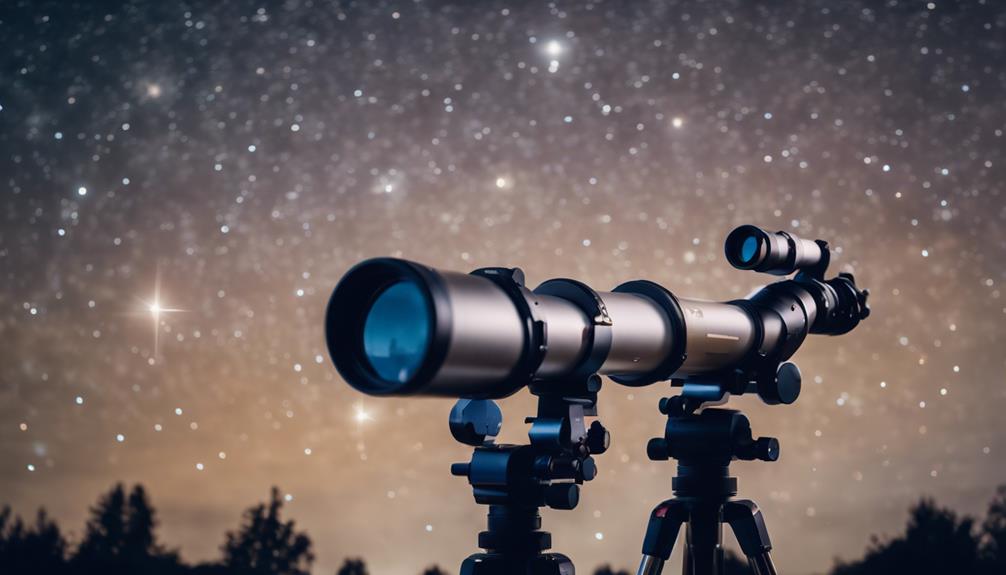
As you step into the domain of astronomy, understanding the importance of aperture, magnification limits, and resolving power is vital for selecting a telescope that meets your stargazing needs.
A larger aperture not only captures more light but also reveals finer details of distant celestial bodies.
Let’s explore how these factors impact optical quality and performance, guiding you toward making an informed decision for your astronomical adventures.
Understanding Aperture Importance
When diving into the world of astronomy, understanding that the size of a telescope’s aperture plays a pivotal role in its performance is important, as it dictates how much light can be gathered for clearer, more detailed observations. Here’s why aperture size matters:
- Amount of Light: A larger aperture captures more light, essential for observing faint celestial objects like galaxies and nebulae, enhancing your viewing experiences.
- Resolving Power: The ability to see fine details in astronomical targets directly correlates with aperture size, improving the optical quality of your telescope.
- Excellent Optical Quality: Prioritizing larger apertures ensures brighter, crisper images, allowing for better observation of the moon, planets, and deep-sky objects.
Magnification Limits Explained
Understanding a telescope’s magnification limits is important for ensuring you’re not straining the instrument beyond its capabilities, leading to clearer and more detailed celestial observations. The magnification limits are directly influenced by the telescope’s aperture size, focal length, and the quality of its optics.
Basically, the maximum useful magnification is about 50 times the aperture in inches or double that in millimeters. Pushing beyond this can cause image distortion, diminish brightness, and reduce clarity. Remember, atmospheric conditions, your eyesight, and the celestial object you’re observing also play important roles in effective magnification.
Resolving Power Insights
After exploring how magnification limits impact your stargazing experience, let’s focus on another key aspect: resolving power, which determines the clarity and detail you can expect from celestial observations. Understanding resolving power is important for evaluating a telescope’s optical performance.
- Resolving Power and Aperture Size: Larger apertures generally equate to higher resolving power, enabling you to see finer details in celestial objects with sharp images.
- Measured in Arcseconds: The smaller the value, the better the resolution, enhancing your viewing experience with clearer views of astronomical phenomena.
- Optical Quality Matters: It’s not just about size; the optical quality of your telescope greatly influences resolving power, ensuring you enjoy the most detailed views of planets, moons, stars, and deep-sky objects.
Finding Value: Budget-Friendly Options
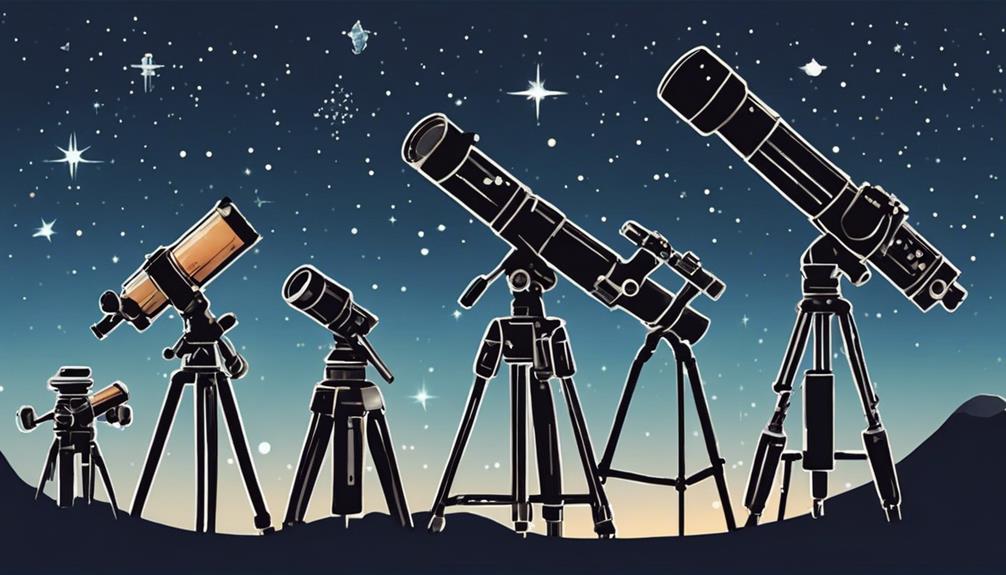
Exploring the stars doesn’t have to break the bank, thanks to a range of budget-friendly telescopes designed with beginners in mind.
The Celestron StarSense Explorer LT 70AZ stands out as a top choice, offering an easy setup and smartphone compatibility. This means you won’t just be staring up at the sky; you’ll have a smart guide to help you identify celestial objects.
For those always on the move, the Bresser Messier AR-80/640 AZ NANO is a compact travel telescope that doesn’t sacrifice quality for portability, making it perfect for beginners keen to explore the cosmos from various locations.
If technology excites you, the Skymax-127 Virtuoso GTi and the Sky-Watcher Star Discovery P150i Wi-Fi telescope offer a tech-savvy experience with their app-controlled capabilities. These telescopes blend the simplicity needed by beginners with the advanced features to grow into, like Wi-Fi and computerized, altaz Go-To systems.
These options make starting your astronomical journey as exciting and enriching as the discoveries you’ll make, without overwhelming your budget or your patience.
User-Friendly Features for Beginners
While budget-friendly options provide a solid foundation, user-friendly features further simplify your journey into astronomy, ensuring you’re not only observing but truly engaging with the stars. For you, the beginner astronomer, exploring the night sky becomes a breeze with telescopes designed with your needs in mind.
Here are some top picks that combine ease of use with innovative technology:
- Celestron StarSense Explorer LT 70AZ: This telescope stands out with its easy setup and the StarSense app. By incorporating a smartphone holder, it leverages your phone to guide you through the stars, making celestial exploration accessible and engaging.
- Sky-Watcher Heritage 100P Tabletop Dobsonian: Perfect for those with limited space, this compact and lightweight telescope doesn’t skimp on quality. Its simplicity is ideal for beginners, offering a straightforward, no-fuss experience.
- Celestron Omni XLT AZ 102 & Bresser Messier AR-80/640 AZ NANO****: Both telescopes are celebrated for their lightweight, transportable designs. The Celestron Omni XLT AZ 102, in particular, provides quick setup with basic mount features, while the Bresser Messier caters to new stargazers with its user-friendly approach.
Embarking on your astronomical journey doesn’t have to be intimidating. These telescopes are specifically designed to make your journey into the cosmos as seamless and enjoyable as possible.
After-Sale Support: Customer Service and Warranties

After you’ve chosen your telescope, it’s important to understand the after-sale support that comes with it, including warranty coverage details and how to access support services.
Many manufacturers offer thorough customer service to help with setup, troubleshooting, and tips for getting the most out of your new astronomy tool.
Knowing the extent of your warranty and how to reach support can greatly enhance your stargazing experience, ensuring you’re well-equipped to explore the cosmos with confidence.
Warranty Coverage Details
Celestron’s 2-year warranty on most telescopes gives you confidence as you embark on your astronomical journey. This warranty is your safety net, making sure that if anything goes wrong due to manufacturing defects, you’re covered. Here’s what it entails:
- Repair or Replacement: If your telescope has faulty parts, Celestron’s warranty covers the repair or replacement during this 2-year period.
- Customer Service: Access to customer service for troubleshooting, technical support, and handling warranty claims is part of the package.
- Registration: Be sure to register your telescope with Celestron to streamline any warranty claims or support requests.
Understanding the terms and conditions of the warranty ensures you can fully utilize these after-sale support services, keeping your focus on the stars, not on potential setbacks.
Support Service Accessibility
Exploring the world of astronomy becomes much smoother with accessible after-sale support, including customer service and warranties, at your disposal.
Telescopes brands prioritize your ownership experience, offering assistance that ranges from setup to troubleshooting. Here’s a snapshot of what to expect:
| Support Feature | Description | Benefit for Beginners |
|---|---|---|
| Customer Service | Assistance with setup, usage, and issues. | Quick resolutions enhance experience. |
| Guarantees | Coverage for defects and malfunctions. | Ensures product reliability and peace of mind. |
| Extended Guarantees | Additional protection beyond standard terms. | Offers longer security for your investment. |
| Online Resources | FAQs, tutorials, and forums. | Self-help tools empower users. |
| Responsiveness | Quick and efficient support responses. | Minimizes downtime, maximizes enjoyment. |
Support services like these make sure that your entry into astronomy is as seamless and enjoyable as possible.
Frequently Asked Questions
What Size Telescope Do You Need for Beginners to See Planets?
For beginners enthusiastic to see planets, you’ll need a telescope with a 70mm aperture and 400-600mm focal length. Choose between refractor or reflector types, ensuring it has a stable mount and quality eyepieces for the best views.
What Accessories Are Recommended for a Beginner Astronomer?
Beginning on a celestial journey, you’ll need more than just a telescope. Consider getting mount adapters, star charts, red flashlights, eyepiece filters, Barlow lenses, cleaning kits, observing chairs, smartphone adapters, dew shields, and focal reducers.
What Should Be My First Telescope?
Choosing your first telescope? Consider types that ease maintenance, enhance star tracking, and combat light pollution. Opt for models with versatile eyepiece selection, night sky apps, and astrophotography features for moon observations and celestial events.
What Is the Best Budget Telescope to See Planets?
For the best budget telescope to see planets, consider mount stability, eyepiece selection, and optical coatings. Join local astronomy clubs for tips and explore star tracking technology to enhance your viewing, even in light-polluted areas.
Conclusion
You’re now equipped with the map to the stars, guiding you through the galaxy of telescopes. Remember, the universe won’t unravel its secrets in a day. Patience and passion are your companions on this celestial journey.
With the right telescope, whether it’s a budget-friendly Celestron or a tech-savvy Unistellar, you’re set to embark on an astronomical adventure.
Dive into the night sky, where every star is a story, and your telescope is the key to unlocking them.
Happy stargazing!


