Beginner's How-To: Start Stargazing With Your First Telescope

Embarking on your stargazing journey is as exciting as it is challenging, and selecting your first telescope is just as essential as understanding the celestial wonders you're about to explore.
You're stepping into a universe where patience meets curiosity, and where the quality of your telescope can greatly influence your experience. Before you rush out to make a purchase, let's consider what makes a telescope your perfect night sky companion, from the importance of magnification and lenses to finding a balance between portability and power.
As you stand on the brink of discovering the cosmos, remember, the right guidance can illuminate your path, leaving you eager to uncover the mysteries above.
Key Takeaways
- Choose a telescope with a larger aperture and stable mount for clearer, shake-free views.
- Experiment with different eyepieces to adjust magnification and explore a variety of celestial objects.
- Align your finderscope and ensure your telescope is properly set up for accurate and sharp observations.
- Plan your stargazing session by checking weather conditions and preparing necessary observing aids for comfort and stability.
Selecting Your First Telescope
Choosing your first telescope is a thrilling step into the world of stargazing, blending excitement with the necessity to make a well-informed decision. The type of telescope you pick—be it refractor, reflector, or catadioptric—should align closely with your observing preferences and budget. Reflect on what celestial objects most capture your imagination and how much you're willing to spend.
Aperture size is a critical factor; larger apertures mean better light-gathering capability, offering clearer views of stars and planets. However, don't overlook the importance of a stable mount. A solid mount guarantees your observations are shake-free and aids in smoothly tracking celestial objects across the sky.
Portability is another key consideration. If you plan on stargazing from various locations, you'll need a telescope that's easy to transport and set up.
Lastly, don't hesitate to seek recommendations. Talking to experienced astronomers or consulting reputable sources can provide invaluable guidance. They can help you weigh the pros and cons of different models based on your specific needs. Remember, the best telescope for you is one that fits your observing preferences, is within your budget, and promises many nights of awe-inspiring celestial views.
Understanding Magnification and Lenses
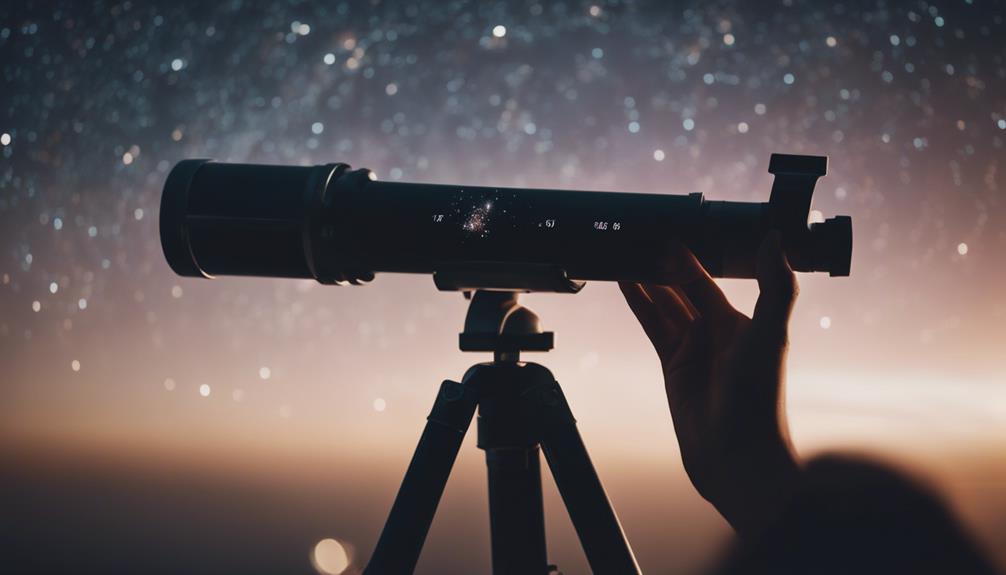
Diving into the world of telescopic stargazing, you'll find that understanding magnification and lenses is key to revealing the cosmos in breathtaking detail. Magnification is what brings distant celestial objects into clear view, letting you marvel at the wonders of the universe from your backyard. It's calculated by dividing the focal length of your telescope by the focal length of the eyepiece. This means both the telescope and the eyepiece play important roles in how well you can zoom in on stars, planets, and galaxies.
Lenses within your telescope work together to focus light, creating an enlarged image of these celestial objects. The eyepiece is especially essential as it determines the level of magnification and clarity. By swapping eyepieces with different focal lengths, you can adjust the magnification, enhancing your viewing experience.
Here's a quick guide to understanding these concepts better:
| Aspect | Role in Telescope | Impact on Stargazing |
|---|---|---|
| Focal Length of Telescope | Determines potential magnification | Base for calculating magnification |
| Eyepiece Focal Length | Adjusts magnification level | Directly changes viewing scale |
| Lenses | Focuses light to form images | ensure clarity and detail |
Becoming familiar with how magnification and lenses work together will greatly optimize your stargazing sessions, making every look through your telescope a new adventure.
Identifying Celestial Objects to View
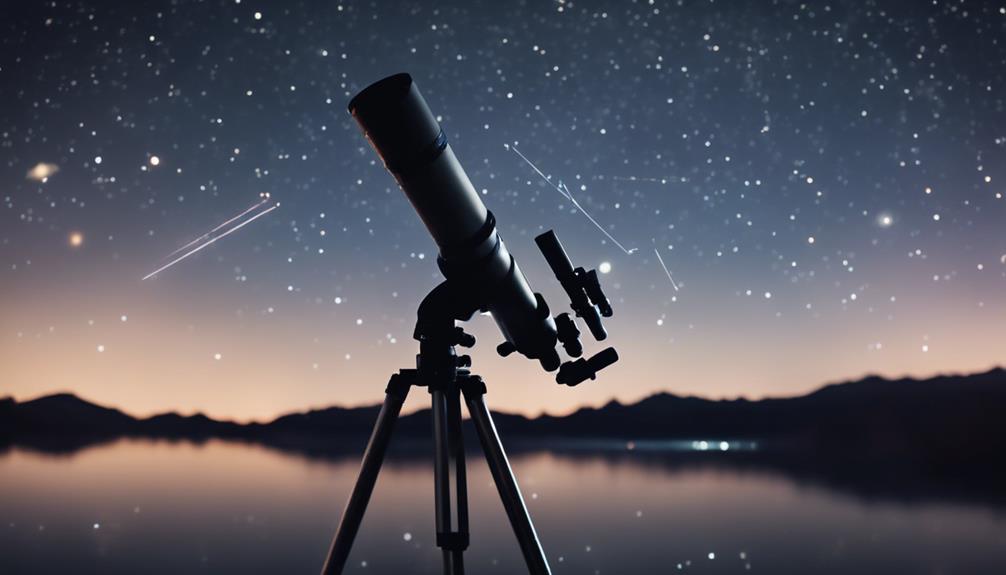
Once you've got a grasp on magnification and lenses, it's time to explore the night sky's dazzling array of celestial objects. Your telescope is your ticket to breathtaking views that span from the investigate surfaces of bright planets like Jupiter, Saturn, Mars, and Venus, to the detailed lunar landscapes marked by the Moon's craters, mountains, and maria. These celestial bodies offer an excellent starting point for your stargazing adventures.
Don't stop there, though. The sky's the limit when it comes to what you can discover. Try to catch the International Space Station (ISS) or various satellites as they swiftly orbit our planet. This dynamic observation can be thrilling as you track their movement across the starlit canvas.
For a more stationary experience, explore into the world of double stars such as Albireo and Almach. These pairs showcase contrasting colors and are fascinating to observe through telescopes due to their close pairings. Additionally, aim your telescope towards prominent star clusters like the Pleiades and the Beehive Cluster. These clusters offer stunning views, revealing the rich tapestry of stars and constellations that decorate our night sky.
Setting Up Your Telescope Properly

To reveal the wonders of the night sky through your telescope, setting it up correctly is a critical first step. Your first telescope is more than just an instrument; it's your gateway to exploring the cosmos. Here's how to make sure it's ready for your stargazing adventure:
- Align the finderscope: Adjust the finderscope to match the main telescope's field of view. This small step makes locating celestial objects a breeze.
- Stabilize the tripod: Place your tripod on a level surface and make sure its legs are fully extended and locked to minimize vibrations. A stable setup is key for clear, sharp images.
- Calibrate for your location: If your telescope has an equatorial mount, calibrating it to match your specific latitude enhances tracking accuracy, making your observations smoother.
- Check collimation and focus: Make certain the optical components are well aligned (collimation) for the clearest view. Secure the eyepiece and use the focus knob to fine-tune the sharpness of the image.
Setting up your telescope properly isn't just about following steps; it's about preparing to connect with the vastness of our universe. Take your time, and you'll be rewarded with breathtaking views and a newfound appreciation for the night sky.
Planning Your Observation Sessions
Before setting out on your stargazing journey, it's important to plan your observation sessions carefully, considering factors like weather conditions and your telescope's capabilities. You'll want to check both the weather and seeing conditions to guarantee best visibility. Nothing dampens the spirit more than setting up, only to have clouds roll in.
Dressing appropriately for the outdoor conditions, especially in colder climates, is essential to stay comfortable throughout your stargazing session. Remember, if you're cold or uncomfortable, you're less likely to stay out and enjoy the wonders of the night sky.
Understanding your telescope's limiting magnitude is crucial. This knowledge will help you determine the faintest objects you can observe under specific sky conditions, making your session more productive. It's all about matching your expectations with what's realistically observable.
Don't forget about preparing observing aids like chairs or ladders for comfort and stability. These can make a significant difference in your overall experience.
Finally, plan your observation targets in advance. Having a focused approach and knowing what you're looking for will maximize your time and enrich your exploration of the night sky. Happy stargazing!
Frequently Asked Questions
How Do I Use My First Telescope?
To use your telescope, start with mount alignment and adjust the eye relief. Focus slowly, using star charts for guidance. Enjoy lunar viewing and seasonal constellations, but beware of light pollution affecting your experience.
What to Do When You First Get a Telescope?
When you first get a telescope, start by following unboxing steps and assembly instructions carefully. Then, align the finder, choose the right eyepiece, and learn maintenance tips. Keep a log of your observations for improvement.
What Is the Best Telescope to Start With for a Beginner Sky Observer?
For beginners, a refractor telescope's a great start, offering clear images and ease of use. Consider your budget, desired portability, aperture size, mount stability, and optical quality. Don't forget to check out accessory options!
How Do You Start Stargazing for Beginners?
Before you explore the cosmos, start by choosing a dark location, minding the weather, and understanding moon phases. Use star maps, let your eyes adapt to the night, and plan your constellation quest carefully.
Conclusion
As you commence on this celestial journey, remember, the skies won't always be clear and your telescope might sometimes feel more like a stubborn mule than a window to the stars. But embrace these hiccups as part of the adventure.
With every gaze upwards, you're not just spotting cosmic wonders, you're also charting your own path in the vast universe of astronomy. Keep your curiosity alight, your patience as vast as the night sky, and enjoy the stellar voyage.
Welcome to the club of stargazers!
