Best Moon Phases for Astrophotography
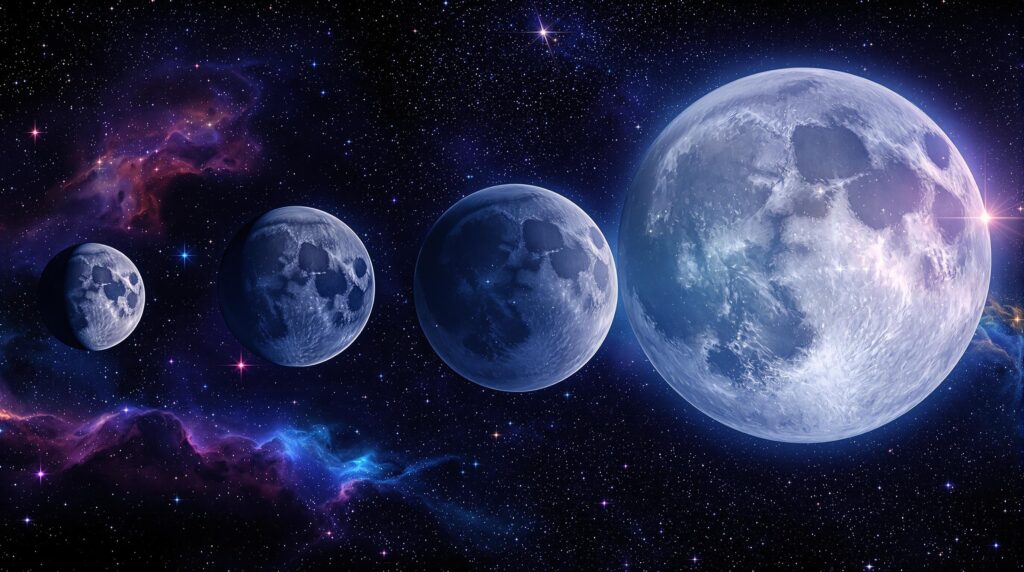
Want to take stunning astrophotography shots? The Moon’s phase is key. Each phase offers unique opportunities, whether you’re aiming for deep-sky objects or detailed lunar surface features. Here’s a quick guide to match the Moon phase with your photography goals:
- New Moon: Best for deep-sky objects like the Milky Way and galaxies (darkest skies).
- Crescent Moon: Great for lunar details (craters, Earthshine) with minimal light pollution.
- First Quarter Moon: Perfect for sharp surface details along the terminator.
- Full Moon: Ideal for bright lunar landscapes and planets but limits deep-sky visibility.
- Gibbous Moon: Highlights craters and shadows with balanced brightness.
Quick Comparison
| Moon Phase | Sky Brightness | Best For |
|---|---|---|
| New Moon | Darkest | Deep-sky objects, Milky Way |
| Crescent | Very Dark | Lunar details, Earthshine |
| First Quarter | Moderate | Surface detail, terminator shots |
| Full Moon | Brightest | Lunar photography, bright planets |
| Gibbous | Partial Bright | Craters, shadows, lunar textures |
Plan your sessions using tools like moon phase trackers, light pollution maps, and weather forecasts. Timing and preparation are everything for capturing breathtaking celestial images.
Deep-Sky Astrophotography During a Full Moon?
1. New Moon
The New Moon phase is perfect for deep-sky astrophotography. With the sky at its darkest, faint celestial objects like the Milky Way, distant galaxies, nebulae, and star clusters become more visible. This darkness also allows for longer exposures, helping you capture fine details that are otherwise hard to see.
To make the most of this phase, head to a location with minimal light pollution. A darker environment enhances contrast and makes it easier to photograph deep-sky objects. Be sure to plan your session when the sky is at its absolute darkest for the best results.
2. Crescent Moon
The Crescent Moon phase is a fantastic opportunity for lunar photography. This phase occurs just after the New Moon (waxing crescent) or just before it (waning crescent). When the Moon is 5–15% illuminated, the sunlight creates sharp shadows along the terminator – the line between light and darkness – making craters, mountains, and valleys pop in stunning detail.
To get the best shots, try these camera settings:
- Shutter speed: 1/125–1/250 to prevent overexposure of the crescent
- ISO: 100–400 to keep noise levels low
- Aperture: f/8–f/11 for sharp, crisp images
The Crescent Moon’s low brightness allows you to capture both its intricate details and surrounding celestial objects. Some great subjects to photograph include:
- Earthshine, where the dimly lit part of the Moon glows faintly
- Crater formations highlighted along the terminator
- Conjunctions with planets
- Wide-field landscapes featuring the Moon
For the best views, look to the western sky in the early evening to catch the waxing crescent or to the eastern sky just before dawn for the waning crescent. Timing is everything – this phase offers reduced light pollution, making it an excellent choice for beginners exploring lunar photography.
Up next, see how the First Quarter Moon brings its own special opportunities.
3. First Quarter Moon
During the First Quarter Moon, half of the Moon’s surface is illuminated, creating a striking contrast of light and shadow. This contrast makes it easier to spot surface details like craters, mountain ridges, and valleys – perfect for photography.
The dividing line between light and shadow, known as the terminator, offers sharp detail, highlighting the Moon’s rugged landscape. To get the best results, plan your shots when the Moon is high in the sky (its zenith) and ensure clear, steady weather conditions.
If you’re using a telescope, the terminator’s sharp details can offer incredible views. The balanced brightness during this phase also makes it easier to photograph the Moon alongside nearby stars or planets without one overshadowing the other. For tips on techniques and settings, you can check out resources like Sat ND Telescope and Astrophotography (https://sat-nd.com).
sbb-itb-9161f90
4. Full Moon
The Full Moon lights up the entire lunar surface, creating both opportunities and challenges for photographers.
To highlight lunar details, adjust for the brightness by using a fast shutter speed (around 1/250), keeping the ISO low (100–200), and, if needed, adding a neutral density filter to cut down on glare. These settings help balance the Moon’s brightness with the surrounding environment.
For nighttime landscapes, take advantage of the Moon’s bright glow. Use longer exposures (15–30 seconds) and a medium aperture (f/8–f/11) to bring out details in the foreground while capturing the silvery moonlight.
One downside of the Full Moon’s brightness is that it can overpower dimmer celestial objects. To work around this, focus on brighter targets like planets or star clusters. Light pollution filters can help, and shooting when the Moon is lower in the sky can reduce its dominance in your frame.
If you’re using a telescope, consider adding tools like a Barlow lens to boost magnification and reveal surface details. While the lack of shadows during this phase makes the Moon’s features less dramatic, areas like the maria (dark plains) and large craters, such as Tycho and Copernicus, still stand out beautifully.
Lastly, atmospheric conditions are key. Clear, steady skies with minimal turbulence will give you the sharpest results. Aim to shoot when the Moon is at least 30° above the horizon to reduce distortion caused by the atmosphere.
5. Gibbous Moon
The Gibbous Moon phase – when more than half of the Moon is lit but not fully illuminated – is a great time for astrophotography. The terminator, the line where light meets shadow, creates striking contrasts that highlight the textures of craters, mountain ridges, and valleys.
To capture these details, adjust your camera settings to balance the bright and shadowed areas. A stable mount is essential for capturing sharp images. For even better results, take your shots when the atmosphere is steadier, like just after moonrise or before moonset. You can also stack multiple frames to reduce the effects of atmospheric turbulence and bring out finer surface details.
This phase’s partial brightness calls for thoughtful composition. To avoid the Moon overpowering other elements in your frame, try using a light pollution filter and carefully position the Moon in your shot. For more detailed advice on lunar exposure, check out Sat ND Telescope and Astrophotography’s guide on moon filters.
Tools for Moon Phase Planning
Plan your astrophotography sessions with tools designed to track lunar phases and conditions. Here’s a quick comparison of moon phases and what they’re best suited for:
| Moon Phase | Best For | Planning Tips |
|---|---|---|
| New Moon | Deep-sky objects, Milky Way | Schedule 2–3 days before or after |
| Crescent | Earthshine, star trails | Check moonrise/moonset times |
| First Quarter | Surface detail, terminator | Ideal for early evening sessions |
| Full Moon | Overall lunar landscape | Adjust exposure settings accordingly |
| Gibbous | Crater detail, shadows | Best captured during dawn or dusk hours |
Use these guidelines to align your sessions with the moon’s phase and local weather. For example, clear skies during a new moon are perfect for spotting deep-sky objects, while moderate conditions can bring out fine details on the lunar surface.
If you’re looking for more in-depth resources, Sat ND Telescope and Astrophotography offers an Advanced Explorer subscription. It includes tutorials and forecasting tools, plus guides on how each moon phase affects different astrophotography styles.
Don’t forget to consider seasonal changes. Winter skies are often darker and clearer, making them ideal for astrophotography, while summer humidity can impact image clarity.
Key planning tools to enhance your sessions:
- Moon illumination calculators
- Atmospheric seeing predictors
- Light pollution maps
- Moonrise and moonset trackers
- Cloud cover monitors
Conclusion
The phase-by-phase guide above highlights how each lunar phase presents unique opportunities for capturing breathtaking celestial images. From deep-sky objects during the new moon to detailed surface features during the quarter phases, timing and preparation are key to achieving standout shots.
To get the best results, focus on careful planning and using the right tools. Moon phase calculators and atmospheric monitoring tools make it easier than ever to plan your sessions. Websites like Sat ND Telescope and Astrophotography provide valuable resources for aligning your photography with ideal conditions.
Key factors for successful astrophotography include:
- Darkness levels: Crucial for capturing deep-sky objects.
- Surface detail visibility: Best during specific moon phases.
- Atmospheric stability: Ensures sharper, clearer images.
