Best Refractor Telescope: Crisp, Clear Views With Top Refractor Picks

Refractor telescopes are perfect for beginners and experienced stargazers. They provide sharp, high-contrast views of planets, the Moon, and stars, thanks to their unobstructed light paths and low-maintenance design. Here’s a quick look at the top options:
- Apertura 90mm: Great for detailed views and astrophotography with its apochromatic design and ED glass.
- Celestron Inspire 80AZ: Beginner-friendly with easy setup, smartphone adapter, and accessories.
- Sky-Watcher Esprit 100ED: Ideal for astrophotographers, offering premium optics and imaging accessories.
- Orion GoScope III 70mm: Lightweight and portable, perfect for travel and casual viewing.
Quick Comparison
| Telescope | Aperture | Best Use | Portability | Price |
|---|---|---|---|---|
| Apertura 90mm | 90mm | Visual & Photography | Moderate | $1,199.99 |
| Celestron Inspire 80AZ | 80mm | Beginners | Moderate | Under $300 |
| Sky-Watcher Esprit 100ED | 100mm | Astrophotography | Limited | $4,599.99 |
| Orion GoScope III 70mm | 70mm | Travel & Casual Use | Excellent | $89.99 |
Whether you’re looking for portability, beginner ease, or advanced imaging capabilities, there’s a refractor telescope for you. Read on for detailed reviews and recommendations.
Guide to Refractor Optics – Choosing the Best Telescope for …
1. Apertura 90mm Refractor Review
The Apertura 90mm is a high-quality apochromatic triplet refractor designed for both visual astronomy and astrophotography. Its 90mm (3.54") aperture and 540mm focal length offer an excellent balance of light-gathering power and portability. This design prioritizes clear, unobstructed light paths and sharp star images.
At its core is an FPL-53 apochromatic glass objective lens, which minimizes chromatic aberration. This means stars remain sharp and free from distracting color fringing, a common issue in many other refractors. Below, we dive into how these features translate into practical performance.
| Key Specifications | Details |
|---|---|
| Optical Design | Triplet Apochromatic |
| Aperture | 90mm (3.54") |
| Focal Length | 540mm |
| Focal Ratio | f/6 |
| Weight | 9.8 lbs |
| Limiting Magnitude | 12.5 |
The telescope features a dual-speed 2.5" rack-and-pinion focuser with a 10:1 fine adjustment capability. This allows for precise focusing, which is especially important for high-magnification observations. Additional features include a rotatable focuser for aligning cameras, a retractable dew shield, a 1x field flattener for full-frame sensors, and a built-in 2" filter thread.
"This is the single best refractor I have used in my astrophotography career… the build quality is exceptional… a perfect refractor in all instances." – Teagan G., High Point Scientific Gear Expert
With its f/6 focal ratio, the Apertura 90mm is versatile enough for wide-field views of deep sky objects as well as detailed observations of the Moon and planets. Its limiting magnitude of 12.5 allows it to capture faint celestial objects under dark skies. Weighing 9.8 pounds, the optical tube assembly requires a sturdy mount, but its solid construction makes it worth the investment.
A 4.8-star rating highlights its excellent color correction and compatibility with full-frame sensors, making it a great choice for those who want premium performance without the bulk of larger instruments. The Apertura 90mm stands out as a strong performer in the refractor telescope category.
2. Celestron Inspire 80AZ: Entry-Level Option
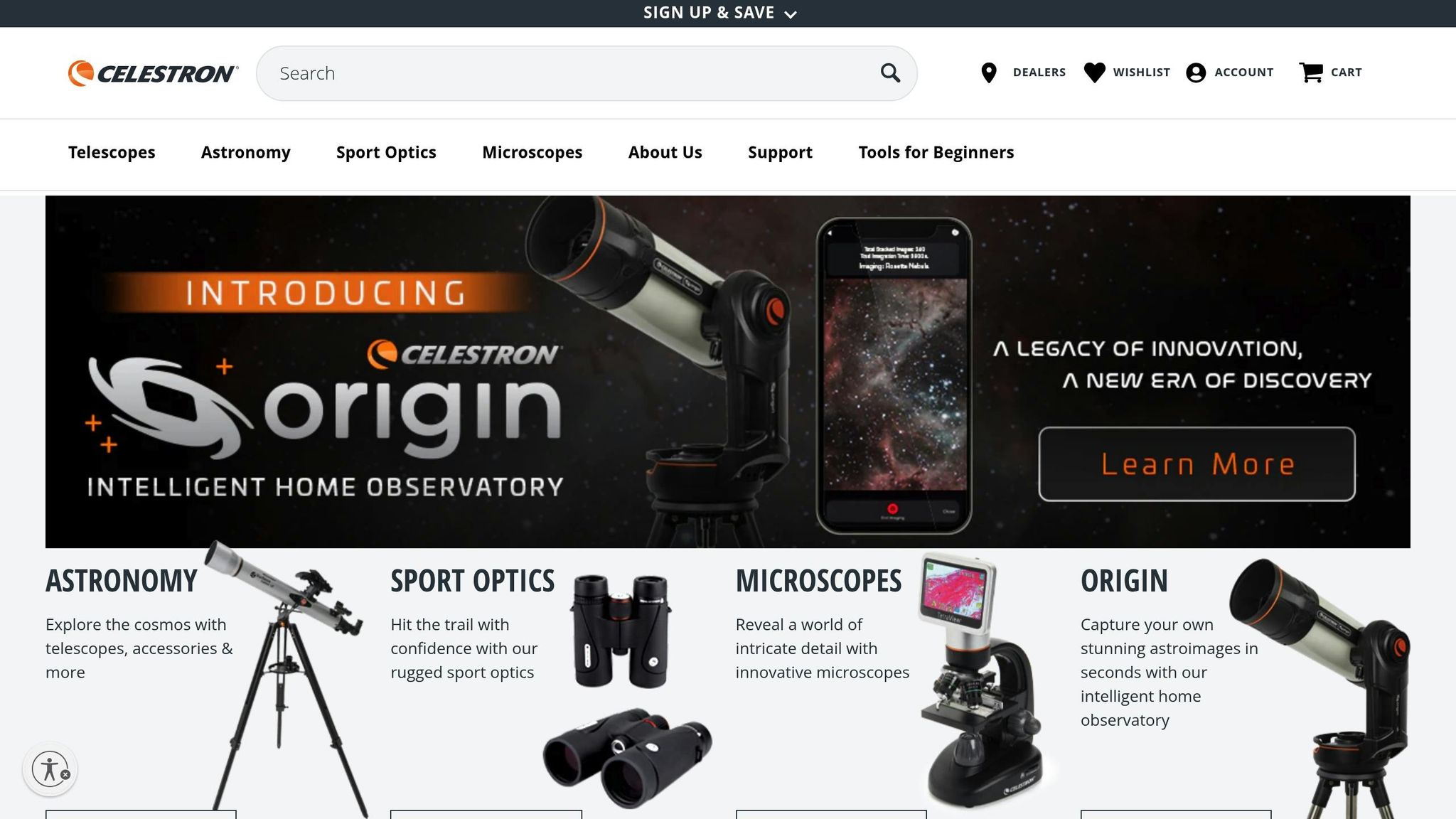
The Celestron Inspire 80AZ pairs an 80mm aperture with a 900mm focal length, delivering reliable optical performance for both stargazing and daytime viewing. Designed with beginners in mind, it’s easy to use and offers a solid starting point for newcomers.
| Specification | Detail |
|---|---|
| Optical Design | Achromatic Refractor |
| Aperture | 80mm (3.15") |
| Focal Length | 900mm (35.43") |
| Focal Ratio | f/11 |
| Weight | 16.98 lbs |
| Maximum Magnification | 189x |
| Minimum Magnification | 11x |
This telescope’s f/11 focal ratio is particularly suited for detailed views of the Moon and planets, though some slight color fringing may occur. The included 20mm (45x) and 10mm (90x) Kellner eyepieces provide versatile magnification options for different viewing scenarios.
The Inspire 80AZ comes with several useful accessories. Its StarPointer® Pro red dot finderscope makes it easier to locate objects in the sky. A smartphone adapter allows you to capture images, while the built-in red LED flashlight is handy for maintaining night vision. The telescope is simple to set up – no tools needed – and comes with an adjustable tripod that extends from 32" to 51". The Alt-Az mount offers smooth movement and precise control with its clutch mechanism.
Priced at under $300, the package also includes Celestron’s Starry Night Software, the SkyPortal App, and an erect image diagonal, making it suitable for both celestial and terrestrial observations.
sbb-itb-9161f90
3. Sky-Watcher Esprit 100ED for Photos
The Sky-Watcher Esprit 100ED is a refractor telescope designed for deep-sky imaging. With a 100mm aperture, 550mm focal length, and f/5.5 focal ratio, it delivers exceptional optical performance for astrophotography enthusiasts.
| Specification | Detail |
|---|---|
| Optical Design | APO Triplet Refractor |
| Aperture | 100mm (3.94") |
| Focal Length | 550mm (21.65") |
| Focal Ratio | f/5.5 |
| Focuser | 3.4" Rack & Pinion |
| Price | $4,599.99 |
This model uses Schott-BK-7 and FPL-53 ED glass elements, paired with Sky-Watcher’s Metallic High-Transmission Coatings™ (MHTC). These features reduce chromatic aberration and improve light transmission, ensuring sharp, high-contrast images. Additionally, an internal knife-edge baffling system helps eliminate stray light and reflections. The package also includes several imaging accessories to enhance its functionality.
The 3.4" rack-and-pinion focuser features a Helinear track for precise adjustments with minimal image shift. Its rotating design allows for flexible framing, making it ideal for various astrophotography setups.
Accessories included with the telescope:
- A 2-element field flattener for sharp star images
- An M48 camera adapter compatible with Canon DSLRs
- An 8×50 right-angle finderscope
- Tube rings with a Losmandy-style D series dovetail
- A padded hard case for secure storage and transport
Astrophotographers have praised the Esprit 100ED for its performance. In October 2024, Michael B., an experienced astrophotographer, reported flawless results using the telescope with ZWO 294 and ZWO 2600 OSC cameras, particularly with the ZWO 294 right out of the box. For optimal results, maintain a 63mm backspacing distance from the field flattener’s last lens element when using astrophotography cameras.
The telescope has received a 4.6/5 star rating from users. While its image quality and sturdy build are often highlighted, some users have mentioned that the included rings could provide better support for the optical tube assembly (OTA) at certain angles.
4. Orion GoScope III 70mm: Travel Model
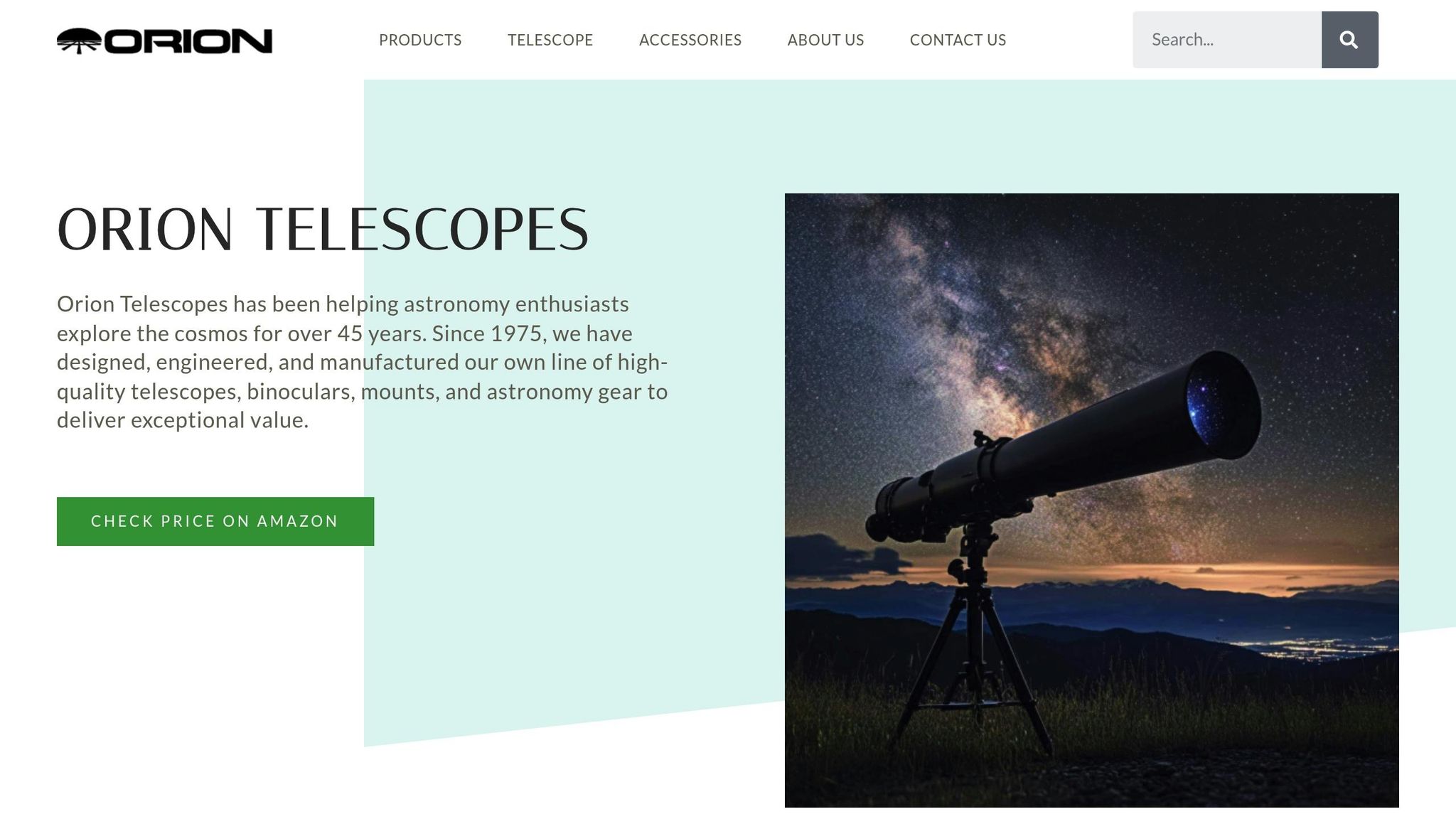
The Orion GoScope III 70mm is a lightweight refractor telescope designed with portability and ease of use in mind. With a 70mm aperture and a 400mm focal length (f/5.7), it delivers sharp views, whether you’re stargazing or observing landscapes during the day.
| Specification | Detail |
|---|---|
| Optical Design | Doublet Refractor |
| Aperture | 70mm (2.75") |
| Focal Length | 400mm |
| Focal Ratio | f/5.7 |
| Weight | 4.25 lbs |
| Price | $89.99 |
This telescope is perfect for travel, weighing just 4.25 lbs and coming with its own backpack for easy transport. The adjustable aluminum tripod ranges from 17.75 inches to 43.5 inches, allowing for comfortable viewing in various positions.
Included accessories make it even more user-friendly: two anti-reflection coated 1.25-inch Kellner eyepieces (20mm for 20x magnification and 9mm for 44x magnification), a 45-degree correct-image diagonal, a 5×24 finder scope, and the Orion MoonMap 260 for detailed lunar exploration.
Users have praised its convenience and performance:
"Best bang for the buck travel telescope complete with backpack. My only complaint would be average eye piece and flimsy tripod. But what can you ask for more at this price. It’s a fantastic beginner telescope." – Min P.
To get the most out of this telescope, start with the 20mm eyepiece to locate your target, then switch to the 9mm for a closer look. It’s particularly well-suited for observing the Moon and planets, making it a great choice for beginners or as a portable second telescope.
In August 2019, a user named Roger improved its performance by pairing it with a Celestron Photographic & Video Tripod and an Orion Tritech LT-1 Travel Tripod, enhancing both lunar and stellar observations.
Features Comparison
Here’s a breakdown of the main features of the telescopes reviewed, designed to help you choose based on your specific needs.
| Feature | Apertura 90mm | Celestron Inspire 80AZ | Sky-Watcher Esprit 100ED | Orion GoScope III 70mm |
|---|---|---|---|---|
| Optical Design | Doublet Refractor | Achromatic Refractor | Triplet APO | Doublet Refractor |
| Aperture | 90mm (3.5") | 80mm (3.1") | 100mm (3.9") | 70mm (2.75") |
| Weight | 12.5 lbs | 14.2 lbs | 16 lbs | 4.25 lbs |
| Best Use | Visual observing | Beginner stargazing | Astrophotography | Travel & portable viewing |
| Build Quality | Aluminum tube | Standard build | Steel optical tube | Lightweight aluminum |
| Portability | Moderate | Moderate | Limited | Excellent |
Each model stands out in its own way, catering to different types of users.
The Sky-Watcher Esprit 100ED is a standout for astrophotography enthusiasts. Its triplet apochromatic design ensures high-quality imaging, and the durable steel optical tube adds to its reliability. However, it’s the heaviest option at 16 pounds.
If portability is your priority, the Orion GoScope III 70mm is the ideal choice. Weighing just 4.25 pounds, it’s perfect for travel and quick setups while still offering decent performance for casual viewing.
For those seeking a balance between performance and ease of use, the Apertura 90mm provides excellent views for general stargazing. Meanwhile, the Celestron Inspire 80AZ is tailored for beginners, offering user-friendly features to help new stargazers get started with confidence.
Recommendations
Based on the reviews above, here are the top telescope picks tailored to different needs:
For Beginners and Budget-Friendly Options
If you’re just starting out or looking for an affordable option, the MEEZAA 90mm is a solid choice at $169.99. Reviews from March 2025 highlight its quick 20-minute setup and user-friendly design. One customer, BR, shares: "This telescope is very easy to set up and align, even for someone with no prior experience using telescopes." Its manual controls and sturdy tripod make it perfect for newcomers.
For Dedicated Astrophotographers
For those serious about astrophotography, the Sky-Watcher Esprit 100ED stands out. Its advanced optics produce sharp, high-quality images. Carter H. says: "This telescope has provided me a great experience in many fields…this dense little refractor offered amazingly clean, crisp images".
For Travel and On-the-Go Viewing
If portability is a priority, the Celestron Travel Scope 70 DX is a great pick. Weighing just 3.3 pounds and priced at $95.00, it comes with a smartphone adapter and Bluetooth shutter release, making it easy to capture celestial images wherever you go.
"Overall, this is a well-made, easy-to-use telescope that offers great value for the price. Highly recommended! 🔭✨" – Pranav, Amazon Customer
Your choice should depend on your primary needs. Astrophotographers should focus on optical performance and stability, while casual stargazers may prefer portability and simplicity. Wherever you are, clear skies and a dark location will make all the difference in your viewing experience. Pick the telescope that best matches your stargazing goals.
