How to Choose a Weatherproof Telescope Cover

Protecting your telescope from weather and storage conditions is essential to maintain its performance and longevity. Here’s a quick guide to help you choose the right weatherproof cover:
-
Material Matters:
- Waterproof: Ripstop nylon, vinyl-coated polyester, or marine-grade canvas.
- UV Protection: Aluminized coatings or multi-layer fabrics to block sunlight.
- Breathable: Mesh panels or air vents to reduce condensation.
-
Get the Right Fit:
- Measure your telescope’s length, width, and height with all accessories attached.
- Choose between snug-fit (for wind resistance) or loose-fit (for better airflow and flexibility).
-
Must-Have Features:
- Secure fastenings (buckles or straps) for windy conditions.
- Ventilation to prevent moisture buildup.
- Reinforced seams for durability.
-
Match Cover to Storage Needs:
- Indoor: Basic covers under $50 for dust and light moisture.
- Outdoor: Premium covers ($75-$200) with heavy-duty weatherproofing and UV protection.
| Feature | Basic (<$50) | Premium ($75-$200) |
|---|---|---|
| Material | Single-layer polyester/nylon | Multi-layer waterproof fabric |
| Ventilation | Basic vent holes | Adjustable airflow systems |
| UV Protection | Standard | Enhanced with reflective coatings |
| Fastenings | Simple drawstring | Heavy-duty straps and buckles |
Choose based on your telescope’s storage location, local weather, and budget. A good cover saves you from costly repairs and keeps your telescope ready for clear skies.
Telegizmos 365 Telescope Cover – Review after Two Years
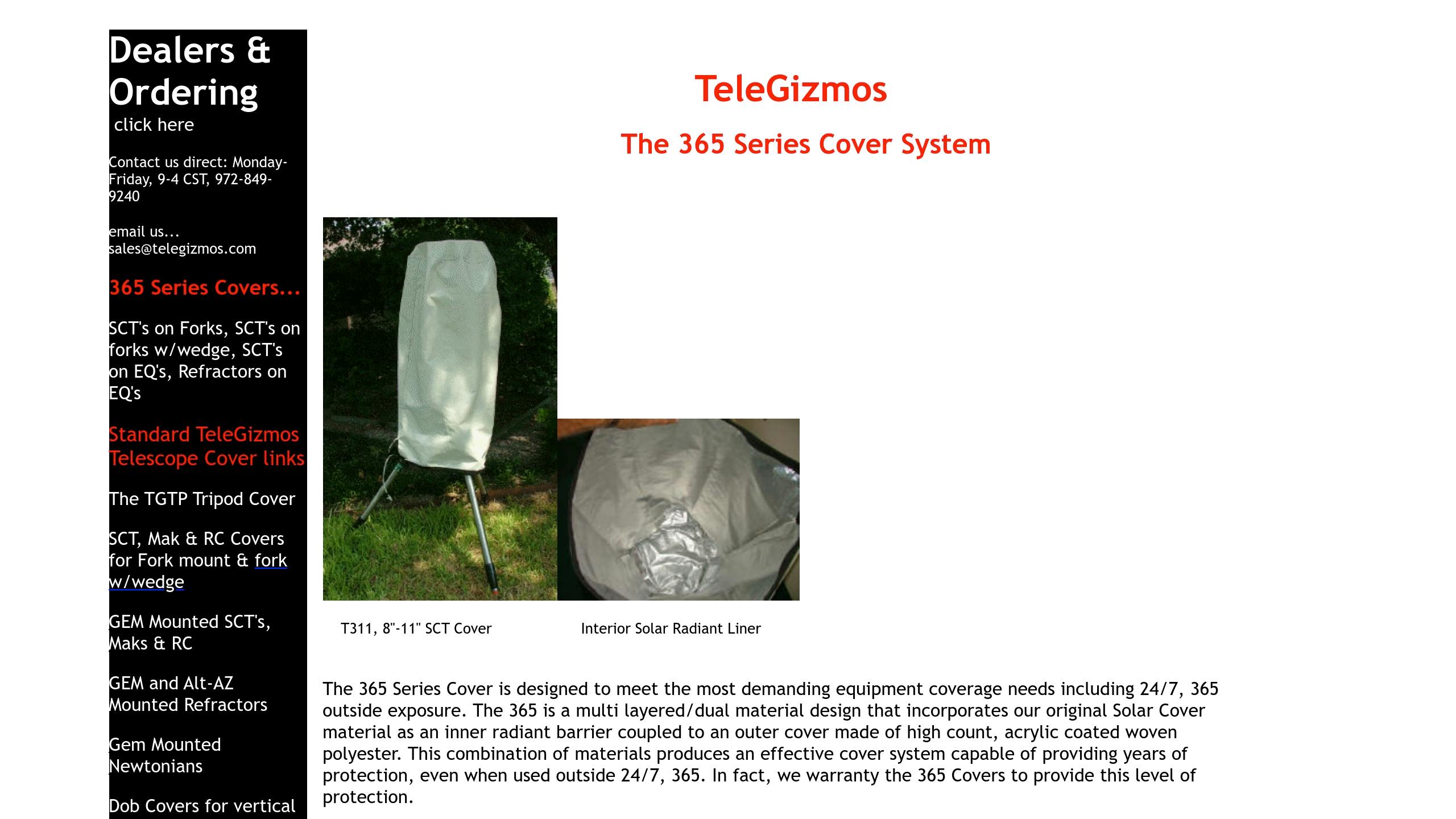
Telescope Cover Materials
Selecting the right material for your telescope cover is crucial to ensuring lasting protection. Different fabrics provide varying levels of defense against weather and other challenges.
Waterproof Materials
A good waterproof cover not only keeps moisture out but also withstands wear and tear. Common materials include:
- Ripstop Nylon: Known for its rugged reinforced weave, often available in high-denier options for added strength.
- Polyester with Vinyl Coating: A flexible option that effectively blocks rain and snow.
- Marine-Grade Canvas: A pricier but highly durable choice, ideal for environments with high salt and moisture levels.
UV Protection and Heat Shields
To prevent damage from UV rays and excessive heat, many covers include features like:
- Aluminized Coatings: Reflect UV radiation to protect both the cover and the telescope.
- Multi-Layer Constructions: Combine UV-resistant outer layers with inner layers that help regulate temperature.
- Reflective Surface Treatments: Minimize heat buildup during storage by reflecting sunlight.
Moisture Control Features
Keeping condensation under control is just as important as blocking external moisture. High-quality covers often use breathable materials that let water vapor escape while keeping liquid water out. Ventilation is another key feature, with options such as:
| Feature | Benefit |
|---|---|
| Mesh Panels | Promote air circulation to reduce condensation. |
| Air Vents | Ensure continuous airflow to maintain a dry interior. |
Balancing protection and breathability is essential. Overly sealed materials can trap moisture, leading to potential damage, while well-ventilated designs help keep the interior dry. Investing in quality materials not only protects your telescope but also helps maintain its optical clarity and mechanical performance. Up next, let’s explore how to find the perfect fit for your telescope.
Getting the Right Size
Choosing the right cover for your telescope starts with accurate measurements. A well-fitted cover not only ensures full protection but also allows your telescope to function properly when stored.
How to Measure Your Telescope
To get precise dimensions, measure your telescope while it’s fully assembled with all its accessories attached. A flexible measuring tape works best for this task.
- Length: Measure from the front of the telescope, including the dew shield, to the back of the focuser or any camera attachment.
- Width: Note the widest part of the optical tube assembly (OTA), including any mounted accessories.
- Height: Measure from the base of the telescope to its tallest point, such as a finderscope or mounting bracket.
| Measurement | What to Include | Commonly Missed Items |
|---|---|---|
| Length | Dew shield, focuser | Camera attachments |
| Width | OTA, dovetail plates | Side-mounted accessories |
| Height | Finderscope, mount head | Diagonal positions |
Fit Types and Their Uses
Covers come in two main styles, each suited for different needs:
Snug-Fit Covers
- Provide close-fitting protection.
- Resist wind interference.
- Ideal for transport or observatory use.
Loose-Fit Covers
- Allow space for attached accessories.
- Easier to handle and remove.
- Promote better airflow.
- Adaptable for changing setups.
When deciding on a fit, think about where and how you store your telescope. For example, if your telescope is kept in a garage or shed with varying temperatures, a loose-fit cover with better ventilation might be a better choice. On the other hand, a snug-fit cover is ideal for permanent outdoor setups, offering superior protection against dust and debris.
Getting the measurements right and choosing the correct fit will ensure your telescope stays protected. In the next section, we’ll explore key cover features to look for.
sbb-itb-9161f90
Must-Have Cover Features
Once you’ve considered materials and sizing, it’s time to focus on the design elements that make a telescope cover practical and reliable. Key features like secure fastenings, proper ventilation, and sturdy construction ensure the cover does its job effectively.
Straps and Closures
Look for covers with multiple attachment points and closures designed to withstand weather. UV-resistant straps or buckles are a smart choice, as they help keep the cover in place, even during windy conditions.
Ventilation
Good airflow is essential. A cover should allow ventilation to reduce condensation buildup while still blocking out dust and debris.
Durable Build
Choose covers with reinforced seams and stress-point reinforcements. These details help the cover stand up to tough weather and regular use without wearing out quickly.
Weather and Location Factors
Once you’ve chosen a durable and appropriately sized telescope, it’s time to think about how weather and storage conditions influence your choice of cover.
How Weather Affects Your Choice
Your region’s climate plays a big role in determining the type of protection your telescope needs. If you live in a humid area, go for breathable covers with built-in ventilation to reduce condensation. In places with strong winds or frequent storms, pick covers with sturdy attachment systems and tough materials to keep everything secure.
For regions with extreme heat or large temperature swings, covers with UV protection and thermal regulation are a smart choice. These features help create a more stable environment for your telescope, no matter the season.
But weather isn’t the only factor to consider – where you store your telescope also matters.
Storage Location Considerations
The storage location has a direct impact on the kind of cover you need. For outdoor storage, look for covers that provide full-length, heavy-duty protection. If you’re setting up temporarily, prioritize lightweight, portable covers with secure fastenings.
If your telescope stays indoors or in a garage, a basic cover designed to block dust and manage moisture with a breathable design should do the trick. For semi-protected spots like patios or balconies, choose covers that offer extended coverage and address moisture where the cover touches surfaces.
If your telescope faces changing conditions throughout the year, consider a modular cover system. These systems let you adjust the level of protection as needed, keeping your telescope safe in any environment.
Cover Options and Prices
Basic Covers Under $50
If you’re looking for a budget-friendly option, basic covers under $50 offer straightforward protection. They’re ideal for indoor storage or occasional outdoor use. These covers are typically made from water-resistant polyester or nylon and feature simple designs.
- Materials: Single-layer water-resistant fabric
- Closure: Basic drawstring or elastic closures
- Ventilation: Simple vent holes
- UV Protection: Standard level
High-End and Custom Covers
For more demanding conditions, high-end covers provide advanced protection. Priced between $75 and $200, these covers are built with premium materials and thoughtful construction to handle harsher weather and long-term outdoor exposure.
- Materials: Heavy-duty waterproof fabrics with sealed seams
- Inner Layers: Advanced moisture-wicking layers
- Attachment: Reinforced points for secure fastening
- Ventilation: Adjustable systems for better airflow and moisture control
- Fit: Custom designs tailored to specific telescope models
Cover Comparison Chart
| Feature | Basic Covers (<$50) | High-End Covers ($75-$200) |
|---|---|---|
| Material | Single-layer polyester/nylon | Multi-layer waterproof fabric with sealed seams |
| Closure System | Drawstring or elastic | Heavy-duty straps with quick-release buckles |
| Ventilation | Basic vent holes | Adjustable vents with moisture control |
| UV Protection | Standard | Enhanced with heat-reflective coating |
| Customization | Universal fit | Model-specific measurements |
| Weather Resistance | Light rain and dust | All-weather protection |
| Construction | Basic stitching | Reinforced seams with added stress protection |
Choose a cover that matches your storage needs and local weather conditions to keep your telescope in top shape.
Making Your Final Choice
When choosing the right cover, think about material quality, precise fit, and how it will handle your local conditions. By combining what you’ve learned about materials, sizes, and features, you can make an informed decision that suits your needs.
Once you’ve settled on the material and size, consider how the cover’s features align with your environment and usage. For outdoor use, opt for waterproof fabrics with sealed seams. If it’s for indoor storage, water-resistant materials should suffice.
Be sure to measure your telescope’s height, mount, and widest point accurately.
Here are some general recommendations based on usage:
- Indoor storage: A basic cover under $50 works well.
- Covered patios: A mid-range option with better moisture control.
- Full outdoor exposure: A premium cover with weatherproofing and UV protection.
Key features to look for include secure fastening systems to prevent wind displacement, ventilation to handle moisture, reinforced stress points for durability, and sealed seams to keep out the elements.
Instead of focusing only on price, match the cover’s features to your specific needs. For instance, a simple cover might be perfect for indoor setups, while outdoor storage requires something tougher.
For more detailed advice, check out reviews and guides at Sat ND Telescope and Astrophotography.
