How to Photograph the Milky Way: A Complete Guide
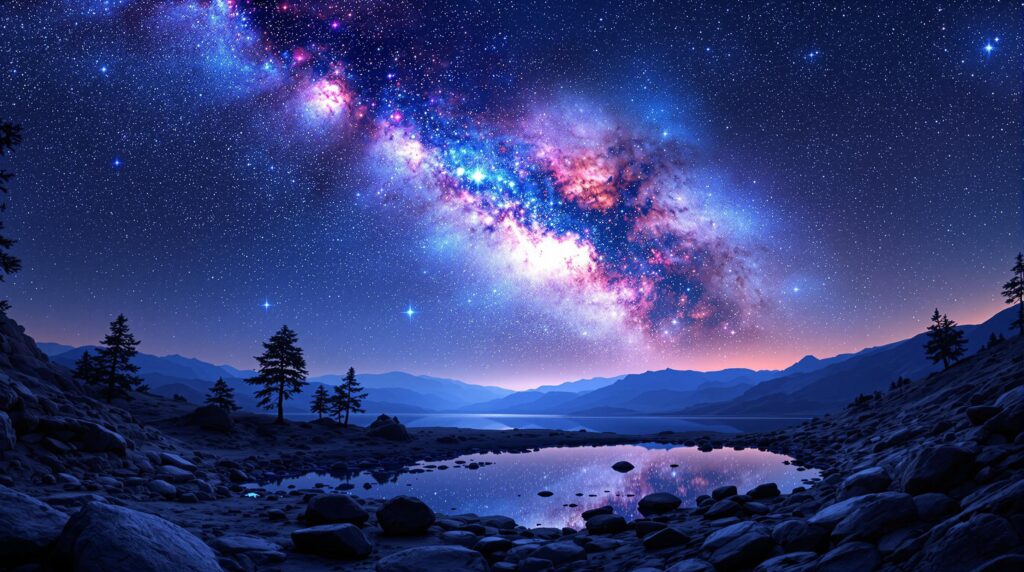
Capturing stunning Milky Way photos requires three essentials: dark skies, the right equipment, and proper camera settings. Whether you’re a beginner or experienced, this guide covers everything you need to know – from choosing gear to editing your final shot.
Key Takeaways:
- Gear: Use a camera (full-frame or crop-sensor), a wide-angle lens (14-35mm, f/2.8 or wider), and a sturdy tripod.
- Best Locations: Look for low light pollution areas (Bortle Class 3 or lower) using tools like DarkSiteFinder.
- Timing: Shoot on moonless nights between March and October (Northern Hemisphere) or February to November (Southern Hemisphere).
- Settings: Start with aperture f/2.8, ISO 3200-6400, and shutter speed following the 500 Rule (500 ÷ focal length).
- Editing: Use image stacking to reduce noise and software like Lightroom for final adjustments.
Quick Steps:
- Plan using apps like PhotoPills for Milky Way positioning and weather conditions.
- Set up your camera on a tripod and manually focus on a bright star.
- Experiment with foreground elements like silhouettes or reflections for depth.
- Edit your images to enhance details and minimize noise.
With practice, you’ll master the art of Milky Way photography and create breathtaking shots of the night sky.
Complete Milky Way Tutorial For Beginners
Required Photography Equipment
Let’s dive into the gear you’ll need to capture stunning photos, balancing quality and ease of use.
Camera Selection Guide
Cameras like the Sony A7 III (rated 4.8/5 on B&H ) stand out for their excellent low-light capabilities, thanks to their full-frame sensors. However, crop-sensor cameras, such as the Fujifilm X-T5, are still great options if you keep the ISO below 6400 . While full-frame cameras often deliver better performance, remember: technique matters more than gear. You can achieve amazing results with any sensor size when you know what you’re doing .
Best Lenses for Night Sky
Your lens choice can make or break your night sky shots. Here’s what to look for:
| Spec | Recommendation | Why It Matters |
|---|---|---|
| Focal Length | 14-35mm (full-frame) | Captures a broad view of the sky |
| Aperture | f/2.8 or wider | Lets in more light for brighter stars |
| Coma Control | High rating | Reduces star distortion at the edges |
The Sigma 14mm f/1.8 Art lens is a top pick, offering excellent coma control and a wide aperture . If you’re on a budget, the Rokinon 14mm f/2.8 is a solid alternative, especially when stopped down to f/4 .
Key Photography Accessories
A sturdy setup is essential for sharp night sky images. Here’s what you’ll need:
- Tripod: Carbon fiber tripods strike the perfect balance between stability and weight .
- Remote Trigger: Any remote shutter release method helps avoid camera shake .
- Lighting Tools: A headlamp with red-light mode, like the Petzl Actik Core, allows you to adjust your gear without ruining your night vision .
If you’re just starting out, stick to the basics. Advanced tools like star trackers can come later once you’ve mastered the essentials.
Preparation and Location Setup
Getting ready for Milky Way photography involves choosing the right location and timing. Here’s how to set yourself up for success.
Dark Sky Locations
To find the best spots, tools like DarkSiteFinder or Light Pollution Map can help you locate areas with minimal light pollution. These locations allow your camera to capture the night sky more effectively.
| Suggested Locations |
|---|
| Death Valley National Park |
| Cherry Springs State Park |
Focus on easily accessible high-altitude areas, such as the trails in Death Valley, rather than remote desert spots that require extensive preparation. Higher elevations reduce light scattering in the atmosphere, making your photos sharper.
Once you’ve picked your location, timing becomes the next priority.
Best Times to Photograph
If you’re in the Northern Hemisphere, plan your shoots between March and October. In the Southern Hemisphere, the best months are February through November, with peak visibility in April and May .
For the best results, consider these factors:
- Time of Night: Shoot during astronomical twilight, about 90–120 minutes after sunset.
- Weather: Choose nights with less than 20% cloud cover and humidity under 80%.
Planning Software Guide
Pair your gear with apps and tools to fine-tune your plans:
- PhotoPills: This app offers an augmented reality view of the night sky, showing exactly where the Milky Way’s core will appear. Its "Planetary Hours" feature helps you time your session .
- ClearDarkSky: Use this to check atmospheric stability and haze levels.
A simple workflow for preparation:
- Use PhotoPills’ AR feature to plan your composition.
- Confirm weather and atmospheric conditions with ClearDarkSky.
- Download offline maps and plan exit routes if you’re heading to remote areas.
For safety in isolated locations, bring navigation lights and a reliable way to communicate in emergencies.
sbb-itb-9161f90
Camera Settings Guide
Once you’ve got your location and gear sorted, it’s time to set up your camera. Here’s what you need to know:
Exposure Settings
| Setting | Recommended Range | Purpose |
|---|---|---|
| Aperture | f/1.4 – f/2.8 (use a fast prime lens) | To gather as much light as possible |
| ISO | 3200 – 6400 | Adjusts light sensitivity |
| Shutter Speed | 10 – 25 seconds | Allows for extended exposure |
Use the 500 Rule to avoid star trails: divide 500 by your lens’s focal length to calculate the maximum exposure time . For precise adjustments, tools like PhotoPills can help fine-tune your exposure settings.
Manual Focus Tips
To achieve sharp focus, zoom into Live View at 10x on a bright star and adjust the focus manually until the star appears as a sharp point .
Focus settings based on subject distance:
| Distance to Subject | Where to Focus |
|---|---|
| Infinity | Stars only |
| 15+ feet | Hyperfocal distance |
| Under 15 feet | Use focus stacking |
Noise Management
High ISO settings can introduce noise, but there are ways to reduce it:
- Use a wider aperture to lower ISO (try 1600-3200) while keeping proper exposure .
- Try image stacking: Take 9-10 identical shots and combine them using software like Sequator or DeepSkyStacker .
Set your white balance manually to 4000K to get a natural look for the night sky. This avoids the unpredictable color shifts that can happen with auto white balance .
These noise-reduction techniques work well with the stacking methods discussed later in the Photo Editing Workflow section.
Photo Composition Methods
Once your exposure settings are dialed in, it’s time to focus on composition. While technical settings capture the Milky Way, composition is what turns your photo into a visual story. Adding foreground elements can create depth and a sense of scale, enhancing the overall impact of your shot.
Foreground Elements
Foreground elements help bring Milky Way photos to life by adding depth and context. Here’s how you can light them effectively:
| Element | Lighting Tip |
|---|---|
| Nature | Light painting (1-2 seconds) |
| Structures | Use ambient light sources |
| Water | Leverage natural reflections |
| Figures | Capture as silhouettes |
When using light painting, keep the illumination subtle to avoid overpowering the starlight. Start with a short 1-2 second exposure at low brightness (around 25%) and adjust based on the scene. Over-lighting can ruin the balance between the foreground and the night sky.
Star Tracker Setup
A star tracker is a game-changer for Milky Way photography. It lets you use longer exposures without creating star trails, resulting in cleaner images with less noise. The Sky-Watcher Star Adventurer is a favorite among astrophotographers for its user-friendly design and reliable performance.
For the best results with a star tracker:
1. Polar Alignment
Accurate alignment is critical to avoid star trails, especially when shooting with longer focal lengths.
2. Exposure Settings
With the tracker properly aligned, you can significantly extend exposure times:
| Focal Length | Max Exposure Time |
|---|---|
| 14-35mm | 4 minutes |
| 50mm | 3 minutes |
| 85mm+ | 2 minutes |
3. Foreground Integration
Combine tracked sky exposures with static foreground shots during editing (check out the Post-Processing section for tips).
Panorama Techniques
Wide-field Milky Way panoramas require both careful planning and precise execution. The grid method is a reliable way to capture the full galactic arch along with detailed foreground elements.
Here’s a quick guide to the process:
| Step | Action |
|---|---|
| Planning | Confirm the galaxy’s position |
| Capture | Shoot overlapping grid rows |
| Process | Blend images using tools like PTGui or Lightroom |
This approach ensures you capture every detail, blending technical accuracy with creative vision to produce breathtaking panoramas of the Milky Way.
Photo Editing Workflow
Building on earlier noise reduction techniques, combining image stacking with thoughtful processing helps turn your Milky Way shots into breathtaking final images.
Image Stacking Process
| Step | Setting | Goal |
|---|---|---|
| Import | RAW format | Preserve maximum image data |
| Alignment | Star detection: High | Ensure precise frame alignment |
| Stacking Mode | Average/Median | Minimize noise |
| Output Format | 16-bit TIFF | Maintain image quality |
To achieve the best results, aim to capture 10-15 frames of the same composition.
Basic Color and Light Adjustments
Start with these key edits to refine your image:
| Adjustment | Recommended Range | Effect |
|---|---|---|
| White Balance | 3800K-4200K | Achieve natural star colors |
| Exposure | +0.5 to +1.5 | Recover hidden details |
| Contrast | +15 to +30 | Define the Milky Way’s core |
| Clarity | +15 to +25 | Enhance structural details |
Make these adjustments before blending in foreground elements from your planned compositions.
Professional Editing Methods
Once the basics are done, advanced techniques can help tackle common challenges in astrophotography:
To reduce light pollution, use targeted masks to separate the sky from the foreground. Plugins like AstroPanel offer tools tailored for astrophotography, allowing for more precise adjustments.
For managing stars and enhancing their appearance, consider these methods:
| Technique | Tool | Application |
|---|---|---|
| Star Reduction | Starnet++ | Dim overly bright stars selectively |
| Color Adjustment | Color tools | Refine star hues naturally |
| Detail Recovery | Luminosity Masks | Highlight the Milky Way’s structure |
Always edit in 16-bit mode to avoid banding and preserve image quality throughout your workflow.
Conclusion: Next Steps
Now that you’ve got a solid grasp on equipment setup, composition, and editing, it’s time to sharpen those skills through practice and advanced techniques.
Joining astrophotography communities like Lonely Speck or local astronomy clubs can be a great way to connect with others who share your passion . These groups often host dark sky outings, which align perfectly with the location planning tips we discussed earlier.
If you’re ready to dive deeper, here are some ways to take your work to the next level:
| Path to Explore | Equipment/Tool | What It Offers |
|---|---|---|
| Advanced Tracking | Multi-axis mount | Captures finer details in your shots |
| Deep Sky Imaging | Cooled astro-camera | Boosts sensitivity for nebula shots |
| Processing Skills | PixInsight software | Streamlines professional workflows |
To build a standout portfolio, aim for compositions that strike a balance between technical precision and creative flair. Using specialized filters can also help you highlight hidden cosmic features .
When you’re ready to share your work, consider platforms like 500px for networking, astronomy publications for broader exposure, and dark sky organizations to advocate for reducing light pollution.
As you continue, stick to the principles of dark sky preservation and precise exposure control. Each night out there is another chance to refine your skills and push your creative boundaries.
