Top Telescope Accessories to Enhance Your Observing Experience
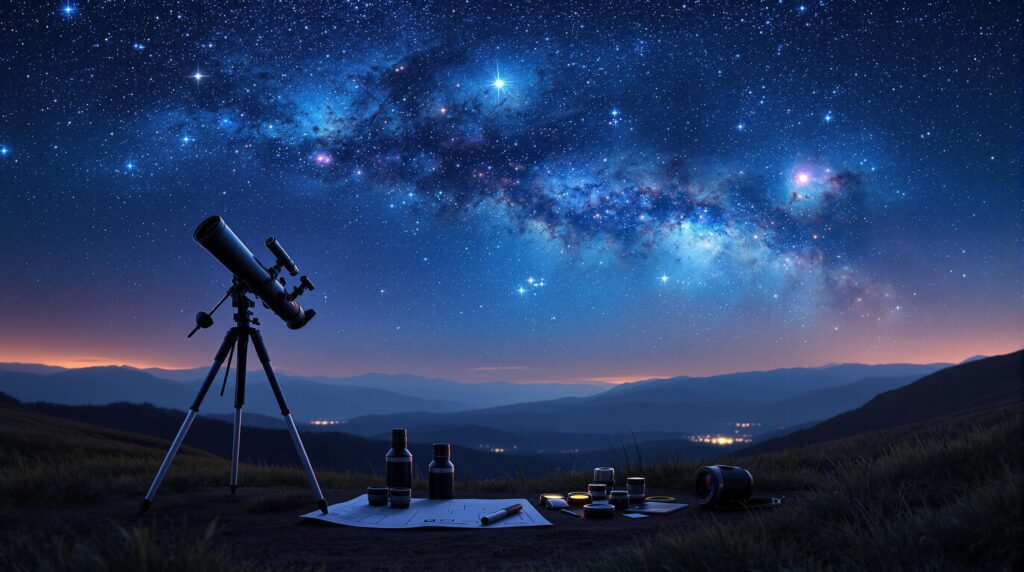
- Eyepieces: Start with wide-field eyepieces (25mm or 30mm) for the Moon and star clusters. Add medium magnification (15mm) for planets.
- Barlow Lens: Double or triple your eyepiece magnification without buying extras.
- Finder Scopes: Locate celestial objects easily with tools like the William Optics UniGuide 32mm.
- Filters: Use light pollution filters for deep-sky clarity or Moon filters to reduce glare.
- Dew Shields: Protect optics from condensation; heated options are available.
- Stability Gear: Anti-vibration pads or sturdy mounts like the Altair Tri-Pier keep your telescope steady.
- Astrophotography Tools: Field flatteners, motorized focusers, and filter wheels enhance imaging quality.
- Power Solutions: Keep your equipment running with portable power tanks.
Quick Comparison
| Accessory Type | Basic Option | Advanced Option |
|---|---|---|
| Eyepieces | Meade Wide-Angle (£39) | Tele Vue Ethos (100° FOV) |
| Light Pollution Filters | Optolong L-eXtreme | Orion Filter Wheel Package |
| Stability Gear | Celestron Anti-Vibration Pads | Altair Tri-Pier (£325) |
| Dew Control | Astrozap Dew Shield (£41.90) | Heated Dew Shield |
Whether you’re a beginner or advanced astronomer, the right accessories can transform your telescope into a versatile and powerful tool for exploring the night sky. Read on for detailed recommendations tailored to your goals.
How to correctly use telescope accessories
Basic Telescope Tools for Beginners
Start exploring the night sky with some must-have tools to improve your viewing experience.
Eyepieces to Get You Started
For wide-field views of the Moon, star clusters, and nebulae, a 25mm or 30mm eyepiece is a great starting point. To observe planets and smaller deep-sky objects, consider adding a 15mm eyepiece for medium magnification.
If you’re just starting out, the Meade wide-angle eyepiece set, priced at £39, is a solid choice. For those with more experience, Tele Vue Ethos eyepieces provide a stunning 100° field of view, though they come at a higher price.
To get even more out of your eyepieces, consider a simple optical upgrade.
Barlow Lens: Expand Your Options
A Barlow lens is an easy way to increase magnification without buying additional eyepieces. It doubles or even triples the power of your current eyepiece. For instance, pairing a 2x Barlow lens with your 25mm eyepiece transforms it into a 12.5mm eyepiece, giving you a closer look at planets and other detailed objects.
| Eyepiece Combination | Magnification Level |
|---|---|
| 25mm Eyepiece | Standard |
| 25mm + 2x Barlow | Double magnification |
| 15mm Eyepiece | Medium magnification |
| 15mm + 2x Barlow | High magnification |
Finder Scopes: Navigate the Sky
A finder scope helps you locate celestial objects with ease. The William Optics slide-base UniGuide 32mm guidescope (£99) is a good option, offering fully coated optics and a built-in prism for sharp, corrected images. For best results, align it during the daytime.
Preserve Your Night Vision
A red flashlight is essential for reading charts or adjusting your telescope without ruining your night vision. The Celestron FireCel+ 5200 (£39) is a handy option that combines a red light with other useful features.
Get comfortable with these basics before diving into more advanced telescope accessories.
High-Performance Viewing Equipment
Take your stargazing to the next level with tools designed to tackle common obstacles. From filters to dew shields and stability gear, here’s what you need to know.
Tackling Light Pollution
Urban areas can dim your view of the stars, but filters can make a big difference. The Optolong L-eXtreme filter helps cut through city light pollution, bringing out deep-sky details. For lunar and planetary views, the Meade Series 4000 Moon & Planetary Filter Set offers a budget-friendly way to enhance clarity.
Managing Moisture
Dew can ruin a session quickly, but there are ways to fight back. The Astrozap flexible dew shield (£41.90) keeps condensation off your telescope’s optics. For tougher conditions, opt for a dew shield with built-in heating to actively keep moisture at bay.
Boosting Stability
A steady setup is key for clear, sharp images. The Altair Tri-Pier (£325) is a solid choice for advanced setups, offering excellent stability. For a more portable option, Celestron Anti-Vibration Pads (£45-60) help minimize shakes. Here’s a quick comparison:
| Accessory | Best For | Price Range |
|---|---|---|
| Altair Tri-Pier | Advanced setups | £325 |
| Celestron Anti-Vibration Pads | Portable setups | £45-60 |
Field Flatteners for Astrophotography
Astrophotographers need field flatteners to capture sharp, distortion-free images. The William Optics RedCat 51 stands out with its built-in field-flattening feature, making it perfect for wide-field shots. Pair it with a DSLR or dedicated astronomy camera for crisp results across the frame.
Keeping the Power On
Long nights require reliable power. The Celestron PowerTank 17Ah offers enough juice for extended sessions and even includes red LED lighting to protect your night vision.
Protecting Your Gear
Invest in sturdy storage cases to keep your equipment safe during transport and ensure its longevity. Proper protection also helps maintain optical alignment, so your gear stays in top condition.
sbb-itb-9161f90
Astrophotography Equipment Guide
Explore the tools you need to photograph the night sky and capture stunning celestial images.
Precision Tracking Systems
For sharp, long-exposure shots, a precision guidescope is essential. Look for models with adjustable ranges, like a 25mm adjustment version, to ensure accurate star tracking. This level of precision is key to avoiding blurry results during extended captures.
Extension Tubes for Perfect Focus
Achieving the right focus distance is a must for clear, full-frame astrophotography. The Explore Scientific M48 Extension Tube Set (£44) is a great option, offering tube lengths between 5mm and 30mm. These tubes help prevent vignetting and ensure light reaches your sensor evenly, resulting in sharper images.
Advanced Filter Systems
Filters play a crucial role in enhancing your astrophotography by improving color and detail. Here’s a quick comparison:
| Filter System | Ideal For | Price |
|---|---|---|
| Orion Filter Wheel Package | Deep-sky imaging | £631.99 |
| LRGB Filter Set | Color imaging | Included |
| Narrowband Filters | Nebula detail | Optional |
The Orion Filter Wheel Package stands out with its smooth automation and reliable design, earning a 4.5/5 rating. It allows you to switch filters seamlessly, ensuring vibrant colors and intricate details in your deep-sky shots.
Focus Control Solutions
Temperature changes during long sessions can affect focus. The Pegasus FocusCube 2 (£250) solves this by automatically adjusting focus to maintain sharpness. Known for its precision and durability, it’s a go-to device for astrophotographers.
Integration Tips
Combine your tracking and focus systems with software like SkySafari. Ensure all components are securely mounted to reduce movement and keep your setup stable during imaging sessions.
Comfort and Setup Tools
Make your stargazing sessions more enjoyable with accessories designed to reduce fatigue and improve the overall experience. With the right tools, a tough night under the stars can turn into hours of comfortable exploration. These accessories work hand-in-hand with performance and imaging gear, ensuring everything runs smoothly from observation to astrophotography.
Comfortable Observing Gear
An adjustable, padded chair can make a big difference during long nights, offering flexible seating and reducing strain.
Reliable Power Solutions
Modern astronomy gear needs dependable power. A portable power supply with long battery life and multiple output options can keep your telescope, camera, and other tools running all night. Opt for outdoor-friendly models that deliver consistent performance.
Dew Control Tools
Moisture can interfere with your telescope’s performance. A dew shield, as mentioned earlier, helps protect against condensation. Some setups even include heating elements to keep dew at bay.
Navigation and Planning Essentials
Finding your way around the night sky requires accurate tools. A good sky atlas is a must-have for locating celestial objects. Pairing it with a mobile planetarium app gives you real-time star tracking and object identification, making planning more efficient.
Gear Protection
Taking care of your equipment is just as important as your comfort. A telescope cover made from silver-coated, breathable fabric can shield your gear from heat, moisture, dust, and debris during daytime storage.
Space-Saving Accessories
Some tools serve multiple purposes to save space. For instance, there are devices that work as hand warmers, emergency power banks, and red LED torches to preserve your night vision.
Conclusion
Choosing the right telescope accessories can elevate your stargazing experience, helping you move from casual observation to more detailed exploration.
The key is to match your tools to your experience level and what you want to achieve in astronomy.
For beginners, starting with wide-angle eyepieces and a reliable finder scope is a great way to build foundational skills. More experienced astronomers often turn to Barlow lenses and specialized filters for clearer, more detailed views of celestial objects.
Here’s a quick guide to accessories based on your observation goals:
| Observation Goal | Basic Accessories | Advanced Tools |
|---|---|---|
| Visual Astronomy | Eyepieces, Finder Scopes, Basic Filters | Barlow Lenses, Specialized Filters |
| Astrophotography | Power Supply | Motorized Filter Wheel, Guidescope |
Beyond optical tools, don’t overlook the importance of comfort and convenience. Reliable power solutions, dew control devices, and ergonomic accessories ensure you can focus on observing the sky without being distracted by your gear.
As your skills grow, consider adding accessories that solve specific challenges or open up new possibilities. A well-rounded kit will naturally expand alongside your expertise.
FAQs
What telescope accessories do I need?
Here’s a quick rundown of the must-have telescope accessories for any stargazer, whether you’re just starting out or already experienced:
Key Viewing Tools:
- A reliable finder scope to help locate celestial objects accurately.
- Both a wide-field and a high-magnification eyepiece for versatile observations.
- A Barlow lens to increase your magnification options.
Protection Against the Elements:
- A dew shield (with an optional heater) to keep condensation off your optics.
- Silica gel desiccators to manage moisture when your telescope is stored.
Improving Your Viewing Experience:
- A Moon filter to cut down on glare during lunar observations.
- A light pollution filter for clearer views in urban settings.
Advanced Gear:
- The Explore Scientific iEXOS-100 mount for accurate tracking of objects.
- Additional tools designed for astrophotography and capturing detailed images.
For more in-depth reviews and recommendations, check out earlier sections of this guide.
Related Blog Posts
- Best Affordable Telescope: Budget-friendly Models That Don’t Compromise On Quality
- Best Telescope Brands: Leading Names And Trusted Manufacturers In Astronomy
- Night Sky Photography: Essential Equipment Checklist
- Best Telescope For Beginners: The Ultimate Starter Guide For Novices And Entry-level Stargazers
