Top 8 Telescope Mounts for Astrophotography

Astrophotography demands precise tracking for long exposures, making the telescope mount a critical component. Here’s a summary of the top 8 mounts for different needs and budgets:
- Sky-Watcher EQ6-R Pro ($1,795): Reliable, high payload capacity (44 lbs), sub-arcsecond tracking, ideal for intermediate users.
- iOptron CEM70 ($3,999): Advanced dual encoder system, 70 lbs payload, professional-grade tracking accuracy (±0.35 arcseconds).
- ZWO AM5 ($2,199): Lightweight (11.9 lbs), strain wave gearing, portable with 30 lbs capacity.
- Sky-Watcher EQM35-Pro ($1,199): Affordable, beginner-friendly, 22 lbs capacity with decent tracking.
- Celestron Advanced VX ($999): Budget-friendly, 30 lbs capacity, good for mid-sized telescopes.
- Explore Scientific EXOS2-PMC8 ($1,595): Wireless control, 30 lbs capacity, modern features for mid-range setups.
- iOptron GEM28 ($1,698): Compact, center-balanced design, 28 lbs capacity, excellent for portable setups.
- Paramount MyT ($8,000): Precision-focused, <0.2 arcsecond tracking, 50 lbs capacity for professional imaging.
Quick Comparison Table
| Mount Model | Payload Capacity | Tracking Accuracy | Weight | Price |
|---|---|---|---|---|
| Sky-Watcher EQ6-R Pro | 44 lbs | ±0.5-0.7 arcseconds | 34.8 kg | $1,795 |
| iOptron CEM70 | 70 lbs | ±0.35 arcseconds | 28 lbs | $3,999 |
| ZWO AM5 | 30 lbs | 0.35 arcseconds RMS | 11.9 lbs | $2,199 |
| Sky-Watcher EQM35-Pro | 22 lbs | <1.2 arcseconds RMS | ~17 kg | $1,199 |
| Celestron Advanced VX | 30 lbs | 1-1.5 arcseconds RMS | ~20 kg | $999 |
| Explore Scientific EXOS2 | 30 lbs | ±5 arcseconds PE | 38 lbs | $1,595 |
| iOptron GEM28 | 28 lbs | ±0.35 arcseconds PE | 15.4 lbs | $1,698 |
| Paramount MyT | 50 lbs | <0.2 arcseconds PE | 28 lbs | $8,000 |
Whether you’re a beginner, intermediate, or advanced astrophotographer, this list covers options for every level. Read on for detailed reviews and recommendations.
The Best Astrophotography Mounts with Analysis (2023)
1. Sky-Watcher EQ6-R Pro
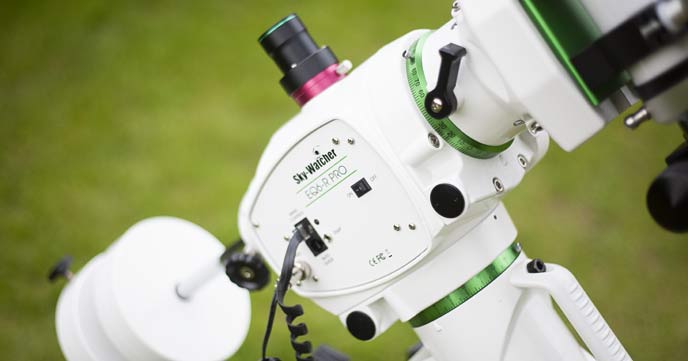 The Sky-Watcher EQ6-R Pro is a robust mount designed for dedicated astrophotographers, offering the stability needed for precise imaging.
Its belt-drive system ensures high accuracy, allowing unguided exposures of up to 180 seconds when paired with shorter focal length telescopes like the William Optics SpaceCat51 . With PHD2 guiding software, users often achieve guiding RMS errors between 0.3 and 0.8 arcseconds .
| Key Specifications | Details |
|---|---|
| Payload Capacity | 44lbs (20kg) |
| Mount Weight | 34.8kg |
| Periodic Error | 0.5-0.7 arcseconds |
| Noise Level | <30dB during slewing |
| Database | 42,000+ objects |
| Power Requirements | 6-8A recommended |
The EQ6-R Pro is designed with practical features for field use. It includes a built-in polar scope with an illuminated reticle and tool-free altitude adjustments . Its weather-resistant construction, paired with a sturdy steel tripod, ensures durability .
The mount supports long exposures exceeding 720 seconds and can handle larger telescopes, such as 11-inch SCTs, for planetary imaging without requiring guiding . It also offers ST-4 and USB 2.0 ports for flexible control options .
"The R-Pro version demonstrates a 40% reduction in backlash compared to the EQ6-Ri model, with periodic error showing a 22% improvement over non-R models" .
To maximize performance, users should activate PPEC error compensation . Regular maintenance of the DEC axis is essential for maintaining tracking accuracy, particularly for multi-hour exposures . The mount’s ASCOM compatibility adds advanced options, such as meridian flip delay settings , making it ideal for automated imaging workflows.
Priced at $1,795 MSRP, the EQ6-R Pro offers high-end features at a more accessible price compared to mounts like the $3,995 iOptron CEM70 . This combination of performance and cost makes it a strong contender before stepping up to premium models like the iOptron CEM70.
2. iOptron CEM70
 The iOptron CEM70, priced at $3,999, steps up from the EQ6-R Pro with its professional-level performance, advanced engineering, and precise tracking. It’s designed for serious astrophotographers who need reliability and accuracy.
| Key Specifications | Details |
|---|---|
| Payload Capacity | 70 lbs (31.75 kg) |
| Mount Weight & Power | 28 lbs (head only), 12V DC |
| Tracking Accuracy | ±0.35 arcseconds RMS |
| Maximum Slew Speed | 8°/second |
| Object Database | 212,000+ objects |
This mount’s dual encoder system ensures impressive tracking, keeping unguided tracking errors under 0.3 arcseconds thanks to real-time positional feedback. With a hefty 70-pound capacity, it comfortably supports setups up to 46 pounds when following the 50% payload buffer guideline.
"Testers report <0.4" RMS guiding even in 15mph winds due to low-torque motor design"
One of its key highlights is the built-in iPolar electronic polar scope, offering alignment accuracy within 2 arcminutes in just under 5 minutes. The compact Z-shaped design reduces vibrations and boosts stability, while its direct-drive frictionless motors are low-maintenance compared to belt-driven systems.
Astrophotographers will appreciate its field-ready features:
- An integrated cable management system to prevent tangling during rotations
- Built-in WiFi and ASCOM/Alpaca support for seamless integration with software like NINA and SGP
- The Go2Nova® 8407+ hand controller, loaded with over 212,000 objects
- Dual saddles, allowing for simultaneous imaging and guiding setups
The center-balanced design effectively tackles vibration issues, especially for telescopes with focal lengths over 1000mm, where traditional German Equatorial Mounts often fall short.
While the CEM70 shines with long focal lengths, the upcoming ZWO AM5 offers a more portable solution with strain-wave technology.
3. ZWO AM5 Strain Wave
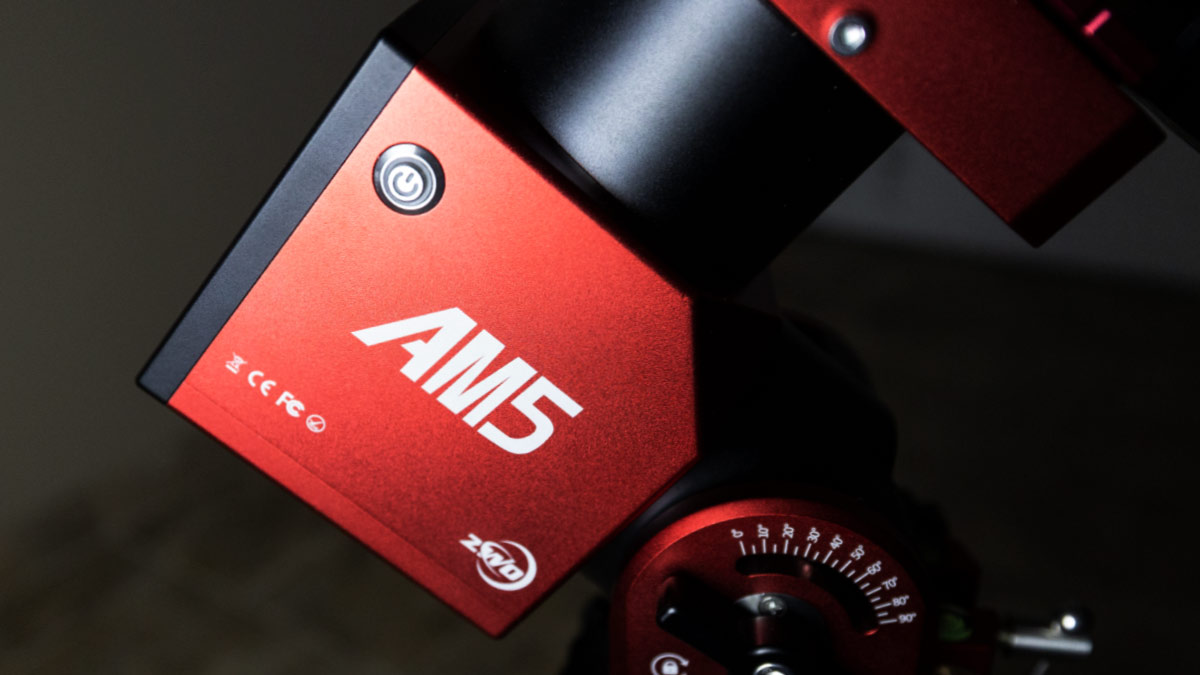 The ZWO AM5 Strain Wave mount, priced at $2,199, brings a new approach to astrophotography mounts by using aerospace-grade harmonic drive technology. This design offers high precision while keeping the mount lightweight and portable.
| Specification | Details |
|---|---|
| Payload Capacity | 30 lbs (13.6 kg) |
| Mount Weight | 11.9 lbs (5.4 kg) |
| Tracking Accuracy | 0.35 arcsec RMS |
| Periodic Error | ±7 arcsec peak-to-peak |
| Power Requirements | 12V DC |
The standout feature of the AM5 is its strain wave gearing system. Unlike traditional mounts, it doesn’t require periodic error correction, yet it delivers impressive tracking results. During testing, astrophotographers reported steady, guided imaging sessions .
One of its key advantages is the balance between weight and payload capacity. Weighing just 11.9 pounds, it’s less than half the weight of the iOptron CEM70 but still supports up to 30 pounds. This makes it a great option for astrophotographers who need portability without sacrificing stability.
"The strain wave technology allows for unguided exposures up to 180 seconds under stable conditions, rivaling the performance of premium mounts costing thousands more" .
The mount integrates seamlessly with ASIAIR for automated plate-solving polar alignment, reducing setup time by 70% compared to manual methods. Built-in WiFi provides full remote control, and the harmonic drive system ensures nearly silent operation – perfect for urban settings .
Its quiet operation is particularly helpful in city environments, where noise can be a concern . However, users should ensure payloads are balanced, especially when using larger telescopes, to achieve optimal performance.
For experienced users, the AM5 offers multiple slewing speeds and supports various guiding options . While the mount doesn’t include tripod legs by default , its compact design prioritizes portability without compromising stability.
This mount addresses two common challenges in astrophotography: dealing with urban light pollution and simplifying field setups. At $2,199, it provides advanced tracking capabilities in a travel-friendly package, making it a great choice for mobile imagers looking to upgrade from entry-level mounts.
If portability is your priority, the AM5 shines. However, for those seeking a more budget-conscious option, the next entry – the Sky-Watcher EQM35-Pro – might be worth considering.
4. Sky-Watcher EQM35-Pro
 If you’re looking for a solid astrophotography mount without breaking the bank, the Sky-Watcher EQM35-Pro delivers reliable performance for $1,199.
| Specification | Details |
|---|---|
| Payload Capacity | 22 lbs (10 kg) |
| Database Objects | 42,900+ |
| Slewing Speeds | 0.5x to 800x sidereal |
| Autoguider Port | Built-in ST-4 |
| Controller | SynScan GoTo |
| Price | $1,199 USD |
This mount features a stepper motor system for quiet operation, making it suitable for urban environments. Its slewing speed range of 0.5x to 800x sidereal ensures both precise tracking and fast object targeting. With SynScan control and a built-in ST-4 port, it integrates easily with popular guiding cameras.
Like the EQ6-R Pro, this model includes PEC (Periodic Error Correction) training, though it requires more frequent guiding for exposures longer than 180 seconds. Its compatibility with EQMOD software provides advanced computer control options .
"Users achieve <1.2" RMS guiding with 15lb loads despite urban turbulence "
The mount’s belt-drive system ensures dependable performance, continuing Sky-Watcher’s history of reliability . While around 12% of users report occasional hand controller lag , this issue is minor compared to the overall value and functionality of the EQM35-Pro.
Although it doesn’t feature the harmonic drive technology found in the AM5, this mount offers dependable precision at a reasonable price. While it lacks automated alignment, its polar scope and EQMOD compatibility provide enough accuracy for those starting out in astrophotography.
This mount strikes a great balance between cost and capability, making it a strong choice for mid-range setups.
5. Celestron Advanced VX

If you’re looking for a mount with a higher payload capacity than the EQM35-Pro but still want to stick to a $999 budget, the Celestron Advanced VX is a solid option for astrophotography enthusiasts.
| Specification | Details |
|---|---|
| Payload Capacity | 30 lbs (13.6 kg) |
| Slewing Speed | 4°/second |
| Tracking Rates | Sidereal, Solar, Lunar |
| Controller | NexStar+ |
| Price | $999 USD |
With its 30-pound payload capacity, this mount works well with mid-sized refractors and smaller Newtonian telescopes. It aligns with the recommended 50% payload buffer when using setups around 24 pounds.
While its servo motor system requires more upkeep compared to belt-driven options , it still provides dependable performance for capturing deep-sky objects. Autoguiding delivers 1-1.5 arcsecond RMS errors without PEC training , which is sufficient for most astrophotography projects.
"Users achieve optimal guiding results when using exposure times greater than 2 seconds, particularly important for maintaining stable tracking during longer imaging sessions"
The Advanced VX is compatible with a wide range of software, making it a good fit for modern imaging workflows. Its All-Star Polar Alignment system simplifies setup, though some users prefer adding PoleMaster cameras for even greater precision .
For unguided exposures, the mount maintains reliable tracking accuracy for up to 3 minutes, making it versatile for both planetary and deep-sky imaging. Features like the NexStar+ controller and optional StarSense AutoAlign make targeting faster and easier, appealing to both casual users and dedicated astrophotographers.
While the Advanced VX offers straightforward polar alignment, the Explore Scientific EXOS2-PMC8 takes it a step further with built-in GPS functionality.
sbb-itb-9161f90
6. Explore Scientific EXOS2-PMC8
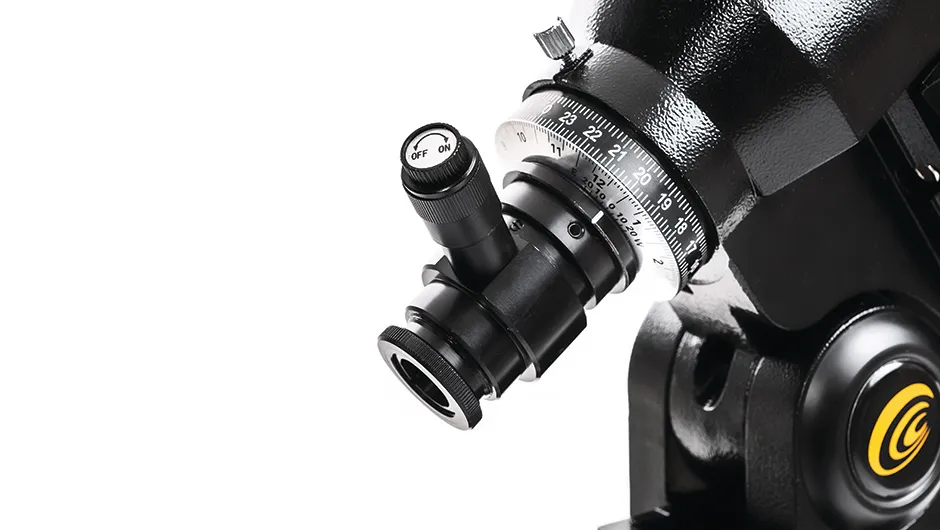 The EXOS2-PMC8 builds on Celestron’s simple alignment system by incorporating the advanced PMC-Eight control system. This mount offers wireless control via smartphones while maintaining the precision needed for astrophotography, all for $1,595.
| Specification | Details |
|---|---|
| Periodic Error | ±5 arc seconds peak-to-peak |
| Slewing Speed | 4.2°/second |
| Mount Weight | 38 lbs (17.2 kg) |
| Control System | PMC-Eight |
Unlike the AM5’s strain-wave technology, the EXOS2-PMC8 updates the traditional equatorial mount design. It’s lighter than the EQ6-R Pro and offers a 30lb payload capacity, similar to the Celestron VX. However, it stands out with its modern wireless control and a stepper motor system that delivers precise 0.14° resolution tracking .
This makes it a solid choice for mid-sized refractors and compact imaging setups.
The ExploreStars app allows control through a smartphone, tablet, or computer . While this system offers flexibility for observatory setups, it does require a bit more initial configuration compared to standard controllers.
"Users achieve optimal results using OAG instead of guide scope beyond 400mm focal length, with PEC training recommended during meridian flips for enhanced stability" .
The mount supports autoguiding via its ST-4 port, achieving sub-1" RMS accuracy when properly set up . For polar alignment, the traditional polar scope method provides 3-5 arcmin accuracy when paired with SharpCap .
When it comes to imaging, the EXOS2-PMC8 handles 5-minute guided exposures with 80mm refractors . The PMC-Eight system also includes plate solving and PEC training features , making it a versatile option for both visual observation and astrophotography.
7. iOptron GEM28 Center-Balanced
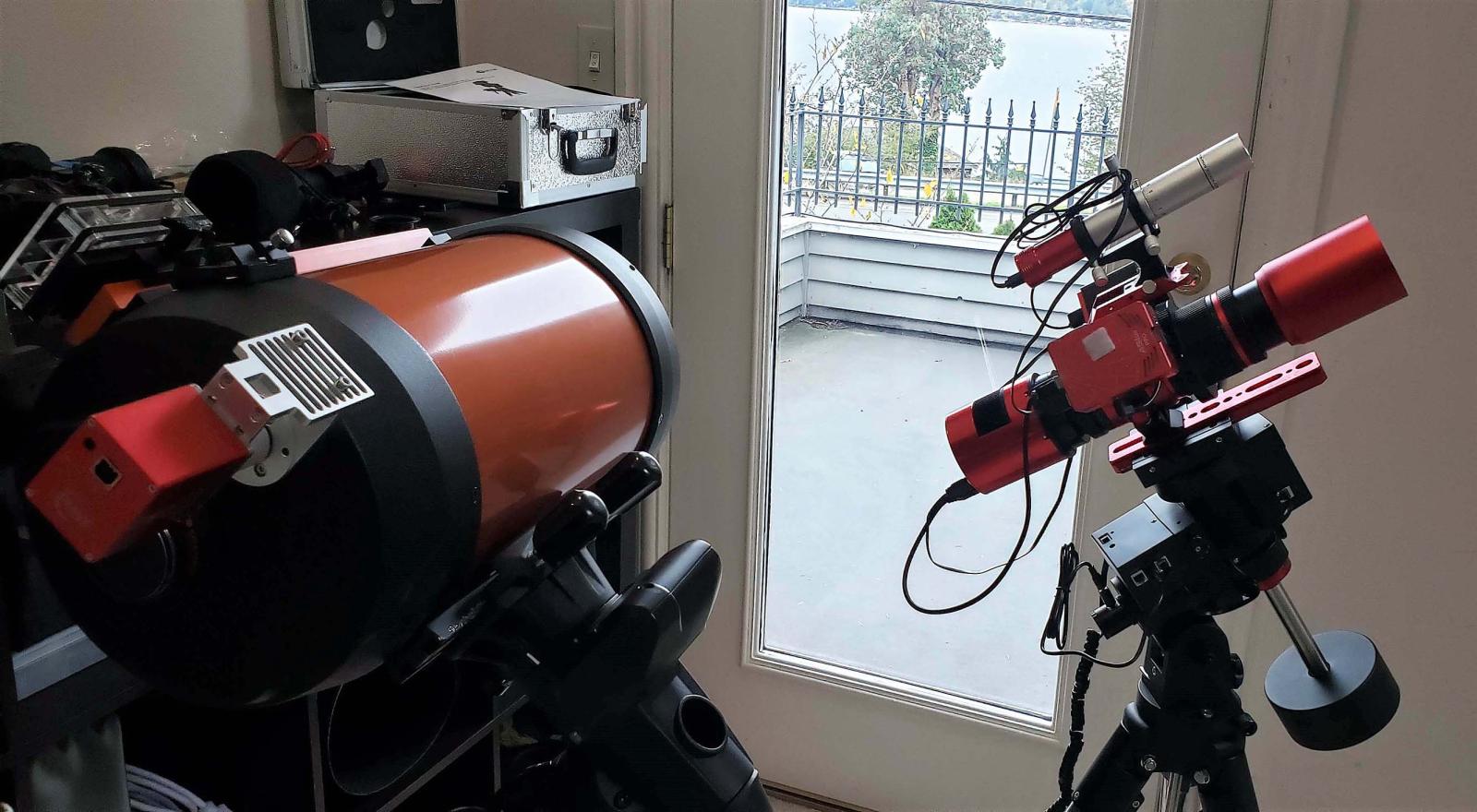 For those seeking a lightweight yet powerful mount, the GEM28 offers professional-grade tracking in a compact 15.4-pound frame. At $1,698, it balances portability with exceptional performance, making it a great option for astrophotographers who prioritize stability and tracking accuracy.
| Specification | Details |
|---|---|
| Payload Capacity | 28 lbs (12.7 kg) |
| Mount Weight | 15.4 lbs (7 kg) |
| Tracking Accuracy | ±0.35 arc-second PE |
| Maximum Slewing | 7.5°/second |
| Control System | Hand controller |
What sets the GEM28 apart is its advanced encoder system, which achieves tracking accuracy of ≤0.4 arcsecond RMS . This makes it ideal for unguided imaging, especially with shorter focal lengths, and provides a level of precision that surpasses many traditional mounts.
The mount’s patented center-balanced design eliminates the need for counterweights in multi-telescope setups, making it perfect for dual imaging rigs. This design directly enhances stability, especially when managing multiple optical systems.
"Field tests demonstrate reliable performance across temperatures from -20°C to +40°C, with sealed bearings providing consistent operation even in challenging environments" .
The GEM28 also includes built-in WiFi for remote operation and integrates smoothly with popular astrophotography software like N.I.N.A. It supports plate-solving tools and offers autoguiding through its ST-4 port .
In practical use, it works exceptionally well with refractors up to 100mm aperture and 8-inch RC telescopes . Harmonic drive stepper motors ensure guiding errors stay within ≤0.8" RMS when using PHD2 .
While the GEM28 shines in mid-range setups, the following Paramount MyT mount takes performance to the next level for observatory-grade needs.
8. Software Bisque Paramount MyT

The Paramount MyT stands out as a mount designed for professional imagers who demand precision and performance in a portable package. Priced at $8,000, this mount focuses on delivering top-tier results without compromise, housed in a relatively compact design.
| Specification | Details |
|---|---|
| Payload Capacity | 50 lbs (22.7 kg) |
| Mount Weight | 28 lbs (12.7 kg) |
| Tracking Accuracy | <0.2 arc-second PE |
| Maximum Slewing | 5°/second |
| Guiding Resolution | 0.05 arc-second |
The MyT offers tracking accuracy of less than 0.2 arcseconds, making it perfect for narrowband imaging with larger telescopes. Its rigid aluminum housing, combined with stainless steel components, helps reduce vibration, ensuring stability during long-exposure imaging. This design is a step above traditional German equatorial mounts, offering a more stable platform.
"The TPoint modeling system achieves <15 arcsecond alignment accuracy without requiring a polar scope, revolutionizing the setup process for professional-grade imaging."
The mount integrates seamlessly with TheSkyX Professional Edition software, which uses advanced modeling algorithms to correct for flexure and atmospheric refraction. This integration enhances the mount’s performance and simplifies the imaging process.
Additional features include internal cable routing to avoid snags during extended exposures and direct-drive servo motors that eliminate backlash, maintaining precise positioning over hours of use. However, the friction drive system demands careful balance adjustments, making this mount more suited for experienced users rather than beginners.
Connectivity options include both WiFi and wired control, offering flexibility in operation. Automated meridian flips further streamline imaging workflows. For those seeking observatory-level results, the Paramount MyT sets a high bar, delivering precision and performance far beyond what mounts like the iOptron GEM28 can achieve.
Mount Specifications Comparison
Here’s a breakdown of how some of the top telescope mounts stack up in terms of specs that directly impact astrophotography performance:
| Mount Model | Payload Capacity | Tracking Accuracy | Weight | Price Range (USD) |
|---|---|---|---|---|
| Software Bisque Paramount MyT | 50 lbs (22.7 kg) | <0.2 arc-sec | 28 lbs (12.7 kg) | $8,000 |
| iOptron CEM70 | 70 lbs (31.8 kg) | ±0.25 arc-sec | 27.6 lbs (12.5 kg) | $3,498-3,698 |
| Sky-Watcher EQ6-R Pro | 44 lbs (20 kg) | ±12 arc-sec | 37.5 lbs (17 kg) | $1,649-1,799 |
| ZWO AM5 | 33 lbs (15 kg) | ±10 arc-sec | 12.3 lbs (5.6 kg) | $1,899-1,999 |
Here are some key takeaways from the comparison:
- Tracking Accuracy: The Paramount MyT and iOptron CEM70 stand out with sub-arcsecond precision, making them well-suited for professional astrophotography setups. In contrast, models like the EQ6-R Pro and AM5 offer less precision but remain solid choices for hobbyists .
- Payload Capacity: If you’re using heavier imaging equipment, the iOptron CEM70’s 70 lbs capacity is a clear winner. For lighter setups or portability, the ZWO AM5 is a strong contender .
- Portability vs. Stability: The ZWO AM5 is the lightest option, perfect for travel. On the other hand, the EQ6-R Pro’s heavier build makes it better for fixed installations.
- Connectivity: Advanced features like WiFi and USB control are typically included in mounts priced above $3,000, offering added convenience for remote operation.
These details emphasize how choosing the right mount can significantly affect your astrophotography results, as noted in our detailed reviews.
Final Recommendations
After analyzing technical specs and performance metrics, here are tailored mount suggestions based on user needs:
For Beginners (Budget: Under $1,500): The Sky-Watcher EQM35-Pro is a great starting point. It’s easy to use, especially with its simple polar alignment process, making it ideal for first-time astrophotographers.
For Intermediate Users (Budget: $1,500–$2,500): The Sky-Watcher EQ6-R Pro is a standout option at $1,799. It offers:
- Reliable performance with various telescope setups
- Plenty of room for upgrades
- Excellent stability for longer imaging sessions
For Advanced Astrophotographers (Budget: $3,000+): Both the iOptron CEM70 and Paramount MyT deliver professional-grade results. The CEM70 is built for observatory-level setups with its durable and precise design, while the Paramount MyT provides unmatched precision for those willing to invest more.
| User Level | Recommended Mount | Key Features |
|---|---|---|
| Beginner | EQM35-Pro | Easy to operate |
| Intermediate | EQ6-R Pro | Versatile and reliable |
| Advanced | CEM70/Paramount MyT | High-end precision |
Key Tips for Long-term Use
When choosing a mount, always plan for the future. A good rule of thumb is to allow for a 30% payload margin above your current equipment weight. This ensures your setup can handle future upgrades comfortably.
For portable setups, consider the ZWO AM5 with its strain-wave design, which balances portability and performance. On the other hand, if you’re setting up a permanent installation, prioritize stability over portability.
Your mount is one of the most critical components for astrophotography. While premium features can be tempting, focus on essentials like payload capacity, tracking accuracy, and dependability to get the best results for your needs.
FAQs
What is the best mount for astrophotography?
Based on our in-depth reviews, the Sky-Watcher EQ6-R Pro stands out as a top choice, offering a strong mix of performance and value. It performs particularly well with 20-30 lb loads, making it a reliable option for most setups.
For those seeking a high-end option, the iOptron CEM70 caters to advanced users with premium features. These recommendations are supported by the details provided in the Mount Specifications Comparison section.
What type of mount is best for astrophotography?
Equatorial (EQ) mounts are the go-to choice for serious astrophotography, as highlighted in our earlier analysis. Their main advantages include:
- Precise tracking in right ascension (RA) and declination through alignment with Earth’s axis.
- Integrated polar scopes that allow for alignments under 5 arcminutes.
While newer options like the ZWO AM5 with its strain wave system offer lightweight designs, traditional German Equatorial Mounts (GEMs) remain the most dependable for consistent performance.
| Mount Type | Key Advantage |
|---|---|
| Traditional GEM | Stable tracking |
| Strain Wave | Lightweight design |
| Fork with Wedge | Versatility |
To get the best results, pick a mount that can handle at least 1.5 times the weight of your equipment and ensure it includes built-in autoguider ports, as discussed in the Introduction.
