Best Telescope To See Planets: Top Choices For Exceptional Planetary Observation
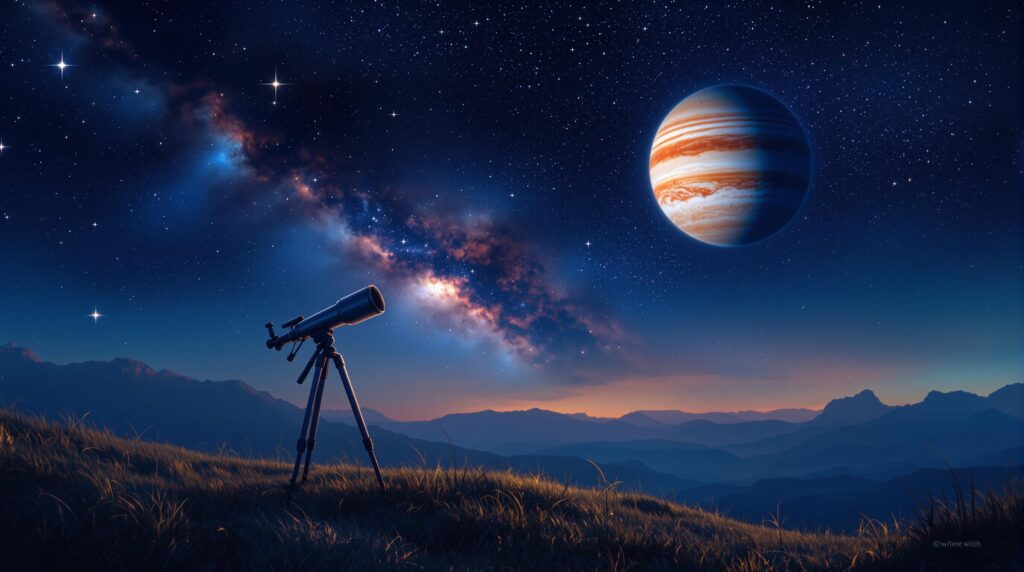
- Best for Beginners: Orion SkyQuest XT8 Dobsonian ($439–$469) – Large aperture, easy setup, and excellent for planetary details.
- Mid-Range Option: Celestron NexStar 8SE ($1,599) – 8-inch aperture, computerized mount, and great for detailed views of Jupiter and Saturn.
- Premium Pick: Meade LX200-ACF 10" ($3,000+) – Advanced Coma-Free optics, 10-inch aperture, and precise tracking for serious planetary enthusiasts.
- Compact Choice: Sky-Watcher Skymax 180 PRO ($1,500) – Maksutov-Cassegrain design with high contrast and portability.
- Budget-Friendly Refractor: Explore Scientific AR102 ($499) – Achromatic refractor with sharp planetary views at an affordable price.
Quick Comparison Table
| Telescope | Aperture | Focal Length | Price | Best For | Mount Type |
|---|---|---|---|---|---|
| Orion SkyQuest XT8 | 8.1" | 1,220mm | $439–$469 | Beginners, simple setup | Dobsonian |
| Celestron NexStar 8SE | 8" | 2,032mm | $1,599 | Intermediate users | Alt-Azimuth (GoTo) |
| Meade LX200-ACF 10" | 10" | 2,800mm | $3,000+ | Advanced planetary viewing | Dual Fork |
| Sky-Watcher Skymax 180 PRO | 7.1" | 2,700mm | $1,500 | Compact, high contrast | EQ Mount |
| Explore Scientific AR102 | 4" | 663mm | $499 | Budget-friendly refractor | Manual Alt-Az |
Key Features to Look For:
- Aperture Size: Larger apertures (5–10 inches) gather more light for clearer details.
- Focal Length: Longer focal lengths (1,200mm or more) are ideal for high magnification.
- Optical Design: Refractors for sharp images, reflectors for affordability, and Maksutov-Cassegrains for portability.
- Mount Stability: Choose a stable mount to minimize vibrations – Dobsonian for ease, or computerized GoTo for tracking.
- Accessories: Invest in eyepieces, Barlow lenses, and filters to enhance your viewing experience.
Start with a telescope that suits your budget and skill level. Even an entry-level model can provide stunning views of Jupiter’s moons, Saturn’s rings, and more!
The Best Telescope to Buy & How to use it – Orion SkyQuest XT8 Dobsonian Review
Key Features for Planet Viewing
When choosing a telescope for observing planets, a few technical details can make all the difference in the quality of your views.
Aperture and Focal Length
To get clear, detailed images of planets, aim for a telescope with at least a 5-inch (125 mm) aperture. This ensures enough light is gathered for crisp visuals. Pair this with a focal length of 1,250 mm or more to achieve the high magnification needed for planetary details.
These two factors work together to heavily influence the telescope’s overall performance.
Optical Design
Refractor telescopes are often preferred for planetary viewing because they have unobstructed optics, which deliver sharper images. Reflectors, on the other hand, can also work well if their central obstruction is kept under 35% – this helps preserve image contrast.
Mounting Stability
A stable mount is just as important as good optics when viewing planets at high magnification. Whether you go for an Alt-Azimuth or an Equatorial mount, make sure it minimizes vibrations and allows for smooth tracking of celestial objects.
Optical Efficiency
For example, an F8 Newtonian reflector with an 18% central obstruction can achieve an effective efficiency ratio of 93%. This puts it on par with premium APO refractors that boast Strehl ratios exceeding 95%.
Maintenance and Cooling
Different telescope types require varying levels of maintenance. Maksutov telescopes need more time to cool down before they’re ready to use, while reflectors require regular collimation to keep their mirrors aligned. Refractors, by contrast, are low-maintenance and usually ready to go with minimal effort.
1. Celestron NexStar 8SE
The Celestron NexStar 8SE is a standout telescope with an 8-inch aperture, offering detailed views of planets and a user-friendly design. Its combination of precision optics and practical features makes it a solid choice for planetary observation.
Optical Performance
With a focal length of 2,032 mm and StarBright XLT coatings, the 8-inch aperture collects 78% more light compared to a 6-inch scope. This allows you to see Jupiter’s cloud bands, the Great Red Spot, and Saturn’s Cassini Division in impressive detail.
Mount and Tracking
The computerized Alt-Azimuth mount ensures smooth tracking, though it doesn’t match the stability of higher-end models like the Evolution 8. It works well for both visual observations and basic planetary imaging.
| Feature | Specification | Benefit |
|---|---|---|
| Aperture | 8 inches | Excellent light collection |
| Focal Length | 2,032 mm | Clear, high-magnification views |
| Optical Design | Schmidt-Cassegrain | Compact and portable design |
| Mount Type | Single-fork Alt-Az | Easy to set up and use |
Price and Versatility
Priced at $1,599.00, the NexStar 8SE delivers strong optical performance and a reliable mount. According to Space.com:
"While it’s an expensive investment, it’s one of the best telescopes you can buy and will last for decades."
Recommended Accessories
To get the most out of the NexStar 8SE, consider adding these accessories:
- Dew shield: Helps prevent condensation.
- Portable power supply: Ensures uninterrupted use.
- Planetary eyepieces: Enhances detailed views.
- NexImage camera: Great for capturing planetary images.
As noted by the High Point Scientific team:
"Featuring a large 8" of aperture, this premium telescope delivers highly detailed views on our solar system neighbors."
The NexStar 8SE strikes a balance between quality optics, ease of use, and upgrade options, making it a great choice for dedicated planetary enthusiasts.
2. Sky-Watcher Skymax 180 PRO Maksutov-Cassegrain
The Sky-Watcher Skymax 180 PRO is a top-tier Maksutov-Cassegrain telescope designed to deliver clear, high-contrast views, making it excellent for planetary observation.
Optical Performance
Equipped with a 180mm (7.1-inch) aperture and a 2,700mm focal length, this telescope achieves an f/15 ratio, ideal for capturing planetary details. Its optical system incorporates advanced materials and coatings:
| Feature | Specification | Advantage |
|---|---|---|
| Mirror Construction | Borosilicate with RAQ™ coatings | 94% reflectivity |
| Corrector Plate | MHTC™ coatings | Reduces chromatic aberration |
| Secondary Obstruction | 23% diameter, 5% area | Maintains high contrast |
| Maximum Magnification | 354x | Perfect for detailed views |
Image Quality
The design minimizes common distortions, ensuring sharp and precise views. According to Sky-Watcher USA:
"If you’re seeking crisp, contrasty views with high levels of detail, look no further than the Skymax series, Sky-Watcher’s premiere line of Maksutov-Cassegrains."
Its long focal length provides significantly more detail – 5 to 7 times – compared to Newtonian or refractor telescopes. This is especially noticeable when observing planetary features, with stars appearing as sharp points almost to the edge of the field of view.
Practical Considerations
Priced at $1,500.00, the Skymax 180 PRO includes:
- A 2-inch 28mm eyepiece
- 9×50 finderscope
- 2-inch diagonal
The optical tube weighs 7.8kg (around 17 lbs), making it portable. However, it requires a longer cool-down period and may show slight image shifts during focusing. Despite these minor considerations, its performance remains outstanding.
Viewing Performance
Experts praise this telescope for its versatility:
"The Sky-Watcher SkyMax-180 PRO outperforms its reputation as just being a planetary telescope. It’s a ‘planet killer’ for sure, but its adaptability when viewing bright deep-sky objects astounds."
Its sharp optics and high contrast excel at revealing planetary features on Jupiter, Saturn, and Mars. With a Dawes Limit of 0.64 and a Rayleigh Limit of 0.78, the Skymax 180 PRO ensures excellent resolution for detailed observations.
sbb-itb-9161f90
3. Orion SkyQuest XT8 Classic Dobsonian
The Orion SkyQuest XT8 Classic Dobsonian is a well-regarded telescope that balances strong optical performance with an easy-to-use design. Priced between $439 and $469, it offers a solid option for those seeking quality without breaking the bank.
Optical Performance
This telescope is equipped with an 8.1-inch (205 mm) aperture and a 1,220 mm focal length (f/5.9), making it ideal for capturing detailed views of planets.
Its parabolic primary mirror gathers about 78% more light than a 6-inch telescope, delivering brighter and more detailed images.
| Feature | Specification | Purpose |
|---|---|---|
| Aperture | 8.1 inches (205 mm) | Better light collection |
| Focal Length | 1,220 mm | Great for planetary views |
| Mount Type | Dobsonian | Stable and easy to use |
| Focuser | 2" Crayford | Compatible with 1.25" and 2" eyepieces |
| Total Weight | 41 lbs (20.7 lbs mount + 20.3 lbs OTA) | Portable yet sturdy |
Planetary Viewing Capabilities
The XT8’s optics allow users to see:
- Jupiter’s cloud bands in detail
- Galilean moons as small, colored disks
- Saturn’s moons, cloud bands, and the Cassini Division in its rings
- Surface features on Mars during favorable oppositions
Build Quality and Usability
The 2" Crayford focuser ensures smooth and accurate focusing, which is essential for clear planetary observations. TelescopicWatch gave the XT8 a perfect 5/5 for Moon and planetary viewing, along with an overall rating of 4.5/5. These ratings highlight its reliable performance and user-friendly design.
"However, no matter where I’m, the Moon and planets are fabulous."
– Zane Landers
Practical Considerations
The base package includes a 25mm Plossl eyepiece, offering 48x magnification. While this is a good starting point, dedicated planetary observers might want to purchase additional eyepieces to explore a wider range of magnifications.
The telescope’s 48-inch (1.2 m) tube length may require some storage space, but its Dobsonian mount ensures smooth tracking and easy aiming.
With its large aperture, high-quality optics, and straightforward operation, the XT8 is a strong choice for both beginners and seasoned stargazers.
4. Meade LX200-ACF 10" Advanced Coma-Free
The Meade LX200-ACF 10" telescope is designed for those serious about planetary observation. Its Advanced Coma-Free (ACF) optical system, inspired by the Hubble Space Telescope’s Ritchey-Chrétien design, eliminates common distortions for crisp, clear planetary views.
Optical Performance
This telescope’s optical system is built for precision and detail:
| Feature | Specification | What It Means |
|---|---|---|
| Aperture | 10 inches | Captures more light for better clarity |
| Focal Length | 2,800 mm | Great for zooming in on planetary details |
| Focal Ratio | f/10 | Perfect for high-magnification views |
| Maximum Magnification | 712x | Ideal for detailed planetary imaging |
| Field Correction | Advanced Coma-Free | Sharp images from edge to edge |
With Ultra-High Transmission Coatings (UHTC), light transmission is increased by 15%, resulting in brighter and more contrast-rich images.
Advanced Tracking Features
The LX200-ACF isn’t just about optics – it’s packed with features to ensure accurate tracking:
- Sony GPS receiver for automatic location and time setup
- AutoStar II controller with a database of 145,000 celestial objects
- Smart Drive technology for permanent periodic error correction
- Dual fork arm mount with high-precision DC servo motors
- Slew speeds ranging from 1 to 8 degrees per second
These features make it a reliable choice for consistent and precise observations.
Real-World Performance
Astronomy enthusiasts have praised its reliability and image quality:
"The LX200 ACF telescope has been a dependable workhorse for my astronomy needs… delivers high-quality images and precise tracking, meeting my expectations. The 10-inch primary mirror provides a great balance of portability and light-gathering capability".
"The LX200 ACF telescope’s images blew me away with clarity and sharpness… Aplanatic design of the optics impressed me the most. Permanent correction for spherical aberration results in robust and stable images, even at high magnifications".
Practical Considerations
The mount can run for up to 20 hours on eight C-cell batteries. For astrophotographers, the optional Meade X-Wedge converts the altazimuth mount into an equatorial mount, making it suitable for long-exposure photography.
5. Explore Scientific AR102 Air-Spaced Doublet Refractor
The Explore Scientific AR102 is a crown-and-flint achromatic refractor designed to deliver detailed planetary views at a much lower price compared to similar apochromatic models.
Optical Specifications
Here’s a quick breakdown of the AR102’s key specs:
| Feature | Specification | Why It Matters for Planet Viewing |
|---|---|---|
| Aperture | 102mm (4") | Gathers enough light for sharp, detailed views |
| Focal Length | 663mm | Offers solid magnification potential |
| Focal Ratio | f/6.5 | Works well for both planetary and deep-sky objects |
| Resolution | 1.14 arcsec | Reveals fine details on planets |
| Weight | 11.5 lbs | Easy to transport and set up |
Optical Design Features
The AR102 is packed with features that improve the quality of planetary observations:
- Fully multi-coated optics: Reduces light scatter to boost contrast.
- Collimatable lens cell: Ensures precise alignment for sharper images.
- Internal baffles: Cuts down on stray light, improving overall contrast.
- 99% reflective diagonal mirror: Maximizes light transmission for brighter views.
These elements combine to deliver clearer, more detailed planetary images.
Performance in Action
On the field, these specs translate into solid performance. Geoff Chester, who has been using the AR102 since 2016, shared this insight:
"Yes, it is an achromat, so there is some color around the brightest objects, but the lens is very sharp and gives great views of the Moon, planets, and double stars from my front yard".
Practical Features
While minor chromatic aberration is present, it’s well-controlled. Using a duo OIII-H-Alpha filter can help minimize it further.
Built with a durable all-metal body, the AR102 is a reliable choice for public star parties and educational events. The 2-inch dual-speed focuser ensures smooth and precise focusing, while the included 8×50 finder scope makes locating targets easier.
Image Quality Insights
Paul T. reported excellent results during star tests, noting sharp images and well-managed chromatic aberration. These qualities make the AR102 a strong performer for observing Jupiter, Saturn, and the Moon in detail.
Required Accessories for Planet Viewing
Boost your planet-watching experience with the right tools. After selecting a telescope, these accessories can take your planetary observation to the next level.
Eyepieces to Consider
Different eyepieces offer varying levels of magnification and detail. Here’s a quick guide:
| Eyepiece Type | Focal Length | Best For |
|---|---|---|
| Low Power | 20–40 mm | Locating planets and getting a wider field of view |
| Medium Power | 10–15 mm | General observation of planetary details |
| High Power | 2–8 mm | Zooming in on fine planetary features |
Start with a low-power eyepiece to locate and center your target. Gradually switch to higher magnifications until the image starts losing clarity.
Barlow Lenses
A Barlow lens is a simple way to boost the magnification of your existing eyepieces:
| Barlow Model | Price | Ideal For |
|---|---|---|
| GSO 2X ED | Under $100 | Affordable and versatile viewing |
| TeleVue 2x | $140 | Top-notch optical quality |
| Celestron Luminos 2.5x | $150 | For higher magnification needs |
A 2x Barlow is a great all-around choice. Keep your telescope’s focal ratio in mind:
- f/5 or faster telescopes work well with 2x–3x Barlows.
- f/10 or slower telescopes typically only need a 2x Barlow.
Filters for Better Viewing
Filters can make specific planetary details stand out:
| Planet | Recommended Filter | What It Does |
|---|---|---|
| Mars | IDAS BE410 | Highlights atmospheric water vapor clouds |
| Venus | IDAS VW-1 | Enhances visibility of lower atmosphere cloud structures |
| Jupiter/Saturn | IDAS BPF | Improves methane band contrast |
Maintenance Essentials
Keep your equipment in top shape with these tools:
- Lens cleaning solution: Designed for delicate optical surfaces
- Microfiber cloths: Soft and safe for cleaning lenses
- Dust blower: Removes particles before wiping to prevent scratches
These tools ensure your gear stays clean and ready for use.
Tips for Clearer Views
Remember, doubling your magnification reduces brightness by a factor of four. This means clear skies and stable atmospheric conditions become even more important.
Investing in quality accessories will help you get the most out of your planetary observations.
Conclusion
This telescope review highlights options suitable for all skill levels and budgets, ranging from beginner-friendly models to high-end systems. Whether you’re just starting out or looking for advanced features, there’s something here for everyone.
For those new to stargazing, models like the Celestron StarSense Explorer series make it easy to begin exploring planets.
Mid-range telescopes provide better optics and additional features, while top-tier options such as the Celestron NexStar 8SE deliver incredible planetary detail.
Here’s a quick breakdown of budget categories:
- Entry-level ($200–500): Basic yet capable for planetary viewing.
- Mid-range ($500–1,500): Better optics and more advanced features.
- Premium ($1,500+): Superior optics and cutting-edge capabilities.
Many of the recommended telescopes feature Cassegrain designs, which strike a great balance between image quality and portability. While city lights don’t significantly hinder planetary observation, stable atmospheric conditions are key to getting the best views.
