DIY Astronomy: What's Inside Your Telescope Kit?

Diving into DIY astronomy is like opening a treasure chest; you never know what gems you'll find inside your telescope kit. As you set sail on this journey, you'll discover the critical components that make up the heart of your telescope—each piece meticulously designed to bring the stars within reach.
From mirrors that capture the cosmos to mounts that steady your gaze, understanding what's in your kit is the first step toward mastering the night sky. But the real question is, how do these parts come together to open up a universe of discovery? Let's explore the intricate dance of assembly and alignment that awaits you.
Key Takeaways
- DIY telescope kits include primary and secondary mirrors, eyepieces, focusers, and finderscopes for capturing and magnifying celestial light.
- Assembly requires fitting optical components accurately and applying baffles and flocking for optimal performance.
- Mounting systems, ranging from simple altazimuth to computerized ones, ensure stability and precise tracking of celestial objects.
- Enhancements like various filters and maintenance tools are essential for clear observations and telescope longevity.
DIY Telescope Kits Overview
DIY telescope kits offer everything you need to commence on the thrilling journey of building your own telescope, providing a hands-on experience in astronomy. These kits come packed with the essential components necessary for the construction of a functional telescope. You'll find primary and secondary mirrors, whose interplay is critical for capturing and focusing celestial light. The tube assembly—a skeleton of your telescope—serves as the housing for these mirrors and guarantees their precise alignment.
The kit also includes a focuser, which allows you to sharpen the image produced by the mirrors' reflection, making celestial objects appear clearer and more detailed. With these components, the kit emphasizes sturdiness in design and construction. This is important for maintaining optical alignment and achieving the best performance under the stars.
As you immerse yourself into assembly, you'll appreciate the opportunity to customize your telescope. Whether you're tweaking the focal length for wider sky coverage or optimizing the tube for better handling, DIY kits offer a foundation for both novice and experienced builders to explore and enhance their astronomical observations. This hands-on approach not only demystifies the optical science behind the telescope but also imbues a sense of accomplishment in creating a personalized window to the cosmos.
Optical Elements and Functions
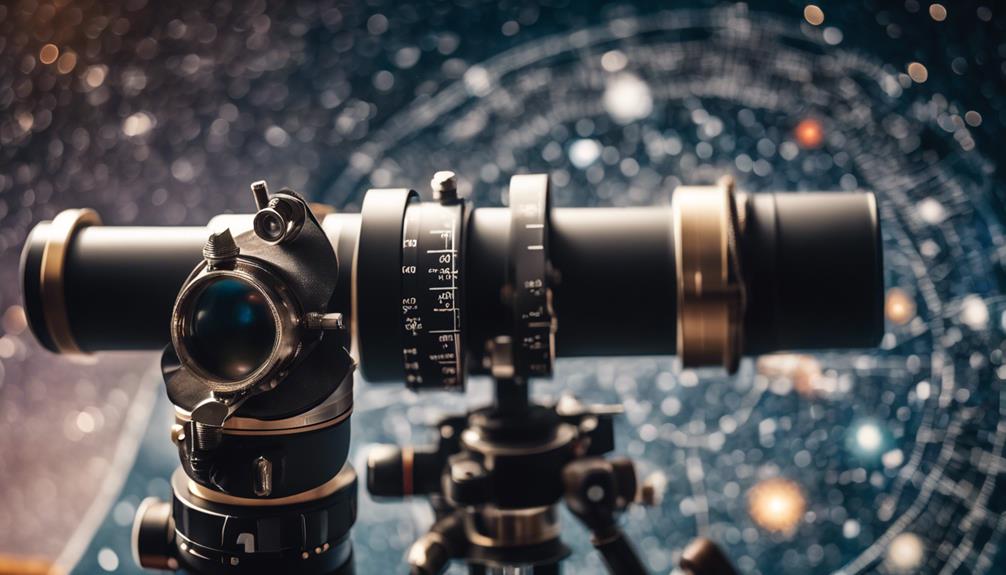
To fully appreciate the cosmos through your telescope, understanding how its optical elements work together is crucial. These components, such as the primary and secondary mirrors along with the eyepiece, collect, direct, and magnify light from distant celestial bodies. They are the heart of your telescope kit, playing pivotal roles in transforming faint specks into breathtaking views of the universe.
- The Primary Mirror: This is where the journey begins. The primary mirror's job is to gather as much light as possible from your targeted celestial object. Think of it as casting a wide net to capture the light that has traveled across the cosmos just to make it to your telescope.
- The Secondary Mirror: Once the primary mirror has collected the light, it's directed to the secondary mirror. This element acts as a guide, redirecting the light towards the eyepiece. It's a crucial step in ensuring that the light's path leads exactly where it needs to go.
- Eyepieces: The eyepieces are where magnification happens. By swapping eyepieces, you can zoom in on the details or zoom out for a wider view. They're like the zoom lens on a camera, allowing you to explore the vastness of space in fine detail.
Understanding these optical elements and their functions within your telescope kit is vital. They're what make it possible to journey through the stars from your backyard.
Mounting Systems Explained
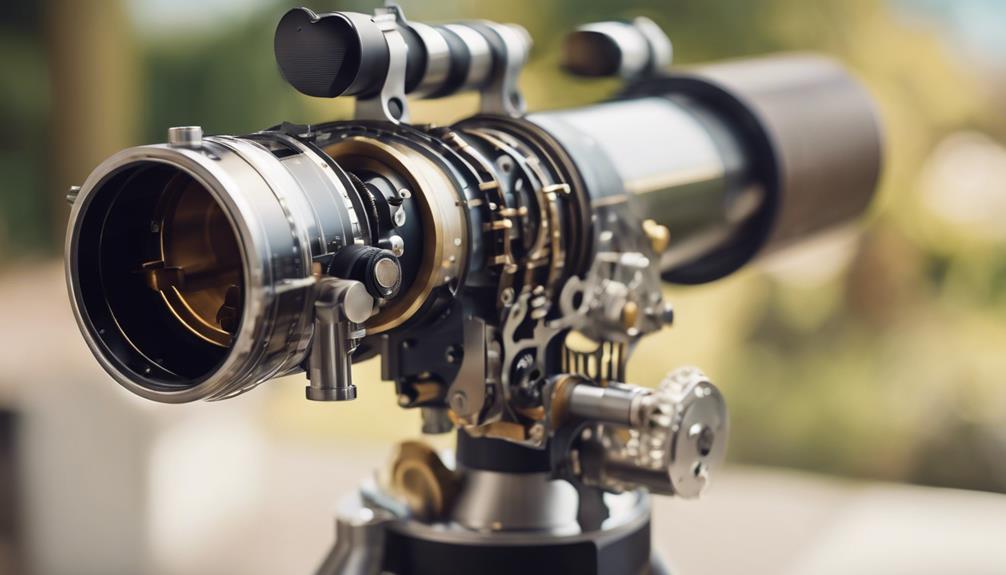
After exploring the core optical components of your telescope, let's focus on the mounting systems that guarantee their stability and precise alignment during your celestial observations. Mounting systems are the unsung heroes that support and stabilize your telescope, ensuring that your stargazing experiences are nothing short of spectacular.
First off, you've got altazimuth mounts. These are ideal for beginners due to their simple up-and-down and left-to-right movements. They offer a straightforward approach to exploring the night sky, making them perfect for casual stargazing.
Then there are equatorial mounts, which are a bit more complex. They require alignment with the celestial pole, a step that compensates for Earth's rotation. This feature is a game-changer for long-exposure astrophotography, as it allows you to track celestial objects with precision over extended periods.
For those who prefer a blend of technology and convenience, computerized or GoTo mounts are the way to go. These mounts take the guesswork out of finding celestial objects, automatically slewing your telescope to whatever you wish to observe. They enhance ease of use, making them a favorite among both beginners and seasoned astronomers.
Regardless of your choice, remember that a mounting system's tracking accuracy, stability, and alignment capabilities are vital for a fulfilling astronomical observation experience.
Eyepieces Role in Telescopes
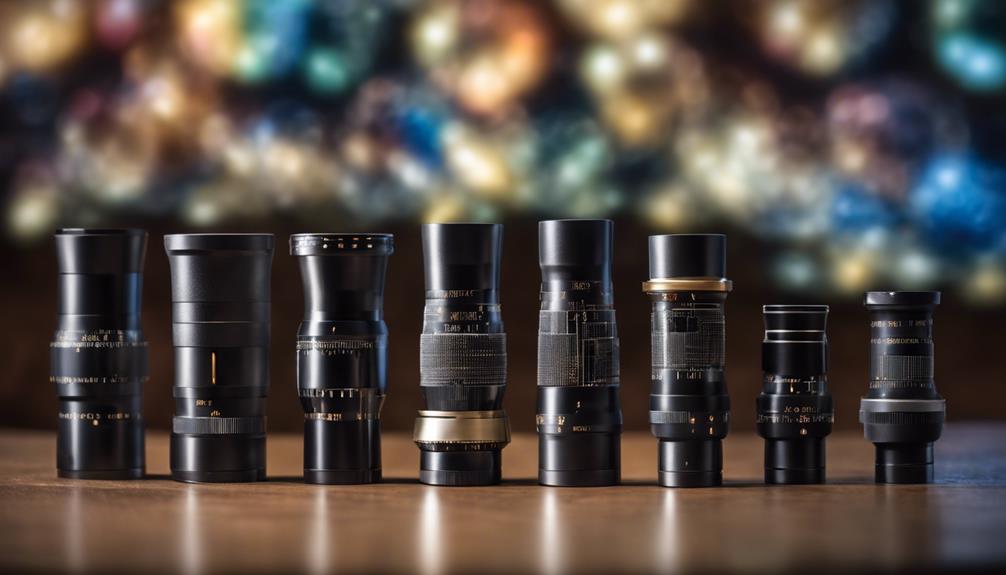
Eyepieces, the windows to the cosmos, play an essential role in telescopes by enhancing your view of the universe's wonders. These critical components refract light to magnify images collected by the telescope's objective lens, allowing you to gaze upon celestial bodies with clarity and detail that the naked eye just can't match. But how exactly do eyepieces contribute to your astronomical adventures? Let's delve into.
- Magnification Mastery: The magic of magnification in telescopes is a simple math game. By dividing the focal length of the objective lens by that of the eyepiece, you determine the magnification power. This means you can swap eyepieces to zoom in or out on your cosmic quarry, tailoring each viewing experience to your curiosity's current target.
- Light Gathering Galore: Thanks to the telescope's larger aperture, it gathers more light than your naked eye ever could, offering a brighter, clearer image. The eyepiece then fine-tunes this light, bringing distant galaxies and nebulae into sharp focus.
- Focuser Flexibility: The focuser adjusts the distance between the eyepiece and the objective lens. This adjustment is vital for fine-tuning your view, ensuring that whether you're exploring the craters of the moon or the rings of Saturn, the image is crisp and clear.
Different eyepieces offer varying levels of magnification and viewing experiences, making them indispensable tools in your telescopic exploration. Remember, the right eyepiece can transform a night of stargazing into a voyage across the cosmos.
Finderscopes Importance
Having explored the role of eyepieces in enhancing your view of the cosmos, let's now focus on how finderscopes, those small yet powerful allies, make locating celestial objects a breeze. Finderscopes are essentially low-power telescopes mounted atop your main telescope. They're your first step in the journey of star-gazing, offering a wider field of view to effortlessly spot those celestial wonders.
Here's a quick glance at why finderscopes are indispensable:
| Feature | Benefit |
|---|---|
| Wider field of view | Eases the initial spotting of celestial objects |
| Crosshair reticles/Red dot sights | Facilitates precise alignment with main telescope |
| Optical finderscopes | Magnification aids in detailed observation |
| Reflex sights | Projects a red dot for straightforward targeting |
| Alignment | Ensures accurate targeting of celestial bodies |
With either optical finderscopes or reflex sights at your disposal, you've got a reliable guide to the stars. The key is in their alignment. A finderscope that's perfectly aligned with your main telescope transforms the daunting task of locating celestial objects into a walk in the park. Accurate targeting becomes not just possible, but second nature. So, as you dive into the cosmos, remember that your finderscope is more than just an accessory; it's your gateway to the universe.
Selecting Telescope Filters
In your quest to uncover the mysteries of the night sky, selecting the right telescope filters is a game-changer, dramatically enhancing your celestial viewing experience. These filters play a pivotal role in blocking specific wavelengths of light, reducing glare, and improving contrast. This guarantees you get the best possible observation of celestial objects, making your astronomical observations more vivid and detailed.
Here's a quick guide to the types of filters you should consider:
- Light Pollution Filters: Perfect for urban astronomers, these filters cut through the veil of artificial light, allowing the beauty of deep-sky objects to shine through, even from light-polluted areas.
- Solar Filters: Essential for any sun gazer, solar filters protect your eyes and equipment from harmful solar radiation while revealing mesmerizing solar phenomena, such as sunspots.
- Color Filters: These are your go-to for planetary exploration, making it possible to see the finer details of celestial bodies. Whether it's enhancing the contrast of Martian surface details or bringing out the cloud bands on Jupiter, color filters are invaluable.
Telescope Assembly Guide

Now that you've selected your telescope filters, it's time to immerse yourself in the assembly process, where you'll attach key components to bring your astronomical tool to life. The heart of telescope assembly lies in accurately fitting the primary mirror cell, the secondary mirror holder, and the focuser onto the tube construction. This stage is where your telescope begins to take shape, transforming from parts to a portal to the stars.
Your journey into tube construction and finishing is more than just putting pieces together; it involves strategic baffle placement to reduce stray light and making precise optical system corrections. Each step, from the spider assembly to ensuring the correct attachment mechanisms, is critical for the best performance. Techniques such as flocking application enhance the internal tube surfaces to improve contrast, making your celestial observations clearer.
Understanding the materials used in construction is essential, as is grasping the nuances of tube assembly details. The size of the secondary mirror, for instance, can have a significant impact on vignetting, affecting the quality of your observations. As you navigate through these steps, remember that each component, from baffles to base construction, plays a pivotal role in the effectiveness of your telescope, guiding you closer to the cosmos with every adjustment.
Maintenance Tools for Telescopes
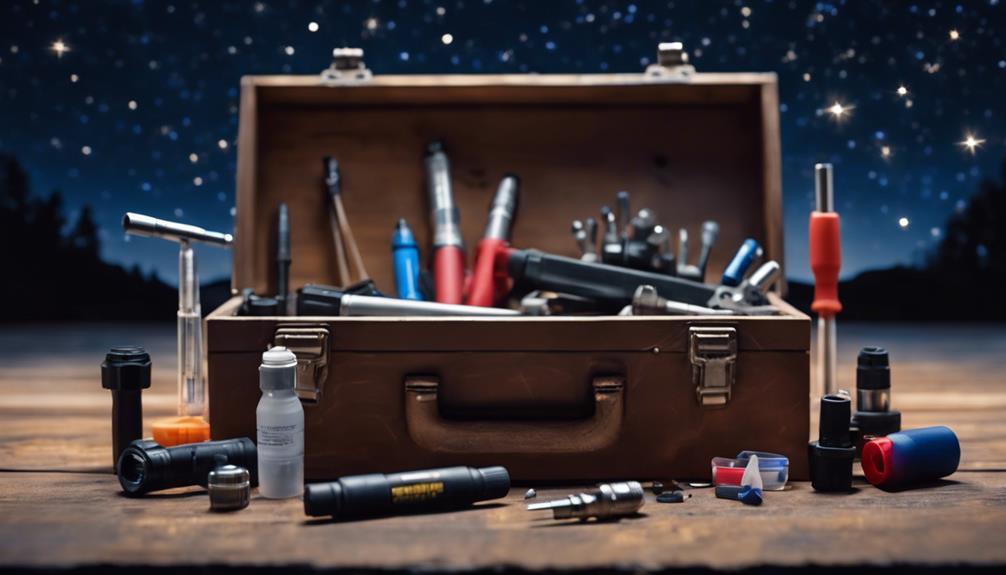
To keep your telescope in peak condition, a set of specialized maintenance tools is essential, including items like a precise collimator and a gentle lens cleaning kit. These aren't just add-ons; they're crucial for making sure your stargazing experiences remain breathtaking.
Imagine this: your telescope, a marvel of optics, in need of a tune-up. Here's what you'll need:
- A Collimator: This tool is your best friend for aligning the optics. It guarantees that the light travels straight through to give you the clearest images of celestial bodies.
- Lens Cleaning Kit: Comprising a dust blower and microfiber cloths, this kit helps you remove dust and smudges without scratching your telescope's delicate lenses and mirrors.
- Telescope Tool Kit & Silicone Grease: Including various screwdrivers, hex keys, and wrenches, this kit is indispensable for adjusting and tightening parts. The silicone grease keeps the moving parts, like focusers and mounts, operating smoothly, preventing wear over time.
These maintenance tools aren't just accessories; they're essential in your telescope tool kit. They make sure your telescope not only lasts longer but also performs at its best, letting you explore the universe from your backyard with clarity and precision.
Enhancing Observations
Exploring the cosmos with your telescope can be greatly enhanced by incorporating a variety of eyepieces and filters, each designed to magnify and clarify your celestial observations. By experimenting with eyepieces of different focal lengths, you can calculate the magnification to suit your specific viewing needs, whether you're zooming in on a distant galaxy or observing the craters of the Moon. The addition of telescope filters can dramatically improve the contrast and visibility of planets and nebulae, making these celestial wonders pop against the backdrop of space.
For those long nights spent craning your neck to glimpse the stars, a star diagonal becomes an indispensable tool. It redirects the light path using two mirrors, allowing you to view at a more comfortable angle. Don't forget to equip yourself with a red LED flashlight to keep your night vision intact while you tweak your telescope's settings or glance at star maps.
Community and Resources
Diving into the world of astronomy isn't just about the gear; it's also about connecting with a community and accessing resources that can elevate your stargazing experience. As you set out on the journey of telescope making and exploration, you'll find that the support and knowledge from fellow telescope enthusiasts are invaluable.
Here's how you can tap into this vibrant community and the rich resources available:
- Online Forums and Astronomy Clubs: Places like Cloudy Nights and Stargazers Lounge, along with local astronomy clubs, offer a treasure trove of advice, workshops, and mentorship. They're the perfect starting points for beginners and a continuous source of inspiration for seasoned telescope builders.
- Astronomy Magazines and DIY Guides: Publications such as Sky & Telescope and Astronomy magazines are packed with articles, reviews, and DIY guides. These resources are essential for anyone looking to dive deeper into the nuances of telescope components and building techniques.
- Marketplaces and Social Media: Websites like Astromart and eBay, along with social media platforms like Instagram and YouTube, are great for sourcing telescope components and drawing inspiration from projects and techniques shared by the astronomy community.
Frequently Asked Questions
What's Inside a Telescope?
Inside your telescope, you'll find optical coatings reducing light pollution, a specific aperture size for clarity, and a focal length dictating magnification. Eyepiece selection, mount types, collimation techniques, and a Barlow lens enhance your stargazing.
What Are the Parts Required for Astronomical Telescope?
Imagine gazing at the stars, your telescope a gateway to the universe. You'll need optical design principles, a chosen eyepiece, specific mount types, and an understanding of focal length, aperture size, coating options, collimation techniques, and light pollution filters.
How to Make a Powerful Astronomical Telescope at Home?
To make a powerful astronomical telescope at home, start by choosing materials and grinding your mirror to the right focal length. Select an eyepiece wisely, guarantee mount stability, consider light pollution, and perform star testing for aperture size.
Can a Homemade Telescope See Planets?
Yes, your homemade telescope can reveal planets, given the right aperture and magnification. Planetary visibility hinges on optical quality, light gathering, and tracking abilities. Fine-tune with eyepiece selection, and even Mars' ice caps could be in view.
Conclusion
In sum, assembling your astronomical ally involves more than merely mounting mirrors; it's about melding mechanics with magic. From fine-tuning focusers to selecting superior eyepieces, every element elevates exploration.
Dive deep into the DIY domain, discover distant dots, and delight in the dance of celestial spectacles. With this toolkit, you're not just building a telescope; you're bridging galaxies.
So, seize the scope, survey the skies, and savor the stars. Your cosmic journey beckons—boldly become the astronomer you've always aspired to be.
