Elon Musk supports expedited International Space Station deorbit
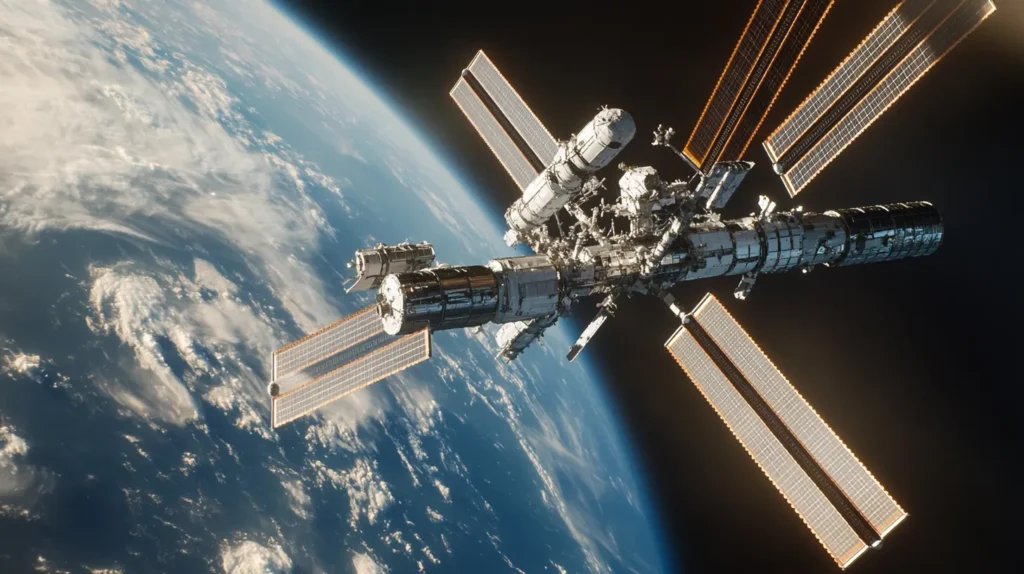
The space exploration world is in an uproar following recent statements by SpaceX CEO Elon Musk, who expressed the urgent need to deorbit the International Space Station (ISS) within two years. According to Musk, this decision is intended to redirect efforts towards ambitious missions to Mars.
However, this suggestion is causing concern within the scientific community and government bodies, raising questions about the future of NASA projects and international cooperation in space.
Musk’s proposals
Elon Musk shared his thoughts on social networks, claiming that the ISS has fulfilled its mission and that it is now time to project itself towards new horizons, including Mars. He emphasized that the decision to deorbit the ISS was not SpaceX’s alone, but that it was up to the President of the United States to decide.
By recommending a two-year deadline, Musk hopes to create a rapid momentum in the transition to interplanetary missions.
Difficulties for NASA
Musk’s statements complicate matters for NASA, which had planned to extend ISS operations until 2030. At that time, the agency would like to have several commercial space stations in operation to ensure the continuity of microgravity research.
NASA has already awarded an $843 million contract to SpaceX in June 2024 for the development of a vehicle called the United States Deorbit Vehicle (USDV), designed to maneuver the ISS to a safe area of the Pacific Ocean should deorbiting occur.
Consequences of early deorbiting
Anticipating an ISS deorbit poses major challenges. Indeed, it could create a void in the United States’ permanent human presence in Low Earth Orbit (LEO), which would run counter to the objectives of NASA’s microgravity strategy. Several members of Congress have expressed concern about this issue, pointing out that such a decision could allow rivals such as China to fill the void.
Reactions from Congress
Elected officials are reacting strongly to Musk’s proposals. Senator Ted Cruz (R-Texas) called for continued ISS operations until commercial alternatives are ready, noting that the U.S. has invested over $100 billion in the project. For his part, Representative Brian Babin (R-Texas) called the ISS a “technological marvel”, stressing the need for careful consideration before transitioning to new platforms.
Context of Musk’s comments
Musk’s comments also come in a tense context. Shortly before making this proposal, he had had an altercation on social networks with European Space Agency astronaut Andreas Mogensen, who had criticized Musk’s statements about astronauts possibly being left on the ISS for political reasons. Musk’s indignant reaction may have fueled his call for a hasty deorbit.
The Future of Space Research
Elon Musk’s call for a rapid deorbit of the ISS raises crucial questions about the future of scientific missions and international cooperation in space.
A hasty deorbit could hamper microgravity research, an essential area for many scientific disciplines, from biology to physics. What’s more, the absence of a continuous human presence in space would call into question the United States’ ability to maintain its leadership in space.
Elon Musk’s calls for the de-orbiting of the ISS raise passionate debates about the future of space exploration. While some see this proposal as an opportunity to redirect efforts towards Mars, others worry about the consequences of early de-orbiting. This debate is essential not only for the United States, but for the entire international community, as it navigates the challenges posed by space exploration and scientific research.
