Must-Have Telescope Parts for Stellar Deep Sky Gazing
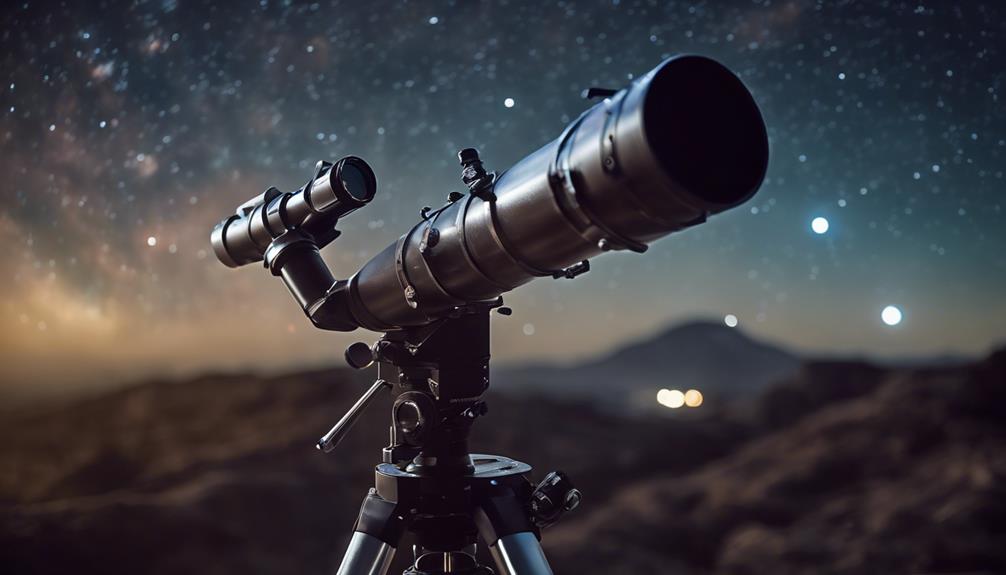
While you might think that a high-end telescope alone guarantees breathtaking views of galaxies and nebulae, it’s actually the lesser-known accessories that can make or break your deep sky gazing experience.
You’ll need not just any eyepieces, but those offering the right magnification and clarity, and a finderscope that promises precision in the vast night sky.
In addition, integrating modern astronomy apps or star charts with your setup can greatly streamline the process of celestial navigation.
Let’s explore how these components, along with a few unexpected tools, can elevate your observations to new heights, revealing why each part is critical in disclosing the universe’s secrets.
Key Takeaways
- A larger aperture is essential for capturing more light and detail in deep sky objects.
- High-quality, stable mounts are crucial for accurate observation and reducing vibrations.
- Barlow lenses and specific filters can significantly enhance the visibility of celestial features.
- Computerized control systems simplify tracking and locating deep sky objects, enhancing the stargazing experience.
Selecting the Right Aperture
Choosing the right aperture is essential, as it directly influences your telescope’s ability to capture light and detail from distant celestial bodies. The aperture size of your telescope isn’t just a number; it’s a gateway to the cosmos, determining your instrument’s light-gathering ability and resolution.
When you’re selecting an aperture for deep sky gazing, remember that larger apertures allow more light to enter the telescope, which is critical for viewing faint and distant celestial objects like galaxies, nebulae, and star clusters.
Furthermore, a larger aperture doesn’t just mean brighter images; it also means higher resolution, allowing you to see finer details in the celestial objects you observe. This is why telescopes with larger apertures are often recommended for best performance in deep sky gazing.
However, selecting aperture isn’t a one-size-fits-all situation. You must balance between the light-gathering capability, the resolution you desire, and the specific deep sky objects you’re most interested in observing. So, when you’re deep into selecting aperture for your telescope, consider how each option will enhance your experience of exploring the universe.
Importance of Mount Stability
After selecting the right aperture for your telescope, it’s equally important to contemplate mount stability, as it plays a key role in the quality of your observations and imaging of celestial bodies. Mount stability is vital for steady tracking and clear imaging of celestial objects. A stable mount greatly reduces vibrations, which are often the nemesis of sharp, detailed observations. These vibrations can blur images, making it challenging to focus on and track moving celestial objects with precision.
Investing in a high-quality mount is essential for achieving the best possible results. Unstable mounts will lead to frustration, with blurry images and difficulty in maintaining the tracking of celestial bodies. This is particularly true in astrophotography, where even the minutest movement can ruin a long-exposure image.
Equatorial mounts are especially popular among astrophotographers for their stability and ability to accurately track celestial objects across the sky. Their design compensates for the Earth’s rotation, providing steady tracking essential for capturing clear, detailed images of deep sky objects. A stable mount, thus, guarantees precise pointing accuracy, which is indispensable for both observing and photographing the night sky.
Eyepiece Selection for Clarity
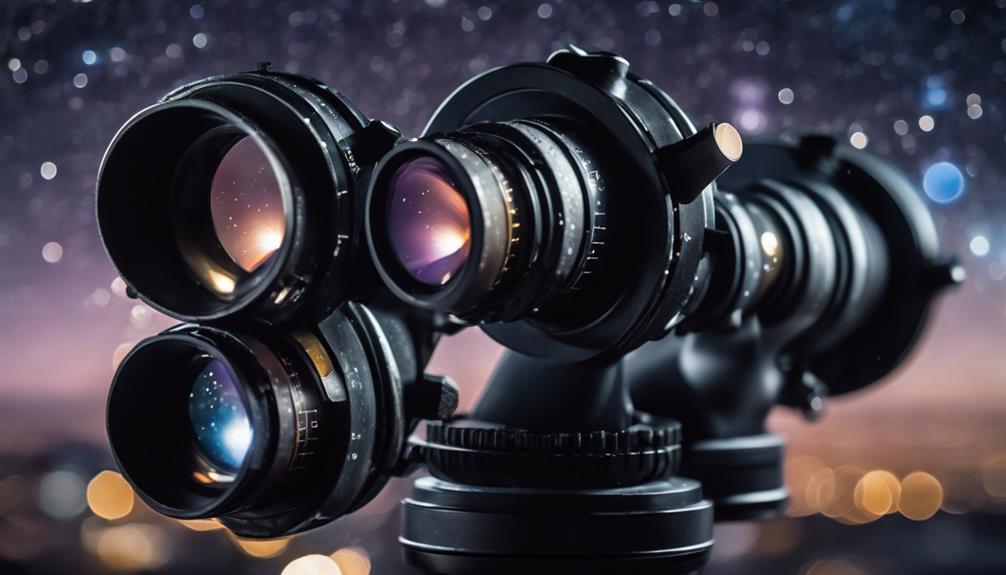
To maximize your telescope’s performance, it’s vital to select an eyepiece that complements its focal length, ensuring sharp and clear views of celestial wonders. Your eyepiece selection is crucial for tailoring your viewing experiences, particularly when zoning in on the vast universe’s intricate details.
| Telescope Focal Length | Eyepiece Focal Length (mm) | Best for Viewing |
|---|---|---|
| Short | 2-4 | High-power viewing of planets and stars |
| Medium | 5-10 | A balance of magnification for detailed lunar and planetary views |
| Medium-to-Long | 10-20 | Deep sky objects like nebulae and galaxies |
| Long | 30 | Large deep sky objects with wide fields |
For telescopes with short focal lengths, eyepieces around 2-4mm are ideal for high-power viewing, allowing you to dive deep into the cosmos’s finer details. Medium focal length telescopes benefit from 5-10mm eyepieces, striking a perfect balance of magnification. To gaze upon the ethereal beauty of deep sky objects, opt for eyepieces ranging from 10-20mm. For the grandest view of large deep sky objects, eyepieces of 30mm and longer are your go-to, providing an expansive window to the universe while ensuring optimal viewing experiences.
Utilizing Filters for Contrast
As you explore the cosmos through your telescope, integrating specific filters can greatly refine your observation. Light pollution and nebula filters, for instance, are pivotal in enhancing the contrast and visibility of deep sky objects by selectively blocking certain wavelengths.
Similarly, employing color filters can accentuate details on planetary surfaces, making features on Mars or Jupiter more pronounced and enhancing your overall stargazing experience.
Types of Useful Filters
When exploring the depths of the cosmos, employing various types of filters can markedly improve the contrast and clarity of celestial objects against the backdrop of night sky pollution.
- Light Pollution Filters: These filters enhance contrast by reducing the impact of artificial light, making them essential for observers in urban areas.
- Nebula Filters: Designed to isolate specific wavelengths emitted by nebulae, these filters notably improve the visibility and contrast of these diffuse celestial objects.
- Oxygen-III Filters: By highlighting the emission lines of oxygen, these filters are ideal for enhancing contrast in nebulae, making the structures within these gas clouds more defined.
- Hydrogen-Beta and UHC Filters: Both types isolate certain wavelengths (hydrogen-beta for specific nebulae and UHC for a broader range) to improve contrast by selectively transmitting specific wavelengths while blocking out light pollution.
Enhancing Planetary Features
Employing specialized filters can notably enhance the visibility of planetary features, allowing observers to discern fine details such as cloud bands on Jupiter and polar ice caps on Mars with greater clarity. The Celestron Mars Observation filter, for instance, notably improves contrast for Mars’ surface features. Similarly, contrast filters are invaluable for reducing Venus’ glare, making its cloud patterns more discernible.
| Filter Type | Benefits |
|---|---|
| Celestron Mars Observation Filter | Enhances Mars’ contrast |
| Contrast Filters | Reduces glare, enhances details |
| #12 Yellow Filter | Improves Jupiter’s band visibility |
| #80A Blue Filter | Accentuates Venus’ clouds |
Utilizing planetary filters, like the #12 Yellow and #80A Blue, allows you to improve visibility and enhance surface details, revealing subtle details in planetary observation that would otherwise remain hidden.
Maximizing Nebula Visibility
Shifting focus to the cosmos’ more elusive wonders, you’ll find that specialized filters greatly enhance nebula visibility by targeting and isolating specific light wavelengths, thereby improving contrast against the night sky’s backdrop. Here’s how:
- Light Pollution Filters – These increase contrast by reducing background light pollution, essential for urban deep sky gazing.
- O-III Filters – Specifically designed for nebula filters, the O-III filter excels in making the faintest nebulae pop by isolating oxygen-III wavelengths.
- UHC Filters – Versatile and effective, UHC filters enhance visibility of nebulae and galaxies by transmitting key wavelengths, striking a balance between broad and narrowband filters.
- Narrowband and H-alpha Filters – Isolating light from hydrogen-rich nebulae, these filters reveal intricate details unseen through standard eyepieces.
The Role of Barlow Lenses
When you integrate a Barlow lens into your telescope setup, you’re greatly boosting its magnification power without compromising image clarity.
This accessory is compatible with a broad range of telescopes, providing a cost-effective way to observe celestial objects in greater detail.
Enhancing Magnification Power
To enhance the magnification power of your telescope for deep sky gazing, integrating a Barlow lens into your setup can greatly amplify the observable details of celestial objects.
- Barlow lenses are important optical accessories that boost magnification by doubling or tripling the focal length of your telescope, making them essential for observing celestial objects with clarity.
- They enlarge magnifications by working between the telescope and eyepiece, effectively increasing the power of any eyepiece you use without requiring multiple eyepieces.
- Offering 2x or 3x magnification factors, Barlow lenses provide versatility and adaptability in your stargazing endeavors, allowing you to closely examine the wonders of the universe.
- As a cost-effective solution to enhance your viewing capabilities, they’re a valuable addition to your stargazing kit, ensuring you don’t miss a detail in the night sky.
Maintaining Image Clarity
Incorporating a Barlow lens into your telescope setup not only boosts magnification but also plays a critical role in preserving image clarity at higher zoom levels. Barlow lenses, by design, increase magnification by doubling or tripling the telescope’s focal length. This unique capacity lets you explore deeper into the cosmos without compromising the crispness of celestial sights.
Available in various magnification factors, such as 2x or 3x, they offer versatility to meet different observing needs. When inserted between the eyepiece and the telescope focuser, they greatly enhance the viewing experience. This approach allows for a broader range of magnification options, enabling you to achieve higher magnifications efficiently without switching to eyepieces with shorter focal lengths, ensuring every observation is clear and detailed.
Compatibility With Telescopes
Barlow lenses effortlessly slot into most telescope setups, greatly expanding their magnification capabilities and ensuring compatibility across a wide range of models. These optical accessories are indispensable for anyone keen to explore the cosmos in greater depth.
Consider these essential aspects:
- Increase Magnification: By doubling or tripling the effective focal length, Barlow lenses offer a cost-effective method to achieve higher magnifications.
- Versatile Compatibility: Designed to fit standard 1.25-inch or 2-inch focusers, they’re adaptable with numerous telescope models.
- Enhanced Observations: Achieve detailed views of planets, the Moon, and other celestial objects without the need for additional, expensive eyepieces.
- Essential Tools: They’re fundamental for deep-sky gazing, transforming standard telescopes into powerful instruments for viewing the cosmos at higher magnifications.
Advantages of Computerized Control Systems
Leveraging computerized control systems greatly enhances the precision and accuracy of tracking celestial objects through a telescope. These sophisticated systems offer a suite of advanced features that greatly enhance your stargazing experience. With precise tracking capabilities, you’re able to follow the movement of celestial bodies across the sky with unparalleled accuracy. This importance is vital for observing fleeting phenomena like meteor showers or the transit of planets across the sun.
Computerized control systems are designed for automatic alignment, making it easier for you to navigate the vast expanse of the night sky. This feature simplifies the initially challenging task of locating specific celestial objects among the millions visible on a clear night. In addition, these systems often come equipped with extensive databases that contain information on a myriad of celestial objects, from stars and planets to galaxies and nebulae. This wealth of information at your fingertips makes it easy to plan your observation sessions.
Additionally, the integration of smartphone apps and computer software for remote control adds a layer of convenience and accessibility. You can adjust your telescope’s position, switch between objects, or even program specific observation paths without needing to be physically next to your telescope. This remote functionality not only enhances your stargazing experience but also invites more flexibility and spontaneity into your observations.
Frequently Asked Questions
What Type of Telescope Is Best for Deep-Sky Objects?
For deep-sky objects, you’ll want a telescope combining large aperture size, robust mount stability, advanced optical coatings, and digital tracking. Reflectors benefit from greater focal length, while cooling systems minimize distortion from light pollution.
What Do You Need for Star Gazing?
For stargazing, you’ll need mounting options for stability, star charts for navigation, and a red flashlight to preserve night vision. Consider light pollution, eye adaptation, a weather app, and comfort gear for the best experience.
Can You See Deep-Sky Objects With a Telescope?
Yes, you can reveal the universe’s secrets with a telescope, but remember, combating light pollution, selecting the right aperture, ensuring mount stability, and choosing eyepieces wisely are crucial. Consider atmospheric conditions, dark sites, and proper planning.
What Telescope Is Strong Enough to See Galaxies?
You’ll need a telescope with a sizable aperture for galaxy viewing, ensuring mount stability and excellent optical quality. Consider light pollution, portability, astrophotography compatibility, eyepiece variety, magnification constraints, efficient cooling systems, and versatile filter options.
Conclusion
To sum up, you’ve got the blueprint for stellar deep sky gazing.
Choosing the right aperture maximizes light capture, while a stable mount guarantees precision.
Diverse eyepieces bring celestial bodies into sharp focus, and filters enhance contrast, revealing astronomical wonders.
Barlow lenses double your viewing power, and a computerized control system streamlines the hunt for cosmic phenomena.
With these tools, you’re not just stargazing; you’re time-traveling, peering back into the universe’s grand history with every gaze.