How to Care for Your Telescope: 3 Essential Tips
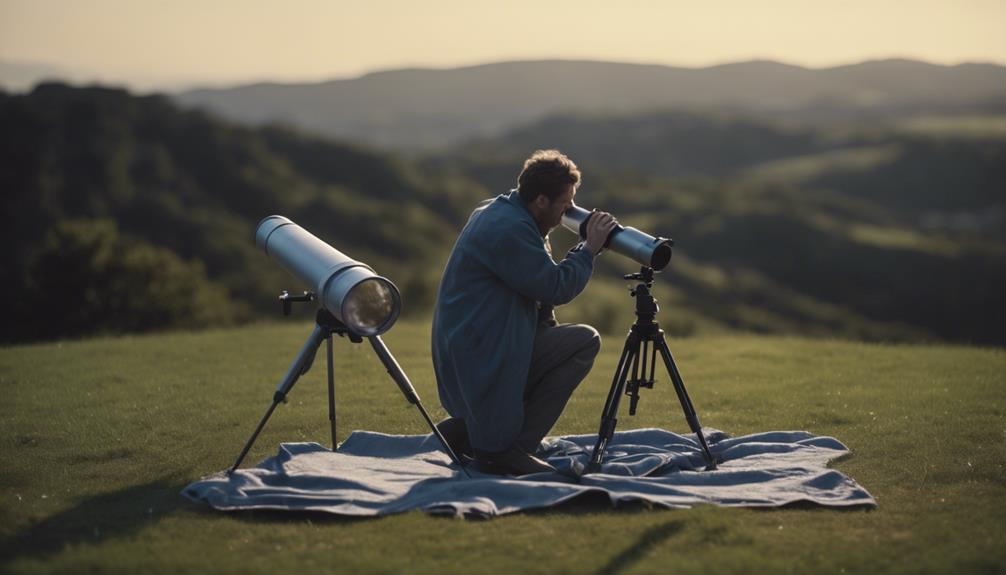
Imagine the gentle caress of a microfiber cloth gliding over the lens of your telescope, a ritual that connects you to the cosmos. As a stargazer, you're entrusted with the care of a window to the universe, and there are three essential tips you can't overlook.
You'll need to master proper cleaning techniques, discover safe storage solutions, and practice correct handling to keep your celestial guide in pristine condition. I'm here to guide you through these critical steps, ensuring your nights under the stars are as clear and breathtaking as the day you first peered through your telescope.
Let's set off on this journey together, and I'll show you how to protect your view of the cosmos.
Key Takeaways
- Regularly clean optics with appropriate tools to maintain clear views.
- Store your telescope properly to protect against dust and moisture.
- Handle your telescope gently to prevent damage to delicate components.
- Follow maintenance guidelines to ensure longevity and optimal performance.
Proper Cleaning Techniques
To maintain peak performance of your telescope, begin by using a camel-hair brush or compressed air to gently remove any dust and particles from the optics. This initial step is important in preserving the clarity and functionality of your telescope. Avoid touching the mirror or lens directly with your fingers, as oils from your skin can leave difficult-to-remove smudges.
When stains or smudges are visible, and only then, should you proceed to a more thorough cleaning. Dampen a piece of cotton or lens tissue with a homemade lens-cleaning solution—mix equal parts distilled water and isopropyl alcohol for an effective, gentle fluid. Apply the solution sparingly, touching the optics as lightly as possible to prevent any scratches or damage. Using a light touch and cleaning in a circular motion, starting from the center and moving outward, is important to prevent damage.
Avoid dismantling your telescope unless absolutely necessary. Sealed telescopes are designed to protect their internal components, and disassembling them can lead to complications or alignment issues. For mirror cleaning, always start with compressed air to dislodge any loose particles. Each telescope model may have specific cleaning instructions, so consult your user manual or manufacturer's guidelines to make sure you're using the correct method for your particular device. Care and precision during the cleaning process will extend the life and performance of your telescope.
Safe Storage Solutions
Ensuring your telescope's longevity requires storing it in a dry, dust-free environment that prevents potential damage. To protect your telescopes effectively, consider these three pivotal steps:
- Utilize Protective Covers and Cases:
Always store your telescope in protective covers or cases specifically designed for its model. These accessories are essential for safeguarding your equipment against physical damage and dust. Make sure the covers are clean and fit snugly around your telescope to offer the best protection.
- Position the Main Mirror Facing Down:
This orientation prevents dust from settling on the surface of the main mirror, a critical component of your telescope. By keeping the main mirror facing down, you minimize the risk of dust accumulation, which can significantly degrade your telescope's performance over time.
- Store Eyepieces in Sealable Boxes and Use WD-40 on Mounts:
To further protect your telescope's accessories, store eyepieces in sealable plastic boxes or bags to keep them dust-free. For the mount, apply WD-40 sparingly to remove old grease and protect against moisture. This step ensures smooth operation and prevents rust and corrosion, extending the life of your telescope's moving parts.
Adhering to these storage solutions will greatly extend the lifespan and maintain the performance of your telescopes.
Correct Handling Practices
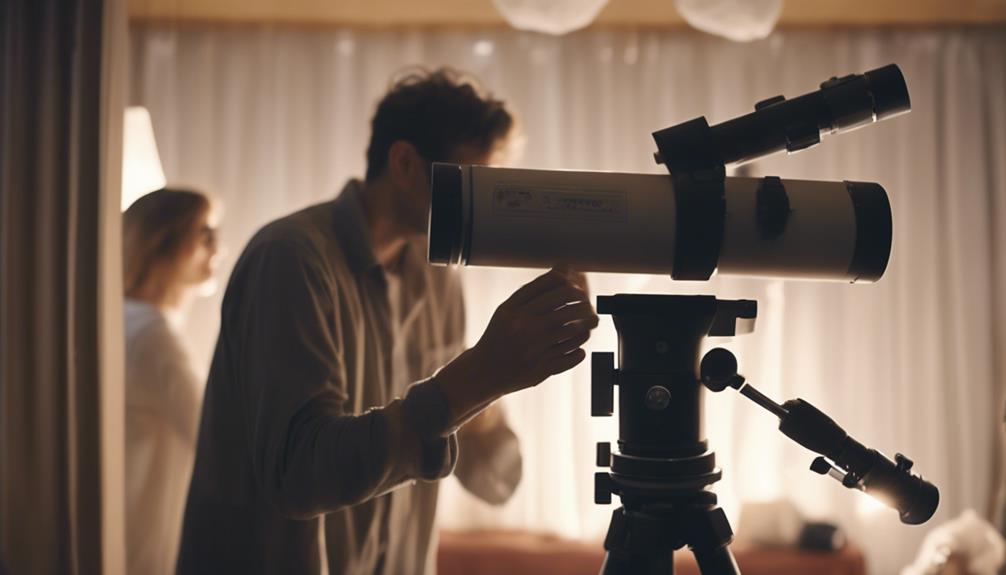
Properly handling your telescope is important for maintaining its condition and ensuring best performance during observations. The integrity of telescope optics, whether lenses or mirrors, can heavily impact the quality of the images you capture. To prevent damage and maintain clarity, it's critical to adopt correct handling practices.
Always handle your telescope with clean hands to avoid transferring oils and dirt onto the optics. This simple step can save you from the complex task of having to clean a lens or mirror without causing scratches. When moving your telescope, use two hands to carry it. This ensures stability and helps prevent accidental drops that could misalign or damage delicate components.
Avoid touching the optics directly. Fingers can leave smudges that degrade image quality and can be challenging to remove without risking harm to the surface. When setting up, adjusting, or repositioning your telescope, make smooth and gentle movements. Sudden shocks can misalign optical elements, affecting your telescope's performance.
Frequently Asked Questions
How Do You Take Care of a Telescope?
To care for your telescope, store it in dry conditions with a dust cover, regularly clean the lens, control humidity, check collimation, maintain the mount, care for accessories, and acclimate it to temperature changes.
What Are the Three Important Things a Telescope Does?
Your telescope's a gateway to the cosmos, expertly gathering light for star gazing, magnifying distant celestial wonders, and mapping the night sky's tapestry. It's essential for planetary observation, eclipse tracking, and deep space discovery.
How Do You Use a Telescope Tip?
To use your telescope effectively, start with star alignment and celestial tracking. Choose the right eyepiece, stabilize the tripod, and use the finder scope for precision. Plan observations considering lunar phases and light pollution for best viewing.
What Are the Three Most Important Factors to Consider When Choosing a Telescope?
When choosing a telescope, consider aperture size for clarity, mount stability for tracking, and optical quality for detailed views. Don't overlook budget, light pollution, viewing location, portability, eyepiece variety, future upgrades, and user experience.
Conclusion
To sum up, by following these essential care tips, you're not just safeguarding your telescope; you're enhancing your stargazing experience. Surprisingly, a well-maintained telescope can perform up to 40% better than a neglected one, displaying clearer and more detailed celestial bodies.
Always store it properly, clean the optics with utmost care, and make sure the mechanics are smoothly operating. This technical diligence guarantees your telescope remains in peak condition, ready to reveal the mysteries of the night sky with precision and clarity.


