How to Choose the Best Catadioptric Telescope Maker

You might not be aware, but the optical design of catadioptric telescopes greatly influences their performance in stargazing. When you’re on the hunt for the best maker, it’s not just about the specs like aperture size or focal length; you also need to weigh the brand’s innovation, customer support, and the community’s feedback.
Each of these elements plays a crucial role in ensuring you get a telescope that not only meets your current needs but also grows with you as your passion for astronomy deepens.
Let’s explore how to sift through the options to find a maker that stands out in this crowded space, ensuring your journey to the stars is as clear and rewarding as possible.
Key Takeaways
- Evaluate the brand’s history and reputation for quality and innovation in catadioptric systems.
- Compare innovative features like GoTo mounts and built-in cameras to match your stargazing needs.
- Assess warranty length, customer support quality, and the availability of repair services for long-term investment protection.
- Conduct a thorough price and value analysis, considering bundle deals and included accessories for the best investment.
Understanding Catadioptric Optical Systems
Catadioptric optical systems ingeniously combine lenses and mirrors to efficiently gather and focus light, offering a compact and versatile solution for enthusiasts and professionals alike.
These sophisticated systems enable you to explore a wide range of celestial phenomena, from deep sky objects to intricate planetary details. Thanks to their folded optics design, they boast long focal lengths within shorter tube lengths, making them highly portable without sacrificing performance.
When you investigate the specifics, a Schmidt Cassegrain telescope stands out for its versatility. With a fast focal ratio and the use of focal reducers, these telescopes can swiftly adapt from capturing expansive nebulae to zooming in on Saturn’s rings, making them ideal for planetary and deep-sky observation.
The build quality of these systems plays an important role in their performance, especially when mounted on an equatorial mount, which aids in precise tracking and stability for those long-exposure astrophotography sessions.
Additionally, the inherent design of catadioptric telescopes means they require less frequent collimation compared to their reflector counterparts, streamlining maintenance and ensuring consistent, high-quality imaging capabilities. This combination of features positions catadioptric systems as a compelling choice for anyone looking to explore deep into the cosmos.
Assessing Brand Reputation and History
When selecting a catadioptric telescope maker, you must explore the brand’s legacy and analyze industry recognition to guarantee quality and innovation.
Investigating the historical contributions and technological advancements of manufacturers like Meade and Celestron provides insight into their reliability and support over time.
This approach allows you to make an informed decision based on a brand’s reputation, reflected in expert recommendations and customer feedback.
Brand Legacy Exploration
To guarantee you’re investing in a product that stands the test of time, it’s important to explore the history and reputation of various catadioptric telescope makers. Here’s how:
- Brand Legacy and Expertise in Designing: Evaluate the longevity and historical contributions of the maker to the field. A long-standing brand often signifies a deep-rooted expertise in designing high-quality optics.
- Customer Reviews and Brand Reputation: Investigate customer reviews and feedback. The collective experiences of users can offer invaluable insights into the reliability and performance of the telescopes.
- Awards, Recognition, and Technological Advancements: Look for any accolades or partnerships that underscore the brand’s commitment to excellence and innovation. This not only reflects their current standing but also their continuous efforts in advancing catadioptric telescope technology.
Industry Recognition Analysis
Evaluating a telescope maker’s industry recognition involves meticulously analyzing customer feedback, historical presence, and accolades to determine their standing and reliability in the field.
Start by examining customer reviews and ratings on platforms like Trustpilot and Google, as these insights can directly reflect the brand’s reputation. Delving into the telescope maker’s history reveals their longevity in the industry, a key indicator of their credibility and expertise, especially in producing catadioptric telescopes.
Awards and recognitions serve as tangible evidence of their innovation and excellence. Additionally, collaborations with renowned astronomers or observatories further underscore their credibility. This thorough analysis guarantees you’re choosing a maker with proven expertise and a solid reputation in the catadioptric telescope industry.
Analyzing Consumer Reviews and Feedback

When you’re selecting a catadioptric telescope maker, it’s important you analyze online ratings and read through user experiences on platforms like Amazon and Cloudy Nights.
Focus on identifying common issues and strengths mentioned, especially regarding optical quality and build construction. This approach will equip you with a thorough understanding of each maker’s reliability and performance, guiding your decision-making process.
Reading User Experiences
Delving into user experiences provides important insights into the performance and reliability of catadioptric telescopes from various manufacturers. When analyzing consumer reviews and feedback, focus on:
- Optical Quality: Look for repeated mentions of image clarity and whether users report satisfaction with the visual output of their telescopes. High optical quality is a hallmark of a superior catadioptric telescope.
- Build Quality and Issues: Pay attention to comments about the telescope’s durability and any frequent mentions of collimation or compatibility issues with accessories. These can indicate potential long-term concerns.
- Customer Support: Experienced users often highlight the importance of robust customer support. Their experiences can guide you towards manufacturers who provide helpful assistance for troubleshooting or addressing concerns with your telescope.
Analyzing Online Ratings
To accurately assess customer satisfaction, it’s important to analyze online ratings and reviews of catadioptric telescope makers, focusing on patterns and specific feedback that reflect the quality of their products and services.
By dissecting consumer reviews, you’ll spot trends in online ratings that shine a light on common praise or concerns, guiding you towards an informed decision.
| Aspect | Positive Feedback | Negative Feedback |
|---|---|---|
| Optical Quality | Sharp, clear images | Issues with clarity |
| Durability | Sturdy, long-lasting | Fragility concerns |
| Customer Service | Responsive, helpful | Slow or unhelpful |
Pay attention to the volume and frequency of feedback to understand overall customer sentiment. Specific features mentioned can align with your needs, helping you choose a telescope maker that meets your requirements.
Identifying Common Issues
After analyzing online ratings, it’s important to scrutinize consumer reviews for common issues like collimation problems and mount stability, providing deeper insights into the quality of catadioptric telescopes.
- Collimation and Optical Quality Concerns: Many users report difficulties in maintaining collimation, affecting the telescope’s optical performance. The clarity and sharpness of images can vary to a considerable extent based on the telescope’s ability to hold its collimation over time.
- Mount Stability and Durability Issues: Reviews often highlight mount stability as a critical factor for observational accuracy. Durability concerns, including construction materials and build quality, further influence long-term satisfaction.
- Customer Support and Accessory Quality: Feedback on customer service, warranty support, and ease of assembly underscores the brand’s commitment to user experience. Complaints about accessories’ quality and packaging issues reveal insights into the manufacturer’s quality control processes.
Comparing Innovative Features
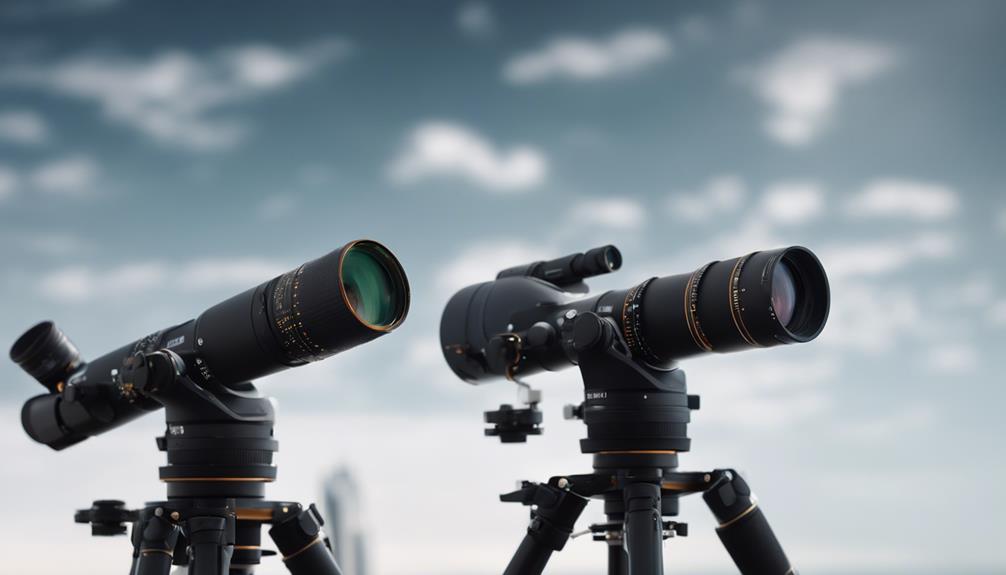
When comparing catadioptric telescopes, it’s important to assess the array of innovative features like GoTo mounts, built-in cameras, and advanced tracking systems that manufacturers offer to enhance your astronomical observations. Telescope wants our customers to shop with confidence knowing we price match competitors.
This means you can get the best value for features like advanced GoTo mounts, which simplify locating celestial objects. Our focus on short focal Focal Ratios guarantees a greater field of view and faster exposure times, beneficial for deep-sky imaging.
| Feature | Benefit |
|---|---|
| GoTo Mounts | Simplifies celestial navigation and enhances viewing experience |
| Built-in Cameras | Streamlines astrophotography without needing external devices |
| Advanced Tracking Systems | Maintains object alignment for long exposure photography |
Before making a purchase, verify a competitor’s advertised features and prices. We’re committed to matching a competitor’s price on comparable catadioptric telescopes with similar innovative features.
This dedication ensures you’re investing in a telescope that not only meets your observational needs but also offers the best technological advancements within your budget. Remember, the right features can greatly enhance your stargazing experience.
Evaluating Warranty and Customer Support
Evaluating the warranty length and coverage is essential in choosing a catadioptric telescope maker, as it reflects the manufacturer’s confidence in their product’s durability and performance. When you’re on the hunt for the best telescope, it’s not just about the specs; it’s about the support behind the product. Here’s what you should consider:
- Warranty Length and Coverage: Check the warranty period offered by the manufacturer. A longer warranty suggests a commitment to the product’s longevity. Make sure the coverage includes critical components and understand the process for warranty claims.
- Customer Support Quality: Evaluate the responsiveness and helpfulness of the customer support team. Reliable support is important for troubleshooting and guidance. Look for online reviews to gauge the manufacturer’s reputation in handling inquiries and honoring claims promptly.
- Access to Repair Services and Replacement Parts: Confirm whether the manufacturer provides repair services or makes replacement parts readily available. This is essential for maintaining your telescope’s performance over time. Manufacturers with a solid reputation for providing these services are often more trustworthy.
Conducting Price and Value Analysis

To guarantee you’re getting the best value for your investment, it’s important to compare the prices and overall offerings of top catadioptric telescope makers like Meade and Celestron.
Start by examining the focal lengths available across different models and how they stack up against the competitors’ advertised prices. This step is important as it offers a direct insight into the technical capabilities you’re paying for.
Next, explore the accessories included with your purchase. While the main focus might be on the telescope itself, the right accessories can greatly enhance your stargazing experience. Compare these alongside the warranties and customer support services offered. A longer warranty or more thorough customer support can add considerable value, potentially saving you money and hassle in the long run.
Don’t overlook the importance of bundle deals, promotions, or discounts. These can offer exceptional value, providing additional accessories or features at a reduced cost. However, it’s crucial to conduct a thorough value analysis to make sure these deals truly offer savings without compromising on quality.
Exploring Telescope Accessories
Delving into the domain of essential telescope accessories, you’ll find that items like dew shields and quality eyepieces play a pivotal role in enhancing your observational experience. When you’re assembling your stargazing kit, particularly for catadioptric telescopes, it’s not just about the main equipment. The accessories you choose can greatly impact your ability to explore the cosmos.
- Dew Shields: Essential in hot and humid climates, these accessories prevent moisture buildup on your telescope optics, ensuring clear, uninterrupted views of celestial bodies. Their importance can’t be overstated, as they safeguard your viewing experience against the frustrations of dew formation.
- Bob’s Knobs: For those who value precision, Bob’s Knobs offer an easy and tool-free method for collimating catadioptric telescopes. This ensures that your telescope is always perfectly adjusted for the best image sharpness and clarity.
- Quality Eyepieces: A high-quality eyepiece can transform your stargazing experience. By enhancing image sharpness and contrast, these accessories allow you to see celestial objects in stunning detail. Investing in quality eyepieces is essential for achieving the best observational outcomes.
Deciding on Your Telescope Needs

Understanding your specific astronomical interests is essential in selecting the right catadioptric telescope maker that aligns with your planetary, lunar, or deep-sky imaging needs. The choice of a telescope maker, such as Meade, Celestron, or Orion, shouldn’t be taken lightly, considering their reputation and track record in the field.
These brands offer a range of focal lengths and aperture sizes that cater to various observing preferences. It’s important to explore the technical specifications, ensuring the telescope’s features, like GoTo mounts, enhance your stargazing experience by providing automated tracking of celestial objects.
Moreover, comparing prices, warranty options, and included accessories across different makers will guide you toward the best value for your investment. Don’t overlook the importance of extensive research, including seeking recommendations from experienced astronomers and reading online reviews.
These insights can offer invaluable perspectives on the performance and reliability of telescopes from specific makers. Ultimately, your decision should be informed by a careful analysis of how well a telescope’s features align with your observational goals, bolstered by the manufacturer’s credibility in the astronomical community.
Frequently Asked Questions
Are Catadioptric Telescopes Good?
Absolutely, catadioptric telescopes are excellent for their versatile usage, offering night sky clarity from beginner-friendly to advanced models. They’re portable, integrate well with astrophotography, consider budget, are easy to maintain, and have impressive light gathering power.
What Is a Disadvantage of a Compound Catadioptric Telescope?
A disadvantage of compound catadioptric telescopes includes their complex design, leading to higher costs, maintenance demands, and cooling times. They also suffer from chromatic aberration, light loss, narrow fields, limited apertures, and image distortion.
What Is the Difference Between a Refractor and a Catadioptric Telescope?
Diving into the universe of telescopes, refractors bend light through lenses, while catadioptrics merge lenses and mirrors, enhancing light gathering and slashing chromatic aberration. They boast compact designs, essential for portability and capturing the night sky’s brilliance.
What Is Another Name for Catadioptric Telescopes?
Catadioptric telescopes, known as compound telescopes, utilize mirror lens systems and hybrid optics. They’re called Schmidt-Cassegrain or Maksutov-Cassegrain, ideal for advanced amateur and professional astronomy, showcasing optical innovation with their dual-purpose designs.
Conclusion
In choosing your ideal catadioptric telescope maker, you’ve navigated through brand reputations, consumer feedback, and innovative features. It’s important to weigh warranty and customer support heavily, alongside a thorough price-value analysis.
Remember, nearly 60% of amateur astronomers report enhanced viewing experiences with higher-quality accessories. Therefore, align your telescope needs with a maker that offers extensive accessory options, ensuring a technically superior and satisfying stargazing journey.
Your meticulous selection process promises a rewarding exploration of the cosmos.
