How to Pick the Best Portable Telescope for Stargazing
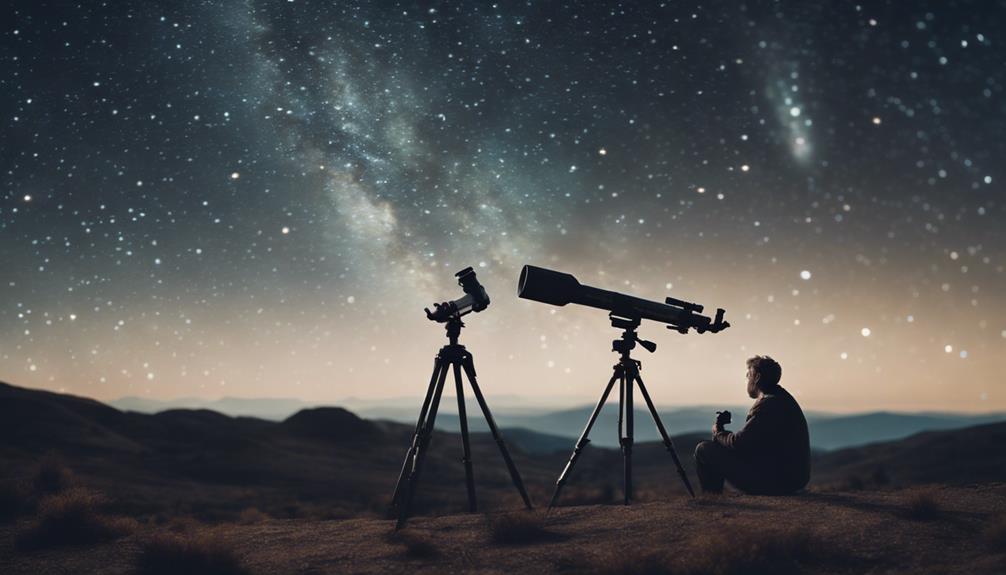
Embarking on a journey to select your portal to the cosmos isn’t a task to be taken lightly. You’ll want to balance portability with the ability to capture stunning celestial views, ensuring you don’t miss a detail of the night sky’s wonders.
From considering the nuances of aperture size to the practicality of the telescope’s design for travel, each aspect plays a pivotal role in enhancing your stargazing experience. But how do you sift through the vast sea of options to find the one that’s just right for you?
Stay engaged, and you’ll discover key insights to guide your decision, ensuring your nights under the stars are nothing short of spectacular.
Key Takeaways
- Opt for compact designs with protective casing for enhanced portability and safe travel.
- Choose telescopes with high-quality optics and sizable apertures for clear, bright stargazing views.
- Prioritize lightweight and tabletop setups to ensure easy transport and setup during stargazing trips.
- Select a durable telescope with easy-to-maintain features to withstand travel and frequent use.
Understanding Telescope Varieties
To effectively choose the best portable telescope, understanding the different varieties available is crucial, each with its own unique mechanisms and applications. Refractor telescopes, utilizing lenses for light collection, stand out for durability and low maintenance. They’re particularly favored by travelers seeking reliability without frequent adjustments.
Reflecting telescopes, on the other hand, employ mirrors to gather and focus light. This design allows for larger apertures at more affordable prices, rendering them ideal for observing galaxies and nebulae—deep sky objects that demand substantial light collection capabilities.
Mak-Cass telescopes combine lenses and mirrors to fold the optical path, resulting in a compact and versatile instrument. This design enhances portability while maintaining a focus on deep sky observation.
Dobsonian telescopes, a subset of reflecting telescopes, feature a large aperture Newtonian reflector mounted on a simple, sturdy base. Their straightforward design promotes ease of use and portability, along affordability.
Thus, Schmidt-Cass telescopes offer a balance between portability and the ability to capture detailed images of celestial bodies, making them a preferred choice for astrophotography enthusiasts and stargazers alike. Each of these telescope types presents a unique set of features tailored to specific stargazing needs and preferences.
Assessing Aperture and Optical Quality
Having explored the various types of telescopes and their specific applications, it’s now important to focus on aperture size and optical quality, as they play pivotal roles in the performance and capabilities of portable telescopes for stargazing.
Aperture size is a critical factor, with larger apertures capturing more light, resulting in brighter and clearer views of celestial objects. However, it’s crucial to strike a balance between aperture size and portability to make sure the telescope meets your stargazing needs without being overly cumbersome.
Opt for telescopes equipped with high-quality optics, including premium glass and specialized coatings, to minimize optical aberrations and enhance image sharpness. These high-quality optics are paramount for achieving superior contrast and clarity, allowing for more detailed observations of celestial phenomena. The interplay between aperture size and optical quality determines the overall effectiveness of a portable telescope in revealing the wonders of the night sky.
Hence, selecting a telescope with a perfect combination of a sizable aperture and exceptional optical quality will greatly enhance your stargazing experience, providing vivid brightness and remarkable image sharpness while maintaining a manageable level of portability.
Evaluating Portability for Travel

When evaluating a telescope’s suitability for travel, it’s important to contemplate its portability features, encompassing weight, size, and protective casing. Selecting the ideal portable telescope greatly enhances your stargazing trips by ensuring travel convenience without sacrificing observation quality.
To guide you in making an informed choice, consider the following aspects:
- Tabletop Setups: Opt for telescopes with tabletop designs, such as the Sky-Watcher Heritage 100P, which offer easy transportability and setup for on-the-go stargazing. These compact designs are particularly beneficial for travelers with limited space.
- Lightweight Options: Lightweight telescopes, like the Altair 60 EDF Doublet Refractor, prioritize portability, making them ideal for stargazing adventures. Their reduced weight aids in ease of transportation, allowing you to explore more remote locations effortlessly.
- Compact Designs: Seek out telescopes with compact structures, such as the Altair Astro Starwave ASCENT 70 ED refractor. Compact designs are synonymous with travel-friendly portability, ensuring your telescope occupies minimal space during transit.
- Protective Casing: Prioritize telescopes equipped with soft, padded cases, like the Acuter Voyager MAK80. Such cases offer essential protection against impacts during travel, safeguarding your investment and ensuring your telescope arrives in pristine condition for the best stargazing experiences.
Selecting the Right Mount
Selecting the right mount, whether an alt-azimuth or an equatorial, is important for optimizing your telescope’s tracking capabilities and enhancing your observational or astrophotographic pursuits.
For those primarily interested in visual observation, an alt-azimuth mount offers simplicity and ease of use. Its design allows for smooth movement in both altitude (up and down) and azimuth (left to right), making it ideal for scanning the night sky.
However, if your passion leans towards astrophotography, an equatorial mount is indispensable. Unlike alt-azimuth mounts, equatorial mounts are aligned with Earth’s axis, enabling them to track celestial objects with precision as they move across the sky, thus mitigating field rotation issues inherent in long-exposure astrophotography.
When considering a portable setup, motorized mounts add a layer of automation to your stargazing experience. With Go-To functionality, these mounts can automatically locate and track celestial objects, making them a valuable asset for both novice and experienced astronomers.
Regardless of the type, ensuring your mount is sturdy and stable is important. A stable mount reduces vibrations, which is important for accurate tracking and achieving clear, sharp images. Remember, the foundation of your telescope setup has a significant impact on your observational success and enjoyment.
Considering Durability and Maintenance
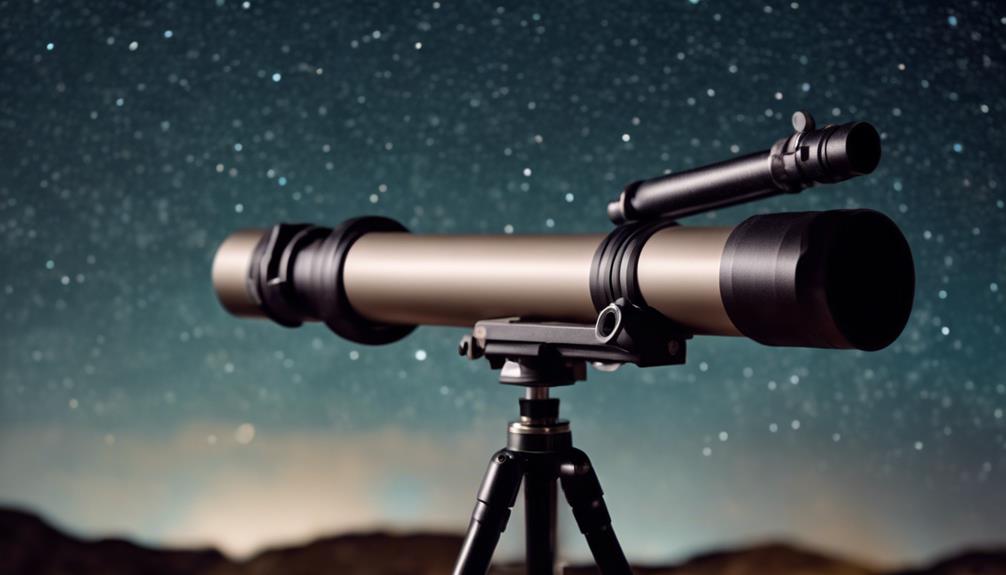
After exploring the importance of the right mount for your telescope, it’s equally imperative to focus on the telescope’s durability and maintenance characteristics to guarantee long-term performance and reliability. When selecting a portable telescope, consider these key factors for a resilient and low-maintenance experience:
- Sealed Optical Tubes: Opt for telescopes with sealed optical tubes to protect against dust and debris, markedly reducing the risk of internal contamination and preserving image quality over time.
- High-Grade Glass and Special Coatings: Look for high-grade glass and special coatings that enhance durability. These materials minimize the need for frequent maintenance and ensure your telescope withstands the rigors of travel and outdoor conditions.
- Sturdy Mounts: A sturdy mount isn’t just about stability; it also minimizes wear and tear during use. This contributes to the telescope’s longevity and guarantees consistent performance, session after session.
- Easy-to-Clean Optics and Durable Construction: Prioritize telescopes with easy-to-clean optics and durable construction materials. These features simplify maintenance routines and offer resilience against the elements, making your portable telescope a reliable companion for your stargazing adventures.
Accessories and Enhancements
As you explore the potential of your portable telescope, consider how accessories like eyepieces and Barlow lenses can greatly enhance your viewing experience by expanding the range and clarity of celestial objects.
Tools for collimation are essential for maintaining the optical alignment of your telescope, ensuring you receive the highest quality images.
Additionally, integrating portable power solutions enables extended stargazing sessions, allowing you to automate tracking with motorized mounts or Go-To systems without worrying about power constraints.
Essential Viewing Accessories
To enhance your stargazing experience, consider integrating essential viewing accessories such as Barlow lenses, red LED flashlights, collimation tools, moon filters, and smartphone adapters into your portable telescope setup. These additions can greatly improve the quality of your observations and make your viewing sessions more productive.
- Barlow Lenses: Amplify the magnification of your telescope by two or three times, making distant celestial bodies appear closer and more detailed.
- Red LED Flashlights: Preserve your night vision while you adjust your equipment in low-light conditions.
- Collimation Tools: Essential for reflector telescopes, ensuring mirrors are perfectly aligned for the best viewing clarity.
- Moon Filters: Dim the moon’s bright glare, revealing more lunar surface details and enhancing contrast for a better viewing experience.
Enhancing Optical Performance
Enhancing your portable telescope’s optical performance involves carefully selecting accessories and enhancements that elevate both clarity and viewing efficiency.
Upgrading eyepieces is paramount for superior optical performance, offering enhanced clarity that brings celestial objects into sharper focus.
Incorporating a Barlow lens can greatly increase magnification capabilities without sacrificing image quality, enabling a closer look at distant stars and planets.
A quality star diagonal corrects image orientation, reducing neck strain during prolonged stargazing sessions.
For precise location and tracking of celestial bodies, investing in a high-quality finderscope or red dot finder is essential.
To end, using a quality collimation tool ensures accurate alignment of optical components, optimizing the telescope’s overall optical performance, and making sure that every stargazing experience is both rewarding and breathtaking.
Portable Power Solutions
After considering optical performance improvements, it’s imperative to explore portable power solutions that sustain prolonged stargazing adventures without interruption. These solutions guarantee your telescope remains operational, capturing the cosmos’s wonders.
Consider these options:
- Rechargeable Lithium-ion Batteries: Compact and lightweight, these batteries offer efficient power without the bulk, making them ideal for travel-friendly setups.
- Solar Panels and Portable Solar Chargers: Harness the sun’s power during the day to fuel your nighttime observations, embodying a sustainable and endless power supply.
- Power Banks with USB Charging Ports: Versatile and convenient, power banks can charge telescopes with built-in USB ports or adapters, ensuring a continuous power flow.
- Power Management Systems: Integrated into your telescope, these systems optimize battery usage, preventing unexpected power loss during important celestial events.
Making the Final Decision
When selecting your portable telescope, weigh the factors of optical performance against physical portability to make an informed decision.
Portability isn’t merely about the telescope’s weight and size; it encompasses the ease of storage and transportation. Compact designs that offer collapsible features greatly enhance portability without compromising the telescope’s structural integrity.
Evaluate the mounting options carefully. A robust mount provides stability and versatility across various observing locations, ensuring accurate and steady celestial tracking. Additionally, consider the optical quality, which is paramount. High-quality optics, indicated by the aperture size and focal length, determine the telescope’s ability to gather light and resolve fine details of celestial objects. Larger apertures capture more light, offering brighter and clearer images, but can impact the telescope’s portability.
Finally, assess accessories compatibility. The ability to customize your telescope with different eyepieces, filters, or cameras adds versatility to your stargazing experience, allowing for a tailored observation that meets your specific interests and needs.
In essence, balance between performance and portability, alongside the telescope’s compatibility with accessories and its mounting options, defines the ideal choice for a portable telescope. Prioritize these elements based on your stargazing preferences and logistical considerations for a fulfilling celestial observation experience.
Frequently Asked Questions
How Do I Choose a Stargazing Telescope?
To choose a stargazing telescope, consider its portability factor, travel weight, and setup time. Make sure it’s user-friendly, durable, and performs well under light pollution. Balance your budget with accessory compatibility, optical quality, and viewing locations.
What Magnification Telescope Is Best for Stargazing?
Imagine piercing the velvet night, where the best magnification marries aperture size, ensuring star brightness and night sky clarity. Aim for 50x per inch, balancing resolution factors, light gathering, and zoom capability for celestial wonders.
What Type of Telescope Is Best for Viewing Planets and Stars?
For viewing planets and stars, you’ll want a telescope with a large aperture for light, stable mount, and quality eyepieces. Refractors offer clarity, while reflectors add affordability. Consider GoTo features and optical coatings too.
How Do You Choose the Perfect Telescope?
To choose the perfect telescope, consider aperture size for optical quality, mount stability for tracking, and travel weight for portability. Factor in setup ease, price range, accessory compatibility, light pollution, user expertise, and night vision.
Conclusion
In wrapping up, you’ve navigated the cosmic sea of choices, from aperture prowess to the sleekness of portability.
Remember, the universe’s marvels await through the lens of the right telescope—a beacon to galaxies afar.
Opt for a telescope that mirrors your stargazing ambitions, balancing technical finesse with the ease of a traveler. Whether it’s the rugged durability of a refractor or the deep-sky mastery of a Mak-Cass, your final pick should be a portal to the stars, tailored just for you.


