James Webb telescope reveals dazzling light show at Milky Way’s center
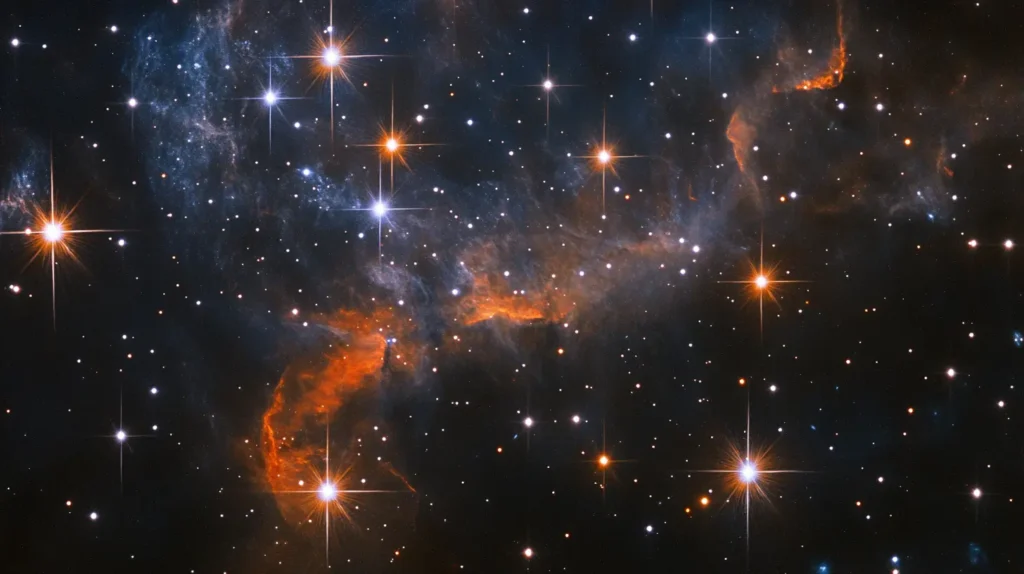
In a groundbreaking study conducted by astrophysicists at Northwestern University, the dynamic activity of the supermassive black hole Sagittarius A*, situated at the core of the Milky Way, has been illuminated.
Utilizing the James Webb Space Telescope (JWST), researchers have discovered that this black hole emits a continuous series of flares, prompting a reevaluation of previous perceptions about supermassive black holes.
This revelation challenges long-standing beliefs and offers a fresh perspective on the enigmatic behavior of these cosmic giants.
Sagittarius A* : An ultra-active black hole
Sagittarius A* is a colossal black hole with a mass four million times that of our Sun, located approximately 26,000 light-years from Earth. Previously thought to be relatively inactive compared to its cosmic counterparts, recent studies now reveal that it produces five to six major flares daily, accompanied by numerous minor fluctuations. This consistent variability suggests that black holes might be far more dynamic than previously assumed.
Research methodology
Researchers observed Sagittarius A* for 48 hours, distributed over several sessions between 2023 and 2024. By employing the Near InfraRed Camera (NIRCam) on the JWST, they were able to monitor the black hole’s activity at two simultaneous infrared wavelengths. This innovative approach provided the most detailed view ever captured of the surroundings of this black hole.
Key findings
The observations uncovered:
- Continuous luminous activity without a real resting phase.
- Brief flares, followed by intense and brilliant light outbursts occurring unpredictably.
- Delays ranging from 3 to 40 seconds between brightness variations at different wavelengths, hinting at distinct physical processes.
Professor Farhad Yusef-Zadeh, the principal author of the study, noted, “Our analysis highlighted an ever-evolving brightness, with sudden bursts appearing randomly, making each observation unique.”
Impact of the discoveries
These observations enhance our comprehension of how black holes interact with their environments. The flares are likely generated by turbulent fluctuations in the accretion disk encircling the black hole, where gas and dust are heated to extreme temperatures. This intense activity could influence star formation and galactic dynamics.
Future observations
The researchers plan to observe Sagittarius A* for 24 consecutive hours to further analyze the activity patterns and ascertain the randomness or periodicity of the flares. This study could also illuminate how supermassive black holes nourish their surroundings and impact galactic development.
The discoveries made by the Webb telescope concerning Sagittarius A* represent a significant leap forward in our understanding of black holes. They provide a captivating glimpse into the dynamic nature of these celestial objects and their potential role in the evolution of galaxies.
As our knowledge expands, so too does the intrigue surrounding these cosmic phenomena, heralding a new era of exploration and discovery in the field of astrophysics.
