Must-See Telescope Observatories Around the World

Imagine standing atop Mauna Kea in Hawaii, enveloped in the quiet of the night, peering through the lens of the world’s largest astronomical observatory. You’re not just observing stars; you’re stepping into a domain where the boundaries of time and space blur.
Each observatory, from the iconic Griffith Observatory to the advanced Paranal Observatory in Chile, offers more than just a view of the cosmos; they serve as portals to the universe, blending history, technology, and the sheer wonder of exploration.
The question then becomes: which observatory will you choose to reveal the mysteries of the night sky?
Key Takeaways
- Observatories like Mauna Kea offer exceptional stargazing due to their high altitudes and unique viewing periods.
- Architectural wonders like Jantar Mantar blend history, culture, and astronomy, making them iconic must-visit locations.
- Educational programs at places like the Griffith Observatory provide valuable learning experiences in astronomy.
- Observatories contribute to major research breakthroughs and utilize leading technologies, showcasing advancements in observational astronomy.
Choosing Your Observatory Destination
When selecting your observatory destination, it’s important to weigh the site’s altitude, as higher elevations often yield superior stargazing conditions. Altitude plays a critical role in reducing atmospheric interference, which can greatly enhance the clarity and quality of celestial observations.
Observatories situated at lofty heights benefit from less atmospheric distortion, allowing telescopes to capture sharper images of the cosmos. This technical advantage is crucial for both amateur stargazers and seasoned astronomers aiming to observe the night sky in unparalleled detail.
Additionally, consider the availability of guided tours within your chosen observatory. Such tours can provide you with a deeper understanding of the instruments you’ll encounter, including their history and significance in the field of astronomy. Learning about the specific telescopes and their contributions to our comprehension of space adds a rich layer to your stargazing experience.
Furthermore, it’s prudent to research the observatory’s peak stargazing season. Planning your visit during these best periods can dramatically improve your chances of witnessing celestial events in their full glory.
Each observatory has its own unique timeline when conditions are at their best, often dictated by local climate patterns and geographical location.
Iconic Observatories and Locations
After considering the factors important for selecting an observatory destination, let’s examine some of the world’s most iconic observatories and their unique locations.
The Mauna Kea Observatory, situated in Hawaii, stands as the world’s largest astronomical observatory. Perched at an altitude of 14,000 feet above sea level, it hosts an impressive array of 13 telescopes, offering unparalleled views of the cosmos.
Over in London, the Royal Observatory Greenwich, overlooking the River Thames, plays a pivotal role in the history of astronomy and navigation, having established Greenwich Mean Time (GMT).
Further afield, the National Observatory in Athens, Greece, marks its significance as the first research center in the country, nestled on the Hill of the Nymphs since 1842.
In Jaipur, India, the Jantar Mantar, built in 1734, showcases 19 astronomical instruments, including the world’s largest sundial, illustrating the advanced understanding of celestial movements by Maharajah Jai Singh II.
Lastly, El Caracol, located in Chichen Itza, Mexico, offers a glimpse into the ancient Mayan civilization’s astronomical prowess, believed to have been used for celestial observations amidst the dense jungle.
Architectural Marvels and Wonders
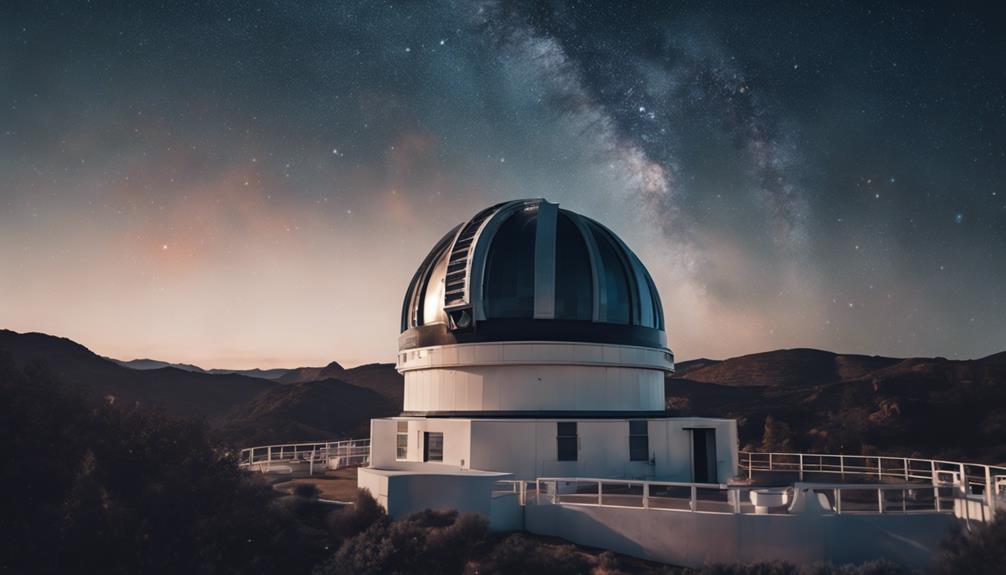
Exploring the world’s most iconic observatories, you’ll discover that their architectural designs aren’t only functional but also embody marvels and wonders that bridge the gap between science and art. These structures serve as a witness to humanity’s relentless pursuit of understanding the cosmos, merging the domains of architecture and astronomy into singular, awe-inspiring experiences.
Among these, a few stand out for their unique contributions to the architectural and astronomical worlds:
- Griffith Observatory: Nestled in Los Angeles, California, this Art Deco marvel not only offers stunning views of the cosmos but also boasts a rich cinematic history, making it a cultural and architectural landmark.
- Jantar Mantar: Located in Jaipur, India, this observatory is home to 19 astronomical instruments, including the world’s largest stone sundial. It’s a fascinating example of early astronomical science and a unique blend of history and astronomy.
- El Caracol: Situated in Chichen Itza, Mexico, this ancient observatory offers insights into the Mayan understanding of the heavens, combining architectural wonders with a deep historical experience.
- Royal Observatory: Spanning locations in Edinburgh and Greenwich, these observatories offer a glimpse into the evolution of astronomical study. From Victorian telescope domes to the birthplace of Greenwich Mean Time, they encapsulate a unique blend of history and astronomy, inviting visitors to explore the architectural wonders that have shaped our understanding of the universe.
Educational Opportunities
Observatories and planetariums worldwide offer a wealth of educational opportunities, enabling both students and the general public to explore the complexities of the universe through hands-on experiences and interactive learning.
At the Griffith Observatory in Los Angeles, educational programs are specifically designed for schools and visitors, providing insights into celestial phenomena and the tools used to study them.
Similarly, the Space Telescope Science Institute in Baltimore, which operates the Hubble Space Telescope and the upcoming James Webb Space Telescope, plays a pivotal role in disseminating astronomical knowledge, offering resources that explore the intricacies of space exploration and observation.
The Shanghai Planetarium, recognized as the largest astronomy museum globally, is an integral part of the Shanghai Science & Technology Museum, showcasing extensive astronomy exhibits that narrate the story of the universe’s past, present, and future. Munich’s Deutsches Museum features dedicated astronomy exhibits, including Fraunhofer’s Telescope, facilitating a deep understanding of astronomical measurements and discoveries.
In addition, the South African Astronomical Observatory, with its history dating back to 1820, houses significant telescopes like SALT, 1.0m, 1.9m, and Lesedi 1m, all dedicated to educational purposes, offering a practical approach to learning about the cosmos. These observatories and planetariums, among others, serve as important platforms for fostering a deeper appreciation and understanding of astronomy.
Planning Your Visit

Before you start on your journey to visit a telescope observatory, it’s important to meticulously plan your visit by checking specific visiting hours and reservation requirements. Delve into the observatory’s visitor center website or contact them directly to gather this critical information. Here’s a succinct guide to enhance your planning:
- Verify Visiting Hours and Reservation Requirements: Ensure you’re aware of the observatory’s operational hours. Some may require prior reservations, especially for tours, programs, and stargazing opportunities.
- Explore Available Programs: Look for educational workshops, astronomy evenings, and special events that can enrich your visit. These are often listed on the observatory’s website or advertised through their visitor center.
- Consider Altitude and Weather Conditions: Observatories are usually situated at high altitudes. Check the weather conditions for the planned visit date to ensure clear skies for optimal stargazing experiences. Don’t forget to pack accordingly, taking into consideration the cooler temperatures at higher elevations.
- Prepare Necessary Gear: Bring warm clothing, a red light flashlight to preserve night vision, and a camera to capture the celestial wonders.
Observatories in Research
You’ve seen how observatories offer unparalleled glimpses into the cosmos, but their impact on research is profound. They’re equipped with leading-edge technologies like the VLT’s interferometry, which sharpens celestial images with unprecedented clarity.
These facilities have been pivotal in achieving research breakthroughs, from detecting faint objects billions of times dimmer than the naked eye can see to uncovering new planets.
Research Breakthroughs Achieved
Throughout the years, numerous research breakthroughs have been achieved thanks to the pivotal role played by global telescope observatories in advancing our understanding of the cosmos.
- Arecibo Observatory: As the largest single-dish radio telescope, it was pivotal in the study of radio waves from space, enhancing our understanding of the universe’s radio spectrum.
- Mauna Kea Observatories: Situated at 14,000 feet, their 13 telescopes have facilitated groundbreaking discoveries, leveraging the clear skies above Mauna Kea.
- Atacama Large Millimeter Array (ALMA): Positioned in the Atacama Desert, ALMA’s contribution to astronomical research, particularly in observing the universe’s coldest objects, has been unparalleled.
- South African Astronomical Observatory & European Southern Observatory: With instruments like SALT and VLT, they’ve enabled significant advancements in observational astronomy, using interferometry techniques for detailed cosmic observations.
Leading Observatory Technologies
Building on the remarkable discoveries achieved through global observatories, it’s imperative to explore the advanced technologies that enable these institutions to push the boundaries of astronomical research.
The Roque de los Muchachos Observatory, home to the Swedish 1-m Solar Telescope, represents Europe’s pinnacle in solar observation. Similarly, La Silla Observatory, blessed with clear skies for 300 days a year, utilizes the High Accuracy Radial Velocity Planet Searcher, enhancing exoplanet detection.
The South African Large Telescope (SALT) at the South African Astronomical Observatory, the largest in the southern hemisphere, epitomizes optical observational prowess. The Very Large Telescope (VLT) at Paranal, operated by the European Southern Observatory (ESO), showcases unparalleled precision with its quartet of telescopes.
Further, Mauna Kea Observatory, perched atop Hawaii, benefits from near-perfect observing conditions, housing some of the world’s most colossal telescopes.
Beyond the Telescope
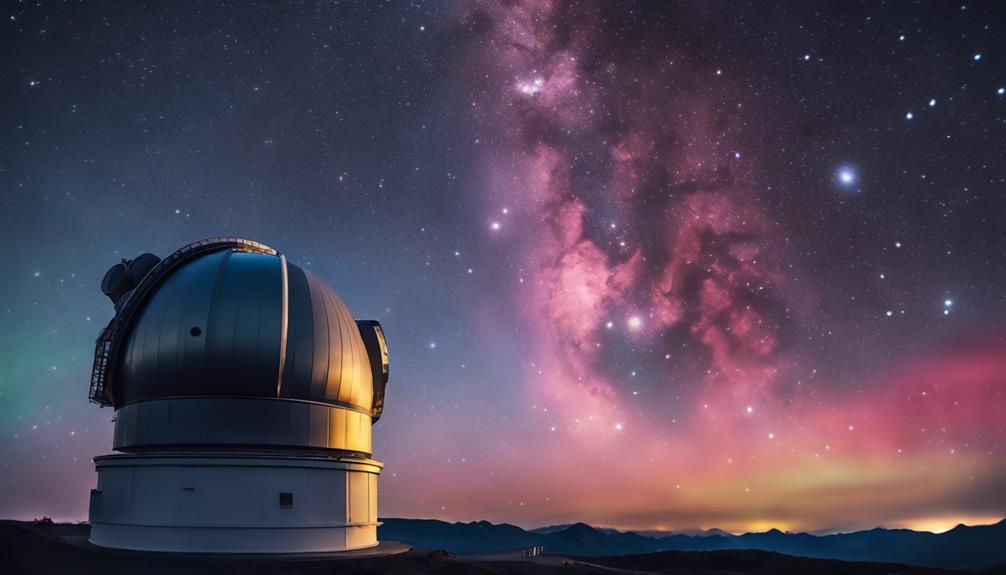
Exploring observatories offers more than mere celestial observations; it greatly enhances one’s mental well-being and fosters a profound connection with the natural cosmos. When you dive deeper into the world beyond the telescope, you uncover a universe brimming with opportunities for growth, learning, and conservation.
Here’s how:
- Mental Well-Being and Connection with Nature: The act of stargazing at observatories doesn’t just satiate your astronomical curiosity; it’s a therapeutic activity that soothes the mind and strengthens your bond with the universe. This unique blend of science and spirituality enhances mental well-being by providing a serene escape from the hectic pace of modern life.
- Educational Growth: Observatories serve as educational hubs, offering programs, workshops, and hands-on experiences that enrich your knowledge of astronomy. These encounters foster a deeper appreciation for the sciences and inspire the next generation of astronomers through engaging educational programs.
- Conservation and Sustainable Tourism: By promoting the conservation of dark skies, observatories play a pivotal role in reducing light pollution, protecting nocturnal wildlife, and advocating for sustainable tourism practices. This not only preserves the beauty of the night sky but also highlights the critical importance of environmental stewardship.
- Astrophotography and Research Contributions: Access to high-powered telescopes and professional guidance opens up vast opportunities for astrophotography enthusiasts and thus contributes to the field of astronomy. Observatories like Mauna Kea and Paranal are at the forefront of astronomical research, offering unparalleled insights into the cosmos.
Frequently Asked Questions
What Is the Most Important Observatory in the World?
Considering historic significance, scientific breakthroughs, and international collaborations, Mauna Kea Observatory stands as the most important. Its location benefits, coupled with technological advancements, enable unprecedented celestial discoveries, enrich educational impact and offer unique visitor experiences.
Where Are the Best Telescopes in the World?
You’ll find the world’s best telescopes benefiting from dark skies’ importance, incorporating advanced telescope technology, and situated at prime night photography locations. They’re often part of public access observatories hosting sky watching events and astronomical phenomena tours.
What Are the Five Biggest Optical Telescope Observatories in the World?
You’re setting out on a journey for the five giants in optical astronomy, where mirror technology and dome engineering eclipse the ages. These observatories, free from light pollution, are pivotal for astronomical discoveries and star gazing.
What Country Has the Best Observatory?
Determining the best observatory country involves examining dark sky tourism, observatory design, and technological advancements. Consider historical observatories, future projects, and space observatories’ roles alongside public access policies, locations, and their environmental impact on amateur astronomy.
Conclusion
So, you’ve decided to traverse the globe, armed with nothing but your untamed curiosity and a penchant for astronomical wonder.
Congratulations! You’re about to join the elite ranks of those who’ve realized that staring at distant stars through colossal lenses is far more exhilarating than the latest binge-worthy series.
Remember, as you meticulously plan your pilgrimage to these celestial cathedrals, the universe isn’t expanding for anyone’s amusement. Or perhaps it is, and we’re just the cosmic sitcom it never knew it needed.
