Refractor or Reflector? Your Ultimate Telescope Showdown Guide

In the quest for celestial clarity and cosmic discoveries, you’re faced with a fundamental choice: refractor or reflector telescopes. Each brings its unique advantages and challenges, from the refractor’s ease of use and maintenance to the reflector’s superior light-gathering capabilities.
As you stand at this crossroads, pondering which path to take, consider what lies beyond the stars you wish to observe. Will the crisp, chromatic-free images of a reflector sway you, or does the durability and simplicity of a refractor appeal more?
Your journey through the cosmos begins with this decision, and the right guidance can illuminate the path forward.
Key Takeaways
- Refractors offer superior image clarity with less chromatic aberration, ideal for detailed observations.
- Reflectors provide larger apertures at a lower cost, enhancing light-gathering for dim celestial viewing.
- Reflectors, particularly Dobsonians, are cost-effective for those seeking large apertures on a budget.
- Maintenance and portability favor refractors, making them more suitable for frequent travelers and reducing long-term upkeep.
Understanding Optical Design
Diving into the world of astronomy, it’s important to grasp the nuances of optical design in telescopes, as your choice between refractor and reflector models greatly impacts your observational experience and outcomes. Refractor telescopes focus light using lenses, while reflectors employ mirrors, leading to distinct optical pathways and consequences for viewing deep space.
The refractor’s lenses, especially when not apochromatic triplets, can introduce chromatic aberration, distorting colors and diminishing clarity. This aberration doesn’t affect reflective telescopes, making them superior for observing the cosmos without color distortion.
However, the optical design of reflectors comes with its own complexity. Various configurations, including Newtonian, Dobsonian, and Cassegrain, offer unique advantages. Newtonians provide simplicity and effectiveness, Dobsonians offer portability and ease of use, while Cassegrain designs excel in minimizing physical length without compromising focal length. These designs cater to diverse observing preferences, but all share a common resistance to chromatic aberration, a significant advantage for deep space exploration.
Understanding these fundamental differences in optical design between refractor and reflector telescopes is important. It helps you invest in equipment that aligns with your astronomical aspirations, budget, and the specific celestial phenomena you wish to observe.
Light Gathering Capabilities
When evaluating a telescope’s ability to reveal the cosmos, it’s important to contemplate its light gathering capabilities, fundamentally determined by the size of its aperture.
Larger apertures mean more light can be captured, which is critical for observing faint celestial objects with clarity and detail. Reflector telescopes, particularly those of the Dobsonian variety, are renowned for their superior light gathering abilities due to their typically larger apertures.
- Aperture size: The larger the aperture, the more light a telescope can collect. This is the single most important factor in a telescope’s light gathering capability.
- Refractor vs. Reflector: Reflectors often come with larger apertures at a lower cost compared to refractors, making them better suited for light gathering.
- Observing faint objects: Larger apertures excel in revealing dim galaxies, nebulae, and star clusters by collecting faint light that smaller apertures can’t.
- Cost-effectiveness: Reflectors, especially Dobsonians, offer a cost-effective way to achieve large apertures, thereby enhancing light gathering without breaking the bank.
Understanding these aspects is critical when prioritizing light gathering in your telescope choice. Reflectors stand out as the go-to option for amateur astronomers aiming to explore the depths of space without compromising on the quality of the view.
Assessing Image Clarity
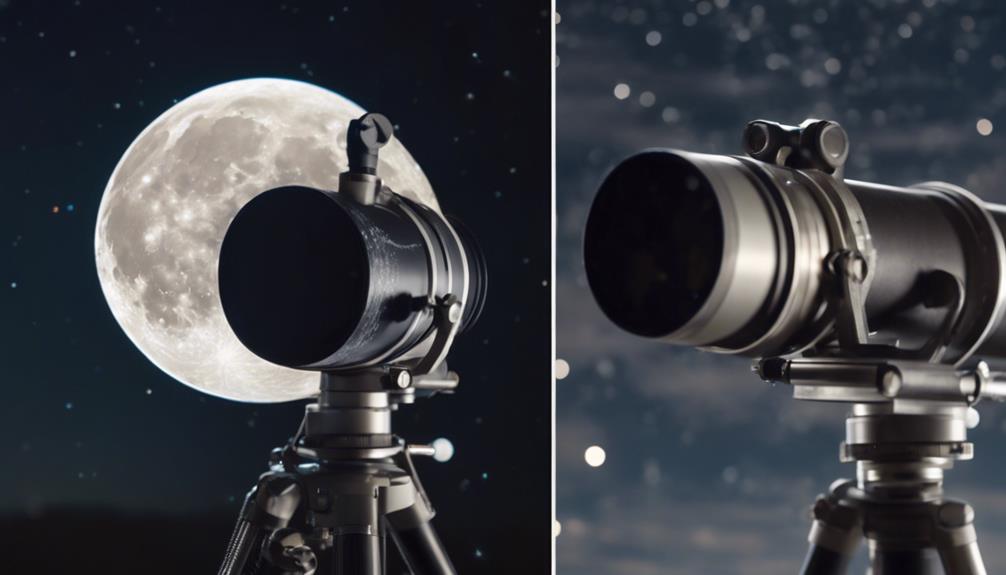
When evaluating image clarity in telescopes, you must compare optical quality, considering both refractors and reflectors have unique advantages.
You’ll find that light-gathering capacity directly influences how clear and detailed the images of celestial bodies appear.
Additionally, the impact of chromatic aberration on image crispness can’t be overlooked, with specific designs like apochromatic triplets in refractors mitigating this issue for superior clarity and color accuracy.
Optical Quality Comparison
In evaluating the optical quality of telescopes, it’s important to understand that refractor models typically offer sharper, clearer images due to their lens-based system. This advantage is particularly striking when considering the following aspects:
- Apochromatic Refractors: These triplets greatly reduce chromatic aberration, enhancing color correction for pristine, high-quality images.
- Chromatic Aberration: While refractor telescopes can exhibit this, advanced models effectively minimize its impact, ensuring minimal distortion.
- Mirror Imperfections: Reflectors might suffer from slight quality dips due to potential imperfections in their mirrors, affecting overall clarity.
- Planetary and Lunar Observations: The superior optical quality of refractors makes them the preferred choice for observing detailed planetary and lunar surfaces with minimal image distortion.
Understanding these key differences can guide you in choosing a telescope that meets your specific needs for optical quality.
Light Gathering Capacity
Understanding the light gathering capacity of a telescope is essential, as it directly influences the clarity and brightness of the images you’ll observe, especially in dimly lit deep space environments. The aperture size plays a pivotal role in this aspect, with larger apertures enabling more light to be collected.
This is particularly crucial for reflector telescopes, which are renowned for their larger apertures, making them superior for deep sky observation. They excel in showcasing fainter celestial objects with remarkable detail and brightness.
| Telescope Type | Aperture Size | Ideal Use |
|---|---|---|
| Reflector | Large | Deep sky observations |
| Refractor | Smaller | Brighter, closer objects |
Reflector telescopes, with their larger apertures, outperform refractors in gathering light, displaying dimmer deep space objects with enhanced clarity.
Chromatic Aberration Impact
The impact of chromatic aberration on image clarity in refractor telescopes greatly compromises the sharpness and color accuracy of observed celestial bodies. Here’s a detailed look:
- Color Fringing: Chromatic aberration introduces unwanted color fringing around objects, distorting the true colors of celestial sights.
- Contrast and Sharpness: It considerably reduces contrast and sharpness, particularly in high-contrast scenarios, muddying the details.
- Lens Types: Refractors with doublet lenses are more susceptible than those with apochromatic triplets, which are designed to minimize this aberration.
- Reflector Advantage: Unlike refractors, reflector telescopes aren’t affected by chromatic aberration, offering clearer and more detailed images without the hassle of color fringing.
Understanding these impacts helps in choosing the right telescope for your astronomical pursuits.
Portability Considerations
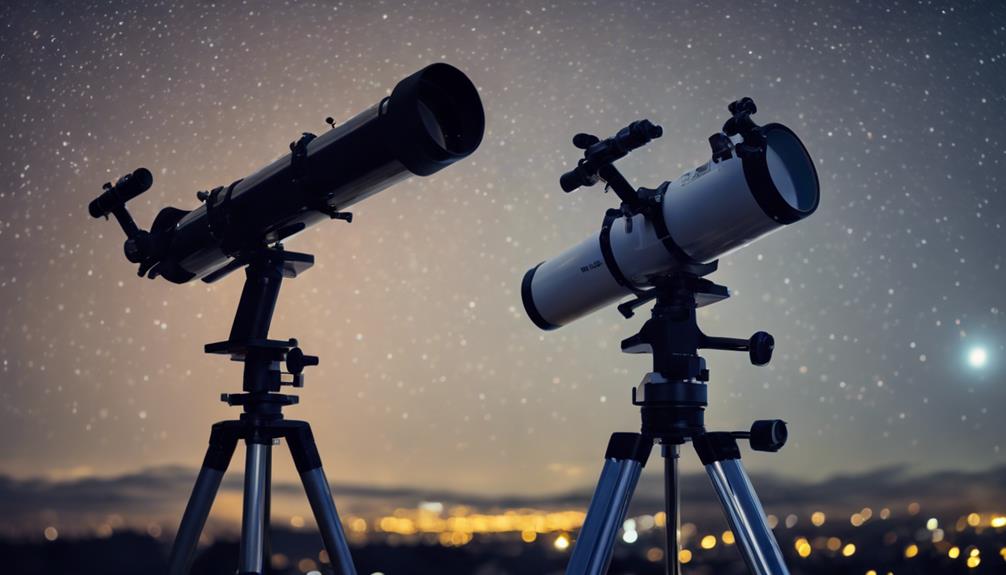
When selecting a telescope, it’s important to weigh up its portability, particularly if you plan to indulge in stargazing from various vantage points. Given the facts, refractor telescopes are generally more compact and lighter, which enhances their portability to a great extent.
This makes them a favored choice for amateur astronomers and beginners who value the ability to easily transport their equipment for outdoor use. On the other hand, reflector telescopes, with their bulkier and heavier design, demand more effort to move and set up at different locations.
Here’s a concise comparison to help you understand the portability considerations between the two:
| Telescope Type | Portability |
|---|---|
| Refractor | High |
| Reflector | Low |
Refractors are notably more convenient for travel and outdoor observations due to their size and weight advantages. This portability factor is important for those who aspire to explore the night sky from various locations.
Reflectors, while offering their own set of advantages, pose a greater challenge when considering mobility. Hence, when portability is a key consideration, refractor telescopes clearly have the upper hand.
Maintenance and Upkeep
To guarantee your telescope continues to provide crisp and clear views of the cosmos, regular maintenance and upkeep are essential. Understanding the nuances of maintenance for both refractor and reflector telescopes can have a profound impact on their performance and longevity.
Reflector telescopes, with their intricate mirror systems, require meticulous care to maintain top-notch image quality. On the other hand, refractors, with their simpler lens-based systems, typically demand less frequent attention.
When considering the upkeep of your telescope, keep the following points in mind:
- Proper Setup and Alignment: Ensuring your telescope is correctly assembled and aligned is critical for both types. Misalignment can lead to poor image quality and can stress components, leading to more significant issues down the line.
- Regular Cleaning: The optical components, whether lenses in refractors or mirrors in reflectors, need routine cleaning to remove dust and fingerprints, which can degrade image clarity.
- Storage Conditions: A dry, dust-free environment is ideal for storing your telescope, protecting it from the elements and reducing the need for cleaning.
- Maintenance Schedule: Regular checks and maintenance, tailored to the specifics of your telescope type, will help in early identification of potential issues, preventing damage.
Cost Analysis

In analyzing the cost of owning a telescope, you’ll need to weigh the initial purchase price against long-term maintenance expenses. Reflectors, particularly Dobsonians, often present a lower upfront cost compared to refractors, but the latter can incur fewer maintenance costs over time due to their sealed optical tube.
This differentiation is important as you consider not only the quality of your celestial observations but also the total investment required for your astronomical endeavors.
Initial Purchase Price
Delving into the initial purchase price of telescopes, you’ll find that refractor models typically command a higher upfront cost than their reflector counterparts. This disparity in initial investment is largely due to the materials and construction intricacies associated with refractor telescopes. Here are key points to take into account:
- Refractor telescopes’ price is driven up by high-quality lenses and larger apertures.
- Reflector telescopes offer a more budget-friendly entry point into astronomy.
- The quality of the lens in refractors plays a significant role in their premium pricing.
- Reflectors, utilizing mirrors, circumvent the costly manufacturing process of lenses, making them more accessible.
Analyzing these aspects, it’s clear that reflector telescopes present a cost-effective choice for beginners, while refractor telescopes, with their higher initial purchase price, cater to those prioritizing optical quality and performance.
Long-term Maintenance Costs
Consider the long-term maintenance costs of telescopes, as they heavily impact your overall budget and experience in astronomy. Refractor telescopes typically boast lower long-term maintenance costs. Their simpler design and fewer moving parts mean they’re less susceptible to wear and tear.
Unlike reflectors, refractors are less prone to dust and dirt accumulation, sparing you frequent cleaning sessions. On the other hand, reflector telescopes, with their open tube designs, demand more attention. They’re more likely to gather dust and debris, impacting the mirrors’ effectiveness. Additionally, reflectors require regular collimation to guarantee optimal performance, adding to potential maintenance expenses.
When choosing between refractor and reflector telescopes, considering these long-term maintenance costs is essential for ensuring your budget’s sustainability.
Making Your Choice
When choosing between a refractor or reflector telescope, it’s important to weigh the types of celestial objects you’re keen on observing against each telescope’s strengths and limitations. Refractor telescopes, known for their low maintenance and ease of use, are often recommended for beginners.
However, they may suffer from chromatic aberration, which can affect the quality of the images of certain celestial objects.
On the other hand, reflector telescopes, while requiring more maintenance, offer larger apertures for the same price, making them a better choice for observing deep space objects without the issue of chromatic aberration.
Considering these aspects, your choice should align with your observing preferences, maintenance capabilities, and budget. Here are some key points thus:
- Refractor telescopes are ideal for those who prefer a ‘grab-and-go’ option with minimal setup and maintenance.
- Reflector telescopes offer superior deep space capabilities for their price, appealing to enthusiasts looking to explore galaxies and nebulae.
- Observing preferences should guide your decision, with a clear understanding of what each type excels in.
- Budget and maintenance capabilities can influence your choice, as reflectors typically provide more value for aperture size but require more upkeep.
Choosing the right telescope is a balance of these factors, tailored to your specific interests in the night sky.
Refractor Vs. Reflector Debate

Having outlined the key considerations for choosing between refractor and reflector telescopes, let’s examine the nuanced distinctions and ongoing debate surrounding these two types. Refractor telescopes harness lenses to converge light into an image, offering you clarity and low distortion, important for detailed planetary viewing.
However, they’re not without their flaws, such as chromatic aberration—a phenomenon where color fringes appear around objects due to the lens’s inability to focus all colors at the same point.
On the flip side, reflector telescopes leverage mirrors to reflect light, sidestepping chromatic aberration entirely. This design allows for larger apertures at a reduced cost, making them a go-to for deep space observations where capturing faint light from distant galaxies and nebulae is paramount. Yet, their open tube design demands more maintenance, and the setup might project images upside down, posing a challenge for beginners.
The debate between refractors and reflectors isn’t about a clear winner but about matching your astronomical ambitions to the telescope’s strengths. If your heart’s set on unearthing the intricate details of distant planets or the moon, a refractor’s your ally.
But, if you’re captivated by the vastness of deep space, a reflector will serve you well, offering unmatched aperture to peer into the cosmos’s depths.
Frequently Asked Questions
Do I Want a Reflector or Refractor Telescope?
You’ll want a refractor if portability and night sky photography are priorities, given its low maintenance. However, for deeper celestial exploration with less worry about upkeep, a reflector meets your needs more effectively.
Do Professional Astronomers Use Reflecting or Refracting Telescopes?
Professional astronomers typically use reflecting telescopes, with their advantages in mirror maintenance, adaptive optics, and combating light pollution. These features make reflectors more suitable for detailed, technical research over refractors in professional settings.
Which Telescope Has Better Magnification Reflector or Refractor?
You’ll find reflector telescopes have better magnification, as they gather more light and aren’t limited by lens clarity or chromatic aberration. This advantage stands even amidst light pollution, offering clearer, more detailed observations.
Is the James Webb Telescope a Reflector or Refractor?
The James Webb Telescope, a reflector, revolutionizes space observation with its infrared capabilities. Its 18 gold-coated, hexagonal mirrors offer unparalleled insights, marking significant advancements in James Webb’s technology and our cosmic understanding.
Conclusion
So, you’ve navigated the technical labyrinth of refractor versus reflector telescopes, weighing each design’s merits against your celestial ambitions. The choice isn’t straightforward; it teeters on a delicate balance of portability, maintenance, cost, and optical prowess.
Will the crisp, steady views of a refractor seduce you, or does the deep-sky allure of a reflector’s vast aperture beckon? Your ultimate decision hinges on dissecting these intricate details, aligning precisely with your stargazing desires.
The cosmos awaits your verdict.


