Safe High-End Telescope Handling: A Simple How-To Guide

Exploring the cosmos with a high-end telescope is akin to sailing uncharted waters; you need the right tools and knowledge to safely voyage through the stars.
You’ve invested in a top-tier instrument, and it’s essential that you handle it with care to maintain its precision and longevity. This guide walks you through the essentials of preparing, using, and maintaining your telescope, from setup to storage. You’ll learn how to transport your telescope safely, adhere to operational guidelines, and troubleshoot common issues.
But first, let’s start with the basics of assembly and focusing techniques—key steps that lay the groundwork for a successful journey into astronomy. Why is this important? The longevity of your telescope and the clarity of your celestial observations depend on it.
Key Takeaways
- Ensure telescope acclimation to outdoor temperatures and stable mounting to prevent damage.
- Follow manufacturer’s assembly instructions and perform regular maintenance for optimal performance.
- Use padded cases for transport and secure packaging to protect sensitive components.
- Observe safety protocols, including using solar filters for sun observation and avoiding direct optical surface contact.
Preparing for Telescope Use
Before setting out on your celestial observations, it’s important to properly prepare your high-end telescope for use. Initially, you need to check the weather forecast to make sure the skies are clear, as key viewing conditions are pivotal. This step is essential; cloud cover or poor atmospheric conditions can severely limit the capabilities of your telescope, rendering your efforts futile.
Subsequently, acclimating your telescope to the outdoor temperature is vital to prevent fogging of the optics. This might sound trivial, but temperature differences between the telescope and the outside environment can cause condensation on your lenses or mirrors, greatly affecting the quality of your observations.
Next, securing your telescope on a stable surface is imperative to avoid any accidental falls or damage. Using a robust mount that can support the weight and size of your telescope without wobbling is key to maintaining the precision of your observations. A shaky mount can lead to blurred images and can even risk misalignment of delicate components.
Correct Assembly Procedures
After preparing your telescope for use by ensuring the best viewing conditions and securing it on a stable surface, it’s now imperative to focus on the correct assembly procedures to maintain its high-end performance. The assembly of your telescope isn’t just about piecing it together; it’s a meticulous process that guarantees top-notch functionality and safety.
To make sure you’re on the right track, follow these guidelines:
- Follow the manufacturer’s instructions: Use the user manual guidance for step-by-step, proper setup instructions. This guarantees each part is assembled in the correct order and position.
- Use the provided tools and components: To secure attachment, utilize all tools and components supplied by the manufacturer. This avoids any compatibility issues or damage.
- Align optical components carefully: Optical alignment is key to achieving clear, sharp images. Take your time to adjust and align lenses or mirrors as directed.
- Check for loose screws or connections: A loose screw check before use can prevent potential accidents or damage. Make sure everything is tight and secure.
- Consult the user manual for any troubleshooting: If you encounter issues during telescope assembly, the user manual is your go-to resource for solutions and additional guidance.
Transporting Your Telescope Safely

When transporting your high-end telescope, it’s critical to employ secure packing methods to safeguard its intricate components.
You’ll need to strategize on the best practices for loading it into a vehicle, ensuring that the telescope and its parts aren’t subjected to undue stress or movement that could lead to damage.
This involves using padded cases designed for telescopes, securing all accessories, and carefully placing the telescope to avoid pressure on sensitive areas.
Secure Packing Methods
To safeguard your telescope’s safety during transport, choose its original packaging or a sturdy case specifically designed for telescopic equipment. Secure packing is paramount to preventing damage during transportation. You’ll need to make sure that every component is snug and protected.
- Wrap each telescope component individually with foam padding or bubble wrap to mitigate shifting.
- Utilize additional packing material to fill any voids within the box, making sure there is no movement.
- Purchase shipping insurance to cover potential damage during transit, offering peace of mind.
- Clearly label the package with fragile stickers and ‘handle with care’ instructions to alert handlers.
- Opt for a case with customized foam inserts for enhanced security and fit.
These steps are critical in making sure your telescope arrives intact, ready for your next stargazing adventure.
Vehicle Loading Tips
Before loading your telescope into a vehicle, make sure it’s securely encased in a padded container designed to absorb shocks and vibrations during transit.
| Component | Protection Strategy | Reason |
|---|---|---|
| Telescope Body | Padded Case | Absorbs shocks & vibrations |
| Mount & Tripod | Straps/Bungee Cords | Prevents shifting/sliding |
| Optical Elements | Stable Positioning | Avoids damage from movement |
| Accessories | Check & Secure | Prevents loss/damage |
| Entire Setup | Avoid Extreme Temperature | Preserves functionality |
Utilize straps or bungee cords to guarantee the telescope doesn’t shift or slide, maintaining stability. Position it to mitigate damage from sudden stops or turns.
Always avoid exposing the telescope to direct sunlight or extreme temperatures, as these can affect its components. Checking and securing all parts before and after transport is critical for its protection.
Regular Maintenance and Care
To guarantee your high-end telescope operates at peak performance, it’s essential to adopt a meticulous approach to its maintenance and care.
Cleaning optics properly, employing strategic storage and transportation methods, and conducting periodic alignment checks are fundamental practices.
These steps not only preserve the integrity of your telescope’s components but also guarantee best observational results.
Cleaning Optics Properly
Maintaining your telescope’s optics with proper cleaning techniques is important for preserving image quality and ensuring longevity. Cleaning too often or too aggressively can damage the coatings on your telescope optics, affecting image quality. Most telescope optics need cleaning just once a year to maintain performance, using gentle methods and specific tools.
- Use compressed air to blow away loose dust from optical surfaces.
- Dilute isopropyl alcohol with distilled water to create a gentle cleaning solution.
- Apply the cleaning solution with soft tissues or cotton balls, avoiding direct contact with the optics.
- Lift off remaining dirt without rubbing the optical surfaces.
- Consider using specialized tools like LensPen or a Lens Cleaning Kit for removing fingerprints, dust, and dirt from eyepieces and lenses.
Storage and Transportation Tips
When storing and transporting your high-end telescope, it’s important to select a dry, dust-free, and secure environment to prevent any potential damage and guarantee its peak performance.
Ideal storage locations, like an observatory, unheated garage, or a well-ventilated shed, prevent moisture buildup, essential for maintaining your telescope’s condition. Keep the telescope at or near outside temperature to prevent temperature shock.
Regular maintenance, including proper collimation and cleaning, is vital. Always cover the optics to protect against dust, mold, and mildew.
| Maintenance Task | Benefit |
|---|---|
| Cover the optics | Protects against dust, mold, and mildew |
| Store in ideal location | Prevents moisture buildup |
| Keep at outside temperature | Avoids temperature shock |
| Perform regular maintenance | Ensures peak performance |
| Secure environment | Prevents damage |
Periodic Alignment Checks
Ensuring your high-end telescope’s alignment through regular checks is important for precise celestial tracking and best performance. Periodic alignment checks are vital to maintain your telescope’s ability to accurately locate and follow celestial objects. This regular maintenance ensures that your observations are as accurate and rewarding as possible.
- Follow the manufacturer’s recommended schedule for alignment checks to prevent inaccuracies.
- Align the finderscope with the main telescope to guarantee both are synchronized.
- Check for any misalignments that could affect tracking precision.
- Adjust the telescope’s alignment using the provided tools and instructions.
- Test the alignment by tracking known celestial objects to confirm accuracy.
These steps are vital for best telescope handling, ensuring that your high-end telescope remains a reliable tool for exploring the universe.
Effective Cleaning Techniques
To effectively clean your telescope and maintain its peak performance, start by using a camel hair brush or compressed air to gently remove any dust and particles from the optics.
This initial step is important in the array of effective cleaning techniques, as it prevents scratches during the subsequent cleaning processes. Avoid disassembling sealed telescopes unless absolutely necessary, as improper handling can lead to damage that’s difficult to repair.
For stains and fingerprints that are more stubborn, a gentle homemade cleaning solution can be applied. However, before introducing any liquid to your telescope optics, make sure to check the mirrors for any pinholes, scratches, or uneven coatings that might be exacerbated by cleaning solutions. This pre-cleaning inspection is essential for preventing further damage.
When it comes to cleaning telescope mirrors, a solution of lukewarm water mixed with mild dish soap proves to be both gentle and effective. This method ensures an even reflection and maintains the integrity of the mirror’s coating.
Remember, the goal is to achieve a pristine surface without compromising the delicate optical surfaces. By following these steps, you’ll ensure your telescope’s longevity and performance, keeping your celestial observations crystal clear.
Proper Storage Solutions
After mastering the art of cleaning your telescope, it’s equally important to focus on how you store it to maintain its pristine condition. Proper storage not only prolongs the life of your telescope but also guarantees that it remains ready for your next stargazing adventure without the need for extensive maintenance.
Here’s how to store your telescope effectively:
- Store in a dry, dust-free environment: This prevents damage to the delicate optics and components, ensuring your telescope functions at its best.
- Use protective covers, cases, or bags: These shield the telescope from dust, moisture, and potential impact, offering an additional layer of protection during storage.
- Incorporate desiccant packs: Especially in humid climates, desiccant packs absorb moisture, preventing fungal growth and damage to the internal components of the telescope.
- Regularly inspect the telescope: Routine checks for signs of wear, damage, or issues are essential for timely maintenance or repairs, maintaining the telescope’s performance.
- For shipping or repairs, use original packaging: When necessary, detach accessories, wrap them securely, and make sure you have the right documentation and insurance for safe transportation.
Adhering to Operational Guidelines
Adhering strictly to the manufacturer’s operational guidelines is important for maintaining your high-end telescope’s best performance and longevity.
Each model has its unique specifications and requirements, making it vital to familiarize yourself with the manual provided. This guarantees you’re not inadvertently causing harm through incorrect usage.
Proper setup and alignment are foundational to damage prevention. Misalignment not only affects the quality of your observations but can also lead to undue stress on the telescope’s mechanical components. It’s necessary to follow the step-by-step procedures for assembling and calibrating your telescope, as outlined by the manufacturer.
Handling delicate components such as lenses, mirrors, and electronics demands a careful approach. Even minor scratches or displacements can degrade the telescope’s performance. Use the appropriate tools and wear gloves if necessary to minimize the risk of accidental damage.
Maintaining accessories and ensuring that mounts and moving parts are in good condition are also part of adhering to operational guidelines. Regularly check and maintain these parts to prevent wear and tear from impacting your telescope’s functionality. Avoiding exposure to extreme temperatures, moisture, or sudden shocks will further protect your investment and guarantee its longevity.
Observing Safety Practices
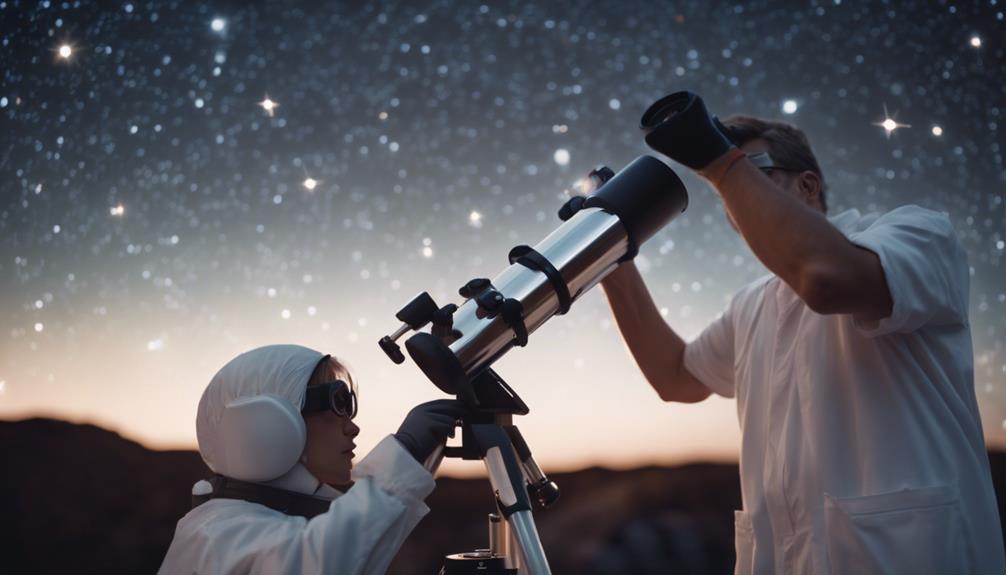
Having covered the importance of following operational guidelines for your high-end telescope, we now turn our attention to observing safety practices to prevent harm to both the user and the equipment.
Observing safety practices are paramount, as they not only guarantee the longevity of your telescope but also protect you from potential hazards. Here’s a detailed look at essential safety practices:
- Use solar filters or dedicated solar telescopes: To observe the sun safely and prevent eye damage from intense sunlight, always equip your telescope with proper solar filters. Directly viewing the sun without these filters can cause permanent eye injury.
- Avoid touching optical surfaces: To maintain the clarity and effectiveness of your telescope, refrain from touching the optical surfaces. Fingerprints can smudge and damage the delicate coatings.
- Securely mount the telescope: Make sure your telescope is securely mounted to prevent it from tipping over or falling, especially in windy conditions. A stable mounting is critical for both safety and accurate observations.
- Store eyepieces and accessories safely: Keep eyepieces and other accessories in a designated safe place. This not only prevents damage but also keeps them easily accessible for your observing sessions.
- Do not look directly at the sun without proper filters: Emphasizing this critical point, never attempt to look at the sun through your telescope without the appropriate solar filters to avoid severe eye damage.
Troubleshooting Common Issues
When you encounter issues with your high-end telescope, such as blurry images or shaking during observation, the problem often lies in either misalignment or an unstable mounting setup.
If you’re struggling to view objects clearly, first assess the optics. Blurry images can signal that your scope requires collimation, a precise alignment of its mirrors and lenses. This guarantees that light is accurately focused, providing sharp, detailed views of celestial objects. Regularly check and adjust the collimation, especially after transporting your telescope, to maintain its peak performance.
Shaking or instability during observation often points to a need for better stabilization of your mounting setup. Make sure your tripod or mount is on solid ground and fully secured. Adding weight can also help to stabilize your setup, reducing vibrations and enhancing your viewing experience.
For more complex issues, don’t hesitate to seek advice. Experienced astronomers and online forums can be invaluable resources for troubleshooting. They can offer specific advice tailored to your scope and the problems you’re facing.
Frequently Asked Questions
How Do You Use a Telescope for Beginners?
To use a telescope as a beginner, start by choosing a location with minimal light pollution. Master night sky mapping with apps, maintain your lens, learn focusing techniques, align your mount, and follow stargazing etiquette.
What Are the 3 Important Tasks of a Telescope Which Is Most Important?
You need to focus on light gathering, magnification, and detail resolution. Light gathering’s vital, impacting brightness and visibility. Guarantee alignment accuracy, proper lens cleaning, and regular maintenance for peak performance in observing distant celestial objects.
What Is the Proper Way to Look Through a Telescope?
While stargazing, you’ll want to correctly position your eye, avoiding direct contact with the eyepiece. Adjust the diopter and focus for clarity, configure magnification settings, and use star tracking to mitigate light pollution effects.
What Is the Proper Way to Carry a Telescope?
To properly carry a telescope, you’ll need to focus on mounting techniques and transportation tips. Make sure it’s securely grasped by the mount, use both hands, and consider environmental factors and storage solutions for safety.
Conclusion
In wrapping up, remember: assembling with precision, transporting with care, and maintaining regularly are your keys to unfastening the cosmos.
Clean meticulously, store judiciously, and adhere strictly to operational guides.
By observing these safety practices and tackling issues proactively, you’re not just elongating your telescope’s life; you’re enhancing your celestial journey.
Let every adjustment, every scan, every upgrade be a step toward clearer skies.
Your commitment to these principles guarantees a stellar experience, every time you gaze upward.
