Top 10 Telescopes to Pair With Your DSLR Camera
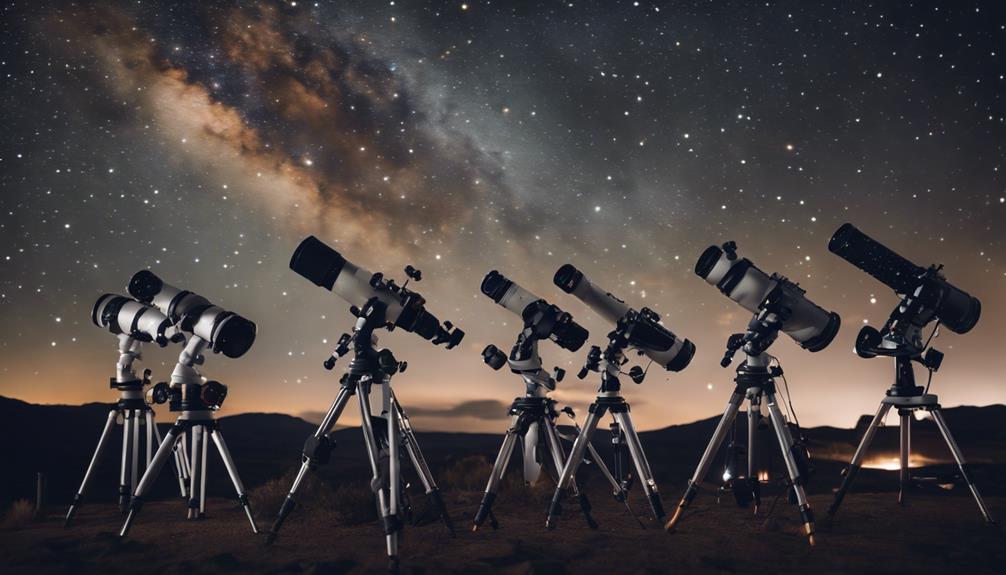
Exploring the night sky, capturing far-off galaxies, and revealing the beauty of nebulae, you're ready to take your astrophotography to new heights by pairing your DSLR camera with the right telescope.
With options ranging from the versatile Sky-Watcher Esprit to the innovative Celestron RASA 8, each telescope offers a unique doorway to the cosmos tailored to enhance your imaging experience.
Whether you prioritize image quality, ease of use, or adaptability, there's a telescope out there that's the perfect match for your DSLR. Stick around to uncover the key features that will make your astrophotography journey truly out of this world.
Key Takeaways
- Choose telescopes with appropriate focal lengths and ratios for desired image detail and brightness in astrophotography.
- Verify compatibility with DSLR cameras through proper mounting mechanisms like T-adaptors and T-rings.
- Consider models like Sky-Watcher Esprit 100 ED and Celestron Edge HD 8 for their specific imaging strengths.
- Equatorial mounts and accessories such as Barlow lenses can significantly enhance astrophotography results.
Choosing the Right Telescope
When selecting the ideal telescope for pairing with your DSLR camera for astrophotography, it's critical to contemplate both the focal length and focal ratio to guarantee sharp, vibrant images. Understanding these aspects ensures you capture the cosmos with clarity and color accuracy. Opting for a focal length telescope that complements your DSLR camera is key. It determines how much of the night sky you can frame in one shot.
A longer focal length allows for detailed captures of distant celestial objects, making it perfect for zooming in on galaxies and nebulae. However, if you're after wide-field astrophotography to capture vast star fields or the Milky Way, a telescope with a shorter focal length and a wide field of view becomes your ally.
Additionally, the focal ratio plays a pivotal role in the brightness of the images captured. A lower focal ratio means more light is gathered over a shorter period, essential for astrophotography where light conditions are minimal. It also affects the exposure time needed to capture those breathtaking cosmic moments. Combining the right focal length telescope with your DSLR camera elevates your astrophotography, producing images that aren't only sharp but also deeply immersive.
Essential Features for Compatibility
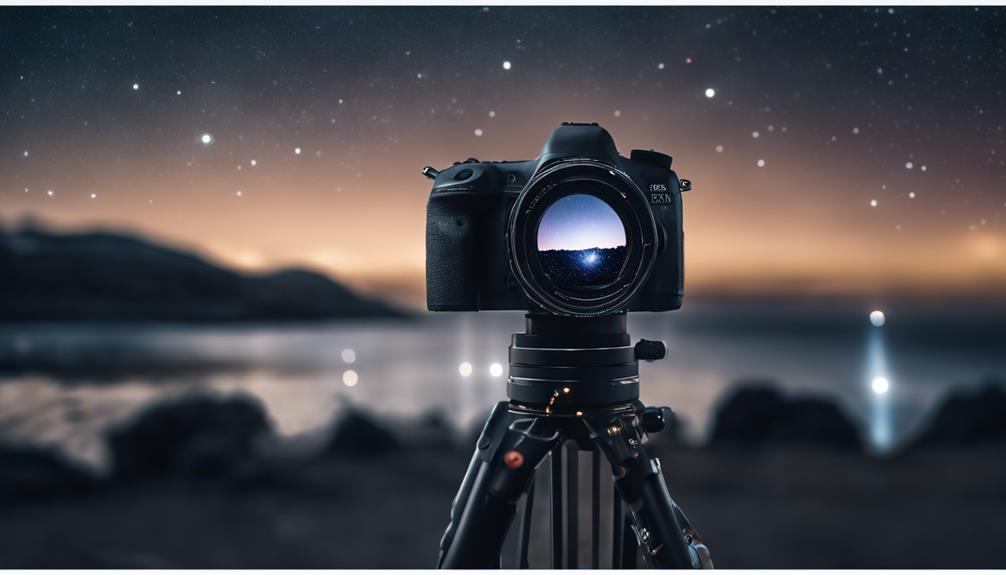
When you're gearing up to capture the cosmos with your DSLR camera, understanding the essential features for compatibility is key.
You'll need to guarantee your telescope is equipped with the right mounting mechanisms and camera connection options.
This knowledge will set you up for success, allowing you to seamlessly merge your DSLR with the vastness of space.
Mounting Mechanisms Explained
To capture the night sky's breathtaking beauty through your DSLR camera, understanding the right mounting mechanisms—such as T-adaptors and T-rings—is important for seamless compatibility with your telescope. Different telescopes require specific mounting mechanisms to connect with your DSLR camera effectively. Here's a quick guide:
| Telescope Type | Mounting Mechanism | Additional Accessories Needed |
|---|---|---|
| Refractor | T-ring | None |
| Reflector | T-adaptor | Barlow lens (optional) |
| Cassegrain | T-adaptor | T-ring |
| Dobsonian | Custom adaptor | Varies |
| Maksutov | T-ring | None |
Understanding these mechanisms is important for a stable connection, ensuring you don't miss capturing a single celestial spectacle. Compatibility is key in astrophotography, so make sure your DSLR camera and telescope are perfectly matched.
Camera Connection Options
Diving into camera connection options, you'll find that pairing your DSLR with the correct telescope can greatly enhance your astrophotography experience.
The key to revealing the stars lies in understanding how T-adaptors and T-rings bring your camera and telescope together. These connectors guarantee your DSLR fits snugly to the telescope's focuser, allowing for prime focus or eyepiece projection methods.
Prime focus, the more direct approach, involves removing the camera lens and attaching the camera directly to the telescope. This setup, ideal for capturing the broad night sky or celestial bodies at a focal ratio of F, ensures sharp, detailed images.
Alternatively, eyepiece projection lets you magnify distant planets or stars, offering flexibility in framing and composition. Selecting a telescope with these DSLR compatibility options is essential for stellar astrophotography results.
Top 10 Telescopes for DSLR Cameras

If you're on the hunt for a telescope that pairs perfectly with your DSLR camera, our list of the top 10 telescopes is your ultimate guide to capturing the cosmos in stunning detail. Starting with the Sky-Watcher Esprit 100 ED Triplet APO, you'll find its sharp, color-corrected optics ideal for nebulae, galaxies, and the moon. Its excellence in capturing celestial wonders makes it a top choice for astrophotographers.
For those aiming for high magnification, the Celestron Edge HD 8 excels in planetary, lunar, and galaxy imaging with a remarkable focal length of 2032mm at F/10. It's designed to bring distant cosmic objects into sharp, clear view.
The Explore Scientific ED 102 Triplet APO, with its 714mm focal length, is another fantastic choice for deep-sky imaging. Its quality optics are great for capturing nebulae and larger galaxies.
Thus, the William Optics RedCat 51 shines in capturing vast celestial scenes. This compact Petzval refractor telescope boasts a wide field of view at 250mm and a focal ratio of F/4.9, making it perfect for photographing large nebulae. Its design blends portability with performance, embodying the best traits of refractor telescopes for astrophotography enthusiasts.
Mounts and Adapters
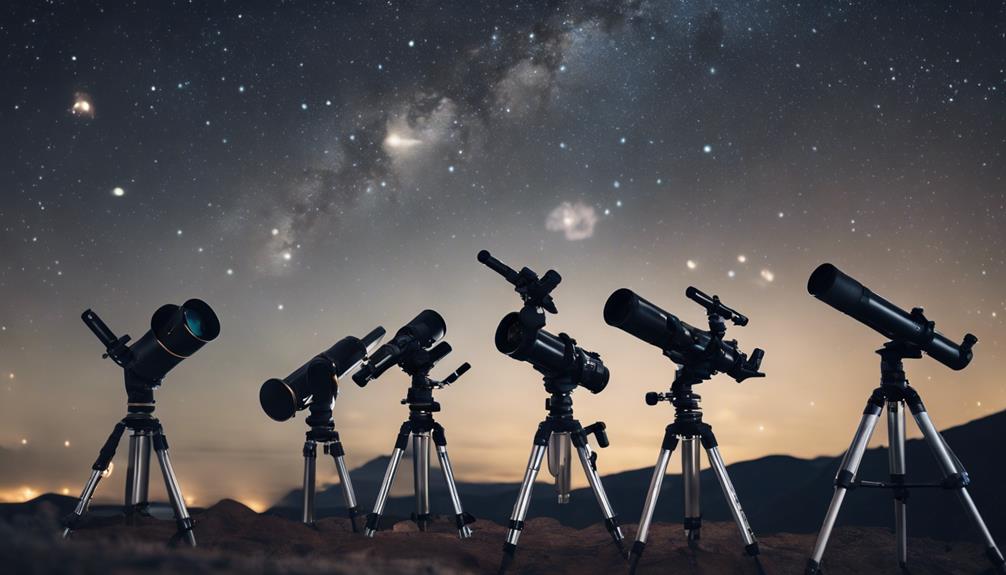
Choosing the right mount and adapter is essential for connecting your DSLR camera to a telescope, ensuring sharp, clear astrophotography captures. Equatorial telescope mounts stand out as the ideal choice for this task, thanks to their precise tracking capabilities. These mounts compensate for Earth's rotation, allowing you to keep celestial objects in your frame for longer exposures without trailing or blurring. This precision is vital for capturing detailed images of the moon, planets, and distant galaxies.
To connect your DSLR camera to your telescope effectively, you'll need T-adaptors and T-rings. These accessories are the bridge between your camera and telescope, facilitating a secure and accurate alignment for optimal imaging. For those looking to enhance their astrophotography further, incorporating a Barlow lens or a focal reducer can be a game-changer. A Barlow lens increases your telescope's effective focal length, providing better magnification for closer views of celestial bodies. On the other hand, a focal reducer decreases the focal length, allowing for wider field views, which is perfect for capturing sprawling star fields or larger astronomical objects.
Enhancing Astrophotography Experience
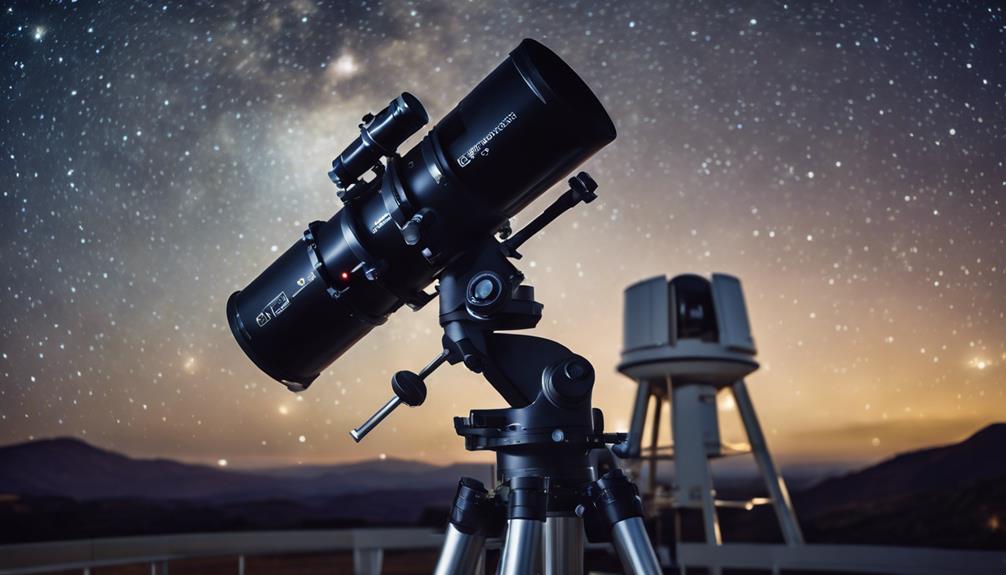
To elevate your astrophotography, it's essential you match your DSLR with a compatible telescope, focusing on factors like focal length and aperture size.
Understanding how to connect your camera to the telescope can greatly enhance image quality, capturing celestial wonders with stunning detail.
Selecting Compatible Telescopes
When selecting a telescope for your DSLR to enhance your astrophotography experience, it's important to take into account compatibility in order to maximize image quality and field of view.
Specifically, for full-frame DSLRs, prioritizing telescopes with a wide field of view and large imaging circles is essential. Apochromatic refractors equipped with flatteners are your best bet, ensuring edge-to-edge sharpness across the entire frame. These telescopes are designed to cover the sensor size of your camera, offering ideal imaging results.
Additionally, to minimize vignetting issues, opt for models with adjustable flatteners. High-quality options like 200-400mm lenses or telescopes, such as the SW 120ED with a flattener, are excellent choices for full-frame DSLR astrophotography, providing you with stunning celestial images.
Camera Connection Tips
Connecting your DSLR camera to a telescope using a T-adaptor and T-ring not only enhances your astrophotography experience but also opens up a universe of stunning celestial imagery. To guarantee top-notch performance, it's important to check compatibility between your DSLR camera and the telescope for astrophotography. Direct attachment allows for capturing the beauty of the cosmos in exquisite detail.
Additionally, consider integrating a Barlow lens to increase the effective focal length, bringing distant celestial objects into closer view. This setup is ideal for those aiming to dive deeper into the world of astrophotography. Remember, while high frame rate planetary cameras offer detailed captures, your DSLR, when correctly connected, can achieve remarkable results, transforming your nighttime sky gazing into a mesmerizing visual journey.
Maximizing Image Quality
How can you elevate your astrophotography to capture the breathtaking tapestry of the night sky with unparalleled clarity? By choosing the right telescope features, you're setting yourself up for success. Consider an apochromatic refractor design for excellent color correction. This, paired with field flatteners, greatly enhances image quality, eliminating distortions for crisp, clear shots.
| Feature | Benefit |
|---|---|
| Apochromatic Refractor | Superior color correction |
| Field Flatteners | Reduces image distortions |
| Wide Fields of View | Captures expansive celestial scenes |
Opt for telescopes offering wide fields of view to embrace the vastness of the cosmos in a single frame. Remember, a stable mount and adequate aperture size are key for brighter images and seamless integration with your DSLR. Elevate your astrophotography with these expert tips and transform your night sky captures.
Maintenance and Care Tips
To guarantee your telescope for DSLR cameras maintains its precision and image quality, it's essential to adopt a routine of regular maintenance and care. Ensuring your equipment is well-maintained not only prolongs its life but also enhances your astronomical viewing experiences.
Here are practical steps to keep your telescope in top condition:
- Regularly clean the telescope lens with a soft brush or compressed air to remove dust and debris. This simple act of telescope lens cleaning can profoundly impact the clarity of your images.
- Store the telescope in a cool, dry place to prevent moisture buildup and potential damage. Following these storage tips helps avoid unnecessary repairs.
- Avoid touching the telescope optics directly to keep smudges or scratches at bay, preserving the pristine condition of your lenses.
- Check and adjust the collimation of the telescope periodically to make sure it's aligned for optimum performance. Proper collimation adjustment is key to achieving sharp, detailed images.
- Use protective caps or covers when the telescope isn't in use to keep dust and dirt from accumulating on the lens and mirrors.
Adaptability and User Experience
Adapting your DSLR camera to a telescope opens up a universe of astrophotography possibilities, with T-rings and T-adaptors streamlining the process for enthusiasts and professionals alike. These indispensable accessories ensure a seamless connection between your camera and the telescope, allowing you to immerse yourself in the world of astrophotography without missing a beat.
Choosing a telescope that complements the focal length and aperture size of your DSLR camera is thus essential for capturing breathtaking celestial images. A compatible focal length enhances the detail and clarity of your astrophotographs, while the right aperture size allows for prime light capture, giving life to your night sky images. Moreover, telescopes with versatile mounting options enhance your user experience. A sturdy, adaptable mount is essential for both the stability of your setup and the quality of your astrophotography endeavors, making sure that your camera and telescope work in perfect harmony.
DSLR Camera Integration
Integrating your DSLR camera with a telescope opens up a universe of astrophotography possibilities.
You'll need to navigate mounting options and guarantee compatibility between your camera and the telescope, which involves selecting the right T-adapters and T-rings.
This setup not only enhances your photography experience but also guarantees you capture the cosmos with stunning clarity and detail.
Mounting Options Explored
Exploring your mounting options is essential when you're aiming to connect your DSLR camera to a telescope for astrophotography. The integration of a DSLR camera with a telescope opens up a universe of celestial imaging possibilities. Here's what you need to contemplate for a seamless connection:
- T-Ring and T-Adapter: These are non-negotiable for a secure attachment to your telescope.
- Direct DSLR Connectivity: Some telescopes are designed for easy DSLR camera hook-up.
- Planetary Cameras: Opt for high frame rate models to capture detailed planetary images.
- Stable Collimation and Mounting: Essential for peak performance and sharp images.
- Mount Compatibility and Stability: Guarantees accurate tracking for long-exposure astrophotography.
Optimizing these mounting options ensures you're well-equipped for capturing the cosmos with your DSLR camera and telescope combo.
Compatibility Considerations
When you're ready to pair your DSLR camera with a telescope, checking the compatibility of both devices is essential for capturing the night sky's wonders. Ensure your telescope has the right T-adaptor and T-ring for seamless connection to your DSLR camera. It's also vital to match the telescope's mounting system with your camera, considering the weight and balance for stability. Opt for telescopes that boast suitable focal lengths and apertures, enhancing your DSLR camera integration for stunning celestial photography.
| Feature | Importance | Consideration |
|---|---|---|
| T-adaptor & T-ring | Essential | For connecting DSLR camera |
| Mounting System | Critical | Compatibility with DSLR camera |
| Focal Lengths | Highly Influential | Optimal DSLR camera integration |
| Weight & Balance | Vital | Stability when attaching DSLR camera |
Choose wisely to ensure your night sky captures are nothing short of spectacular.
Image Quality Considerations
Why should you care about the optical quality of your telescope when pairing it with a DSLR camera? The simple answer is that the quality of your images hinges on it. When delving into astrophotography, three critical factors to bear in mind are focal length, apochromatic refractors, and overall optical quality. These elements directly influence the sharpness, clarity, and color fidelity of your celestial captures.
To bring your astrophotography visions to life, keep in mind the following:
- Apochromatic refractors that use extra-low dispersion (ED) glass minimize chromatic aberration, ensuring that stars appear as perfect pinpoints rather than blurry halos.
- Multi-coated or fully coated optics enhance light transmission, notably improving image contrast and brightness.
- Telescopes designed with a flat field or equipped with field flatteners guarantee that your entire image, from center to edge, is in crisp focus.
- A longer focal length telescope can capture detailed close-ups of planets and lunar craters, while shorter focal lengths are ideal for wide-field imaging, capturing vast swaths of the night sky.
- Evaluate compatibility with DSLR mounts and accessories, simplifying your astrophotography setup and ensuring seamless integration.
Understanding these considerations empowers you to choose a telescope that elevates your astrophotography from good to breathtaking.
Mount Stability Importance
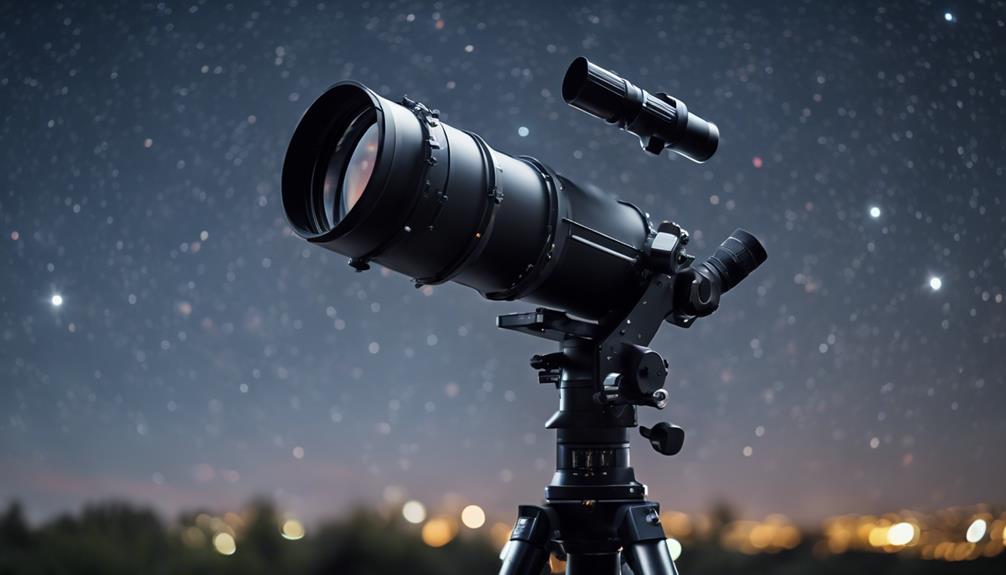
In the domain of astrophotography, the stability of your mount isn't just important—it's vital for capturing crisp, clear images of the cosmos. Without a stable foundation, your telescope risks capturing images that are blurred or trailed, reducing the awe-inspiring beauty of space to a mere smudge. This is where mount stability comes into play, acting as the linchpin in the quest for high-quality astrophotography.
Equatorial mounts, known for their precision in tracking celestial objects along the Earth's rotation axis, are the gold standard in astrophotography. Their design aligns perfectly with the Earth's tilt, enabling you to follow stars and planets smoothly across the night sky. But it's not just about the type of mount; it's also about ensuring that the mount you choose can bear the weight of your telescope and any additional accessories. This is essential, as even the slightest movement or vibration can impact the sharpness of your images.
Frequently Asked Questions
Can I Connect My DSLR to Telescope?
Yes, you can connect your DSLR to a telescope using telescope adapters. This setup unleashes amazing astrophotography techniques, letting you dive deep into backyard astronomy with stunning captures of celestial wonders.
Which Telescope Is Best for Photography?
For photography perfection, ponder an apochromatic refractor telescope. Ideal for astrophotography beginners, its lens compatibility and advanced image processing techniques guarantee crisp captures. Reflecting and hybrid telescopes also offer unique benefits, tailoring to specific needs.
How Do You Match a Telescope to a Camera?
To match a telescope to your camera, check mount compatibility, focus on focal length considerations, and explore adaptor types. This guarantees your setup's optimized for stunning astrophotography with seamless integration and control.
What Is the Best Camera to Attach to a Telescope?
The best camera for attaching to a telescope excels in adaptability, astrophotography settings, and image stabilization techniques. You'll want a model that seamlessly integrates with various telescopes and enhances your celestial photography experience.
Conclusion
In wrapping up, your quest for the celestial wonders is about to metamorphose into an epic saga with the right telescope. Pairing your DSLR camera with any of these top 10 telescopes is like accessing a gateway to the universe, offering unparalleled clarity and awe-inspiring images.
Remember, the perfect match isn't just about specifications; it's about how the stars align for your photography journey. With the right setup, every shot you take won't only capture the cosmos but also the essence of the universe itself.
