What You Should Know Before Purchasing Telescope Parts
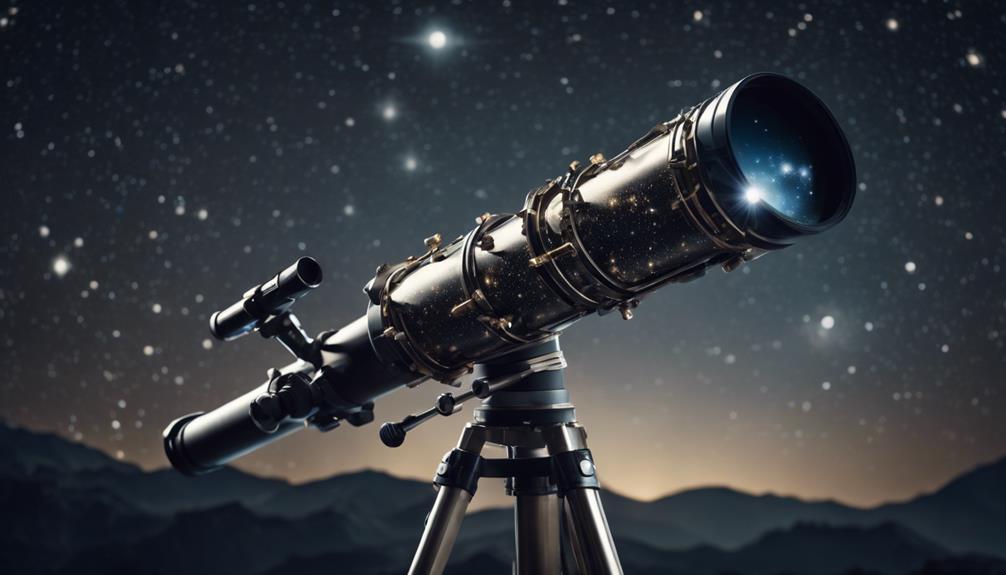
Venturing into the world of astronomy without understanding the nuts and bolts of your telescope is like setting sail without a compass—you may find yourself lost in a sea of confusion.
Before you invest in telescope parts, it’s essential to assess your stargazing ambitions and how each component, from the optical tube to the mount, plays an important role in your celestial journey.
Whether you’re aiming to capture breathtaking astrophotography or simply gaze at the moon’s craters, knowing the ins and outs of your equipment is critical.
Let’s set out on a journey to uncover the essentials, ensuring your telescope not only meets but exceeds your expectations.
Key Takeaways
- Determine your stargazing goals and choose parts that match your celestial interests and observing locations.
- Balance budget with quality to include essential accessories without compromising optical performance.
- Understand the distinctions between telescope types and select one that aligns with your specific viewing preferences.
- Consider the impact of light pollution on observing needs to ensure chosen parts enhance stargazing experiences.
Understanding Telescope Components
Delving into the world of telescopes, understanding the roles and intricacies of key components such as the optical tube assembly (OTA), mounts, eyepieces, and various accessories is fundamental to grasping a telescope’s performance and versatility. Understanding these elements is important for anyone looking to enhance their stargazing experience.
The optical tube assembly, or OTA, is the backbone of your telescope. It houses the primary optics, either a lens or a mirror, which are pivotal in gathering light and forming images of celestial objects. The quality and type of the OTA dictate the overall optical performance of your telescope, influencing how clear and detailed your observations will be.
Mounts play a critical role in stabilizing your telescope and facilitating smooth tracking of objects across the night sky. A robust mount is necessary for avoiding vibrations and ensuring precise movements, which are important for both viewing and astrophotography.
Eyepieces are the unsung heroes of the telescope setup, determining the magnification and field of view. Different eyepieces can significantly change your viewing experience, allowing you to zoom in on planetary details or take in wide swaths of the starry sky.
Evaluating Your Stargazing Needs
Before you invest in telescope parts, it’s important to pinpoint your stargazing goals and understand how different telescope types align with these objectives. Comparing telescope models based on your interests—whether planets, deep-sky objects, or both—guarantees you’re gearing up effectively.
Additionally, a clear assessment of your budget will guide your selections, factoring in not only the telescope but also necessary accessories for a complete observing setup.
Identify Stargazing Goals
Identifying your stargazing goals is an important first step, requiring you to evaluate whether your interest lies in observing planets, deep-sky objects, or delving into astrophotography. Evaluating the level of detail and magnification your interests demand is essential.
For instance, observing planets requires higher magnification, whereas deep-sky objects need telescopes capable of gathering more light. Astrophotography, on the other hand, demands precision and advanced features.
| Goal | Magnification | Observing Location |
|---|---|---|
| Planets | High | Less affected by light pollution |
| Deep-Sky Objects | Low to Medium | Dark, rural skies are preferable |
| Astrophotography | Varies | Dark skies, stable setup |
Consider your observing locations—urban areas with light pollution versus dark, rural skies. Also, factor in budget constraints and commitment levels.
Telescope Types Comparison
Choosing the right telescope type—whether refractor, reflector, or catadioptric—depends, therefore, on your specific stargazing preferences and needs. Each of these types of telescopes offers unique benefits tailored to different observing preferences, from detailed planetary views to expansive deep-sky explorations. Here’s a concise comparison:
- Refractor telescopes: Ideal for lunar and planetary observations, these telescopes use lenses to gather light, offering crisp images with minimal maintenance required. Their simplicity and durability make them highly portable.
- Reflectors: Utilizing mirrors, reflectors excel in deep-sky viewing, capturing faint galaxies and nebulae with greater light-gathering capacity. They’re typically larger and require occasional alignment.
- Catadioptric telescopes: These versatile, compact designs combine lenses and mirrors, supporting both planetary and deep-sky viewing, making them a flexible option for enthusiasts who value portability and a broad observing range.
Budget Considerations
After determining the type of telescope that best suits your astronomical interests, it’s important to assess your stargazing needs to establish a budget that supports your observing ambitions.
Consider the celestial objects you’re keen to explore. This choice directly influences your budget considerations, guiding you towards telescopes with the capabilities required for those observations.
Remember, beyond the telescope itself, essential accessories like eyepieces and filters greatly impact your budget. Conduct thorough research on the price range of telescopes and accessories that meet your requirements for best performance.
Striking a balance between quality optics and affordability is vital. A well-considered budget ensures you achieve your observing goals without compromising on the quality of your stargazing experience.
Optical Tubes and Their Significance
Understanding the optical tube’s role is important, as it’s the heart of a telescope, directly influencing its performance by determining the focal length, field of view, and overall image clarity.
The optical tube is your gateway to exploring the sky, where the balance between optical quality, aperture, and focal length comes into play. Choosing between refractor telescopes with their long optical tubes and lenses, or reflector telescopes with shorter tubes and mirrors, affects how you observe celestial phenomena.
Here are three critical points to take into account about optical tubes:
- Focal Length and Field of View: The length of the optical tube dictates the focal length. A longer focal length provides higher magnification but a narrower field of view. This trade-off is essential when observing distant galaxies versus wide star fields.
- Aperture Size: The aperture, or diameter of the optical tube, is key to gathering light. A larger aperture enables better light collection, resulting in clearer and brighter images of distant stars and galaxies.
- Optical Tube Design: The design impacts not only the telescope’s portability and ease of use but also determines the types of celestial objects you can effectively observe. Whether you’re scanning the sky’s expansive canvas or focusing on a specific celestial marvel, the optical tube’s configuration is paramount.
Mounts: The Backbone of Stability
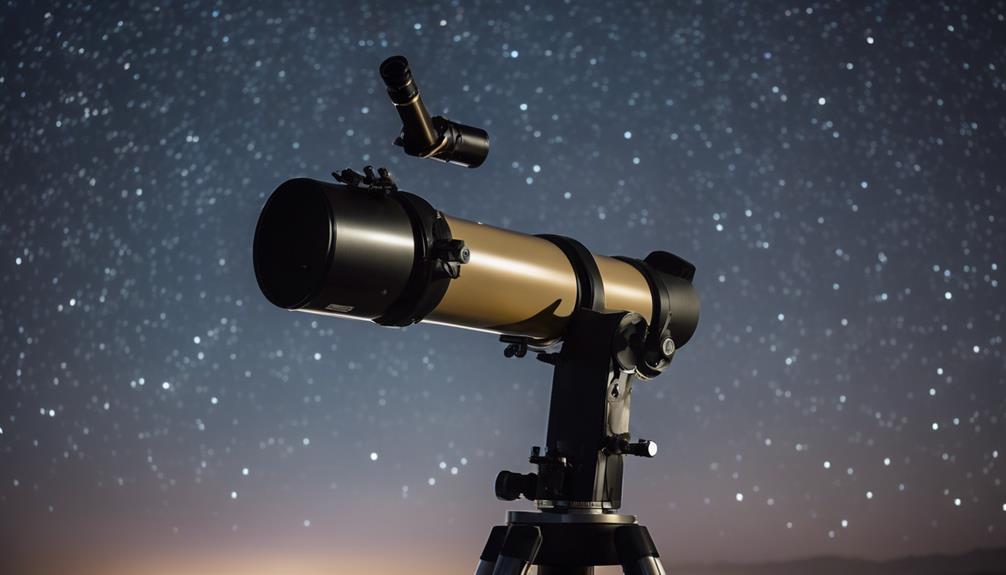
As you explore the world of telescope parts, understanding the critical role of mounts in achieving stability can’t be overstated.
You’ll find that the choice between Alt-Azimuth and Equatorial mounts notably influences your telescope’s performance, with each type catering to different observational needs and skill levels.
Analyzing mount stability essentials and making an informed decision on the right mount will elevate your stargazing experience, ensuring precision and reducing vibrations effectively.
Types of Telescope Mounts
Selecting the appropriate telescope mount is essential, as it serves as the foundation of stability for your astronomical observations, directly influencing the quality and precision of the celestial images you capture. Understanding the types of telescope mounts and their distinct functionalities is critical:
- Altazimuth Mounts: These mounts offer simplicity and versatility, allowing movement in up-down and side-to-side directions. They’re user-friendly, making them perfect for beginners or those with general observing preferences.
- Equatorial Mounts: Designed for precision, equatorial mounts align with Earth’s axis. This alignment facilitates the tracking of celestial objects and effectively eliminates field rotation, which is a boon for astrophotography enthusiasts.
- Choosing the Right Mount: Your observing preferences should guide your choice. Altazimuth mounts cater to casual stargazing, while equatorial mounts are tailored for those aiming to dive deep into astrophotography.
Mount Stability Essentials
Ensuring your telescope mount is stable is crucial for achieving clear, uninterrupted views of celestial bodies. Mount stability is the cornerstone of a rewarding stargazing experience, directly influencing the quality of the images you capture.
Altazimuth mounts offer straightforward, intuitive movements, making them ideal for casual observation. However, their simplicity comes at the cost of less stability during prolonged observations or when tracking objects over time.
On the other hand, equatorial mounts, designed to align with Earth’s rotation axis, provide superior stability and precise tracking capabilities essential for astrophotography. Quality mounts effectively dampen vibrations, ensuring that your observations aren’t only steady but also sharply focused.
Matching your observing needs with the right type of mount is vital for optimizing your stargazing experience.
Choosing the Right Mount
Choosing the right mount, the backbone of your telescope’s stability, depends critically on your specific astronomical interests and whether your focus is on casual stargazing or the more demanding requirements of astrophotography. Mounts are indispensable for ensuring stability during observations, a fundamental aspect for any stargazer.
Here are three key considerations:
- Altazimuth Mounts: Ideal for beginners and general stargazing, these mounts offer intuitive up-down and side-to-side movements, facilitating a smoother observing experience.
- Equatorial Mounts: Essential for astrophotography, they compensate for Earth’s rotation, providing precise tracking of celestial objects, vital for long-exposure images.
- Quality: Regardless of your observing goals, investing in a quality mount prevents vibrations, ensures clear, steady views, and enhances your overall observing or astrophotography endeavors.
Selecting the Right Eyepieces
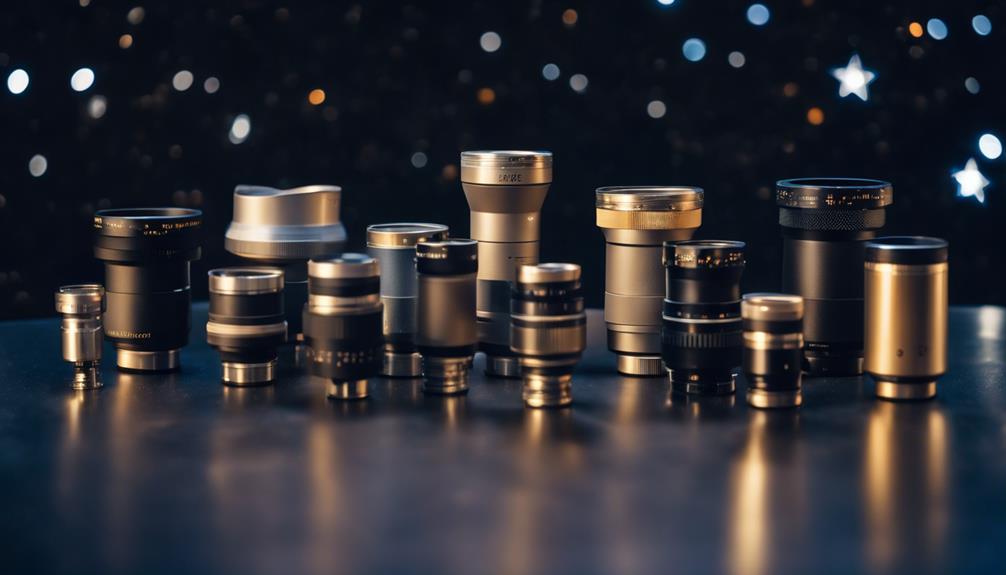
To maximize your telescope’s performance, it’s important to invest in the right eyepieces, as they greatly impact magnification and field of view. Eyepieces are the bridge between you and the cosmos, transforming what could be a speck of light into a detailed planet or galaxy.
Their role in determining magnification and field of view means you’ll need to select them with care, balancing your desire for closer views with the need to see the broader cosmic landscape.
Different eyepieces offer varying magnifications, with focal lengths being a key determinant. Shorter focal lengths yield higher magnification, but remember, lower numbers in millimeters equate to higher magnification levels. This basic rule helps in browsing the vast array of options available, ensuring you can match your eyepieces to your observational goals.
Quality can’t be overstated. Investing in higher-quality eyepieces can drastically improve image clarity and your overall viewing experience. Additionally, eyepieces with wider apparent fields of view can greatly enhance your observing sessions, offering a more immersive glimpse into the universe.
This combination of focal lengths, quality, and apparent fields of view will guide you in selecting eyepieces that transform your stargazing from ordinary to extraordinary.
Enhancing Views With Filters and Adaptors
By adding specific filters and adaptors to your telescope setup, you’ll significantly enhance the quality and scope of your celestial observations. Filters and adaptors are pivotal in refining what you see and how you see it, directly impacting your stargazing experience. They play an important role in overcoming common viewing challenges and expanding your telescope’s capabilities.
Here are three ways to leverage filters and adaptors for superior celestial views:
- Combat Light Pollution: Utilizing light pollution filters will greatly improve sky visibility, especially in urban areas. These filters work by blocking out unwanted artificial light, allowing the true beauty of the night sky to shine through.
- Safe Solar Observations: Never attempt to view the sun without a solar filter. These are specifically designed to protect your eyes and equipment from the sun’s harmful rays. Solar filters enable you to safely observe sunspots and solar eclipses, enhancing your views without risking damage.
- Capture Stellar Images: Adaptors can transform your telescope into a powerful imaging tool. By facilitating the attachment of cameras or smartphones, adaptors allow you to capture breathtaking images of celestial objects, effectively expanding your telescope’s capabilities beyond visual observation.
Caring for Your Telescope Parts
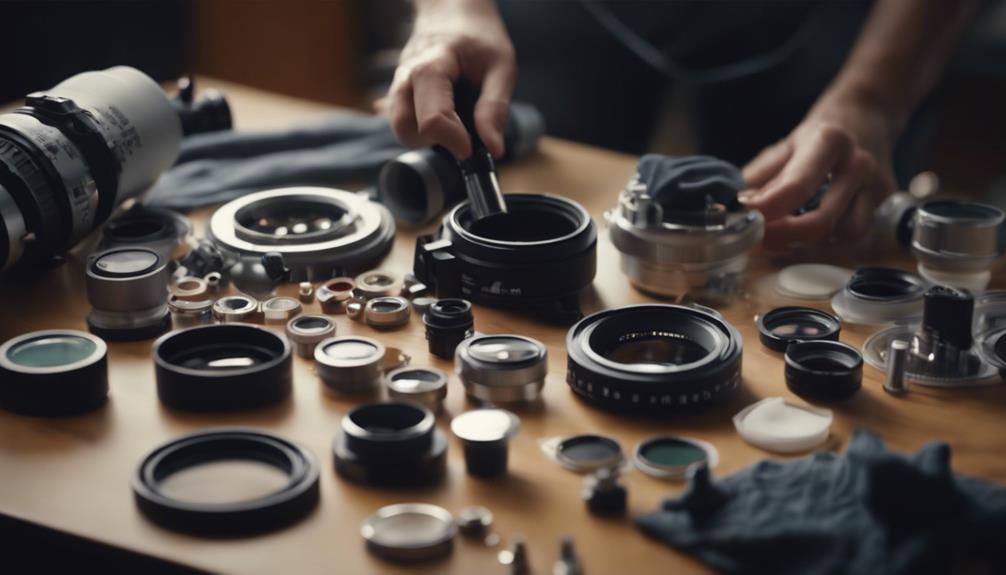
After enhancing your celestial views with filters and adaptors, it’s equally important to focus on the upkeep of your telescope parts to maintain their peak functionality. Regular cleaning of your telescope’s lenses and mirrors is essential.
Dust, fingerprints, and other contaminants can greatly degrade optical performance. Use a soft, lint-free cloth and an appropriate cleaning solution to gently wipe away any debris, making sure you don’t scratch these delicate surfaces.
Storing your telescope in a dry, dust-free environment is essential for preventing damage to its intricate parts. Humidity and dust can cause corrosion and buildup that impede functionality. Always handle eyepieces and accessories with the utmost care to avoid scratches or misalignments that can detract from your viewing quality.
Protective covers or cases are indispensable for safeguarding your telescope’s parts when they’re not in use. They shield against dust and potential damage, thereby extending the lifespan of your equipment.
Frequently Asked Questions
What You Should Know Before Buying a Telescope?
Before buying a telescope, contemplate your budget, how often you’ll use it, storage space, local stargazing conditions, after-sales support, and potential for future upgrades to guarantee the best experience and value for money.
How Can You Tell the Quality of a Telescope?
To discern a telescope’s caliber, explore optical coating comparison, engage in star testing methods, and assess eyepiece quality,. Analyze mount stability, dispel aperture size myths, and understand focal ratio misunderstandings with a keen eye.
What Are the Most Important Parts of a Telescope?
The most important parts of a telescope are the optical tube assembly, mounting systems for stability, and eyepiece collection for magnification. Don’t overlook the aperture size, focal length, finder scopes, and optical coatings for clarity.
What Are Good Specifications for a Telescope?
Looking for stellar views? You’ll need a telescope with a large aperture size for ample light gathering, a suitable focal length, the right mount type for stability, and an optical design that fits your needs.
Conclusion
In sum, diving into the world of stargazing demands a nuanced understanding of your telescope’s anatomy. From deciphering the roles of optical tubes to selecting mounts that promise celestial stability, each choice you make shapes your journey across the stars.
Remember, the eyepieces and filters you choose aren’t mere accessories; they’re your windows to the universe. So tread carefully, for in this domain, every detail counts, echoing the adage, ‘The devil is in the details.’
Care for your telescope, and it’ll reveal skies unimagined.
