Where to Go for Amazing Stargazing With Your Telescope
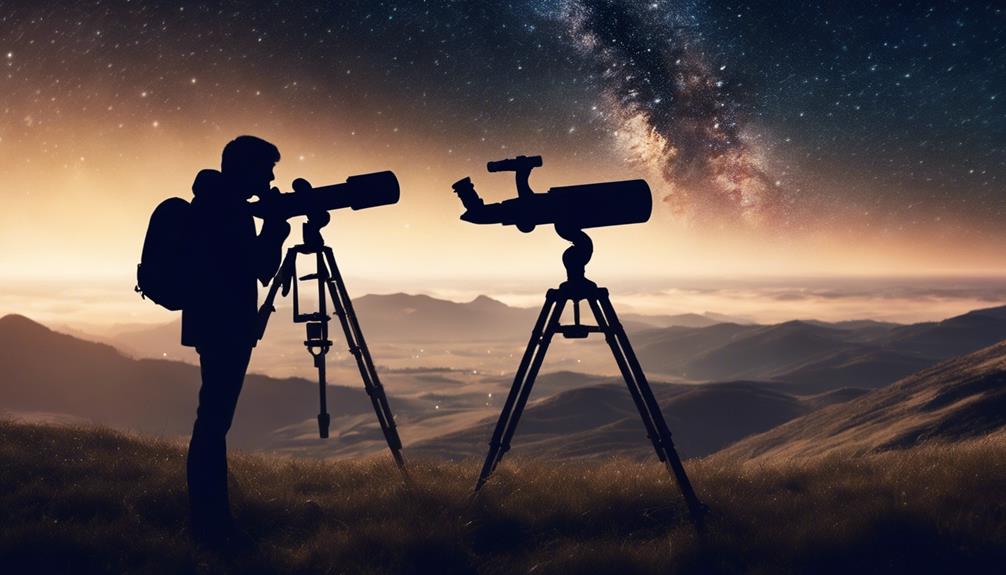
When you gaze up at the night sky, you’re not just looking at stars; you’re witnessing the history of our universe and the beauty of our world at night.
If you’re considering where to take your telescope for an unforgettable stargazing experience, you might want to explore options beyond your backyard. Places like Big Bend National Park, Great Basin National Park, and Canyonlands National Park offer not just pristine dark skies but also a chance to connect with nature in a profound way.
However, choosing the right spot involves more than just finding darkness; it’s about access, amenities, and the unique celestial events visible from different locations.
Let’s explore what makes a stargazing site stand out from the rest, ensuring your next nocturnal adventure is both breathtaking and enlightening.
Key Takeaways
- Choose locations with minimal light pollution, like Dark Sky parks, for clearer views of the night sky.
- High altitudes, such as Mauna Kea, offer reduced atmospheric interference and clearer stargazing conditions.
- Opt for areas with professional observatories to benefit from advanced astronomical research and viewing instruments.
- Explore remote islands and deserts for unique and pristine stargazing experiences away from urban light pollution.
Selecting the Ideal Stargazing Spot
To maximize your stargazing experience, it’s important to choose a location with minimal light pollution, considering factors such as altitude, remoteness, and legal accessibility. Light pollution, the excessive or misdirected artificial light that obscures the night sky, greatly diminishes the quality of celestial views.
Opting for Dark Sky parks or reserves, which are designated areas known for their commitment to preserving the night sky, can provide you with clear, unpolluted skies essential for observing the cosmos through your telescope.
The selection of an ideal spot also entails understanding atmospheric interference, which can adversely affect stargazing. Atmospheric conditions, such as air pollution and humidity, scatter light and can blur or wash out starlight, making celestial objects less discernible. Locations away from urban centers, where the air is cleaner and less humid, often offer superior stargazing opportunities.
Moreover, it’s critical to check local weather conditions to confirm clear skies during your stargazing session. Cloud cover, for instance, can completely obscure your view of the stars, no matter how ideal the location might otherwise be. Carefully timing your outings to coincide with clear, cloudless nights will greatly enhance your stargazing experience, allowing you to fully utilize your telescope’s capabilities and enjoy the majesty of the night sky.
High Altitude Havens for Astronomers
As you explore high altitude havens for astronomers, it’s imperative to contemplate both the best viewing conditions and the accessibility of mountain locations.
Places like Mauna Kea offer unparalleled clarity in celestial observation, thanks to their towering altitudes, which greatly minimize atmospheric interference and light pollution. Additionally, the presence of advanced telescopes at these sites enhances your ability to scrutinize the cosmos with extraordinary precision.
Optimal Viewing Conditions
High altitude locations, such as Mauna Kea in Hawaii, offer ideal conditions for stargazing, thanks to their elevated positions above much of the Earth’s interfering atmosphere. At Mauna Kea’s summit, you’re perched at 13,796 feet, where the air is thinner and clearer, providing an unparalleled window to the cosmos.
Here’s why these conditions are unmatched:
- Minimal light pollution: The remote location guarantees the skies are pristine and dark.
- Reduced atmospheric interference: Sharper, clearer views of celestial bodies are possible.
- Stable atmospheric conditions: Consistently clear skies enhance observation opportunities.
- Presence of professional observatories: Access to advanced astronomical research and technology.
These factors make high altitude havens like Mauna Kea not just destinations, but sanctuaries for astronomers wielding telescopes in pursuit of the most favorable viewing conditions.
Accessible Mountain Locations
Exploring accessible mountain locations reveals a domain where the cosmos appears within reach, offering astronomers and enthusiasts alike havens poised at high altitudes for unparalleled stargazing experiences.
These locations, with their elevated summits and clear skies, provide ideal conditions for astronomical observations. The presence of observatories further enhances the scientific value of these spots, making them prime destinations for both casual stargazers and serious astronomers.
| Location | Key Features |
|---|---|
| Mauna Kea, Hawaii | 13 observatories, summit stargazing |
| Bryce Canyon, Utah | Up to 7,500 visible stars, Astronomy Night programs |
| Denali, Alaska | Long darkness hours, secluded stargazing |
| Susquehannock, PA | Excellent Milky Way visibility, protected area |
These mountain locations offer a blend of accessibility and isolation, perfect for those seeking to immerse themselves in the celestial wonders above.
Dark Sky Sanctuaries: Preserving the Night
You’ll find that Dark Sky Sanctuaries play an important role in the preservation of pristine night skies, essential for both scientific research and the casual observer’s enjoyment.
By safeguarding areas from light pollution, these sanctuaries guarantee that future generations can still witness the awe-inspiring beauty of the cosmos.
Locating a sanctuary near you can offer an unparalleled opportunity to observe celestial phenomena with minimal artificial light interference, enriching your stargazing experience.
Importance of Sanctuaries
Dark Sky Sanctuaries play a critical role in preserving the pristine condition of the night sky, offering a refuge from the pervasive light pollution that threatens stargazing, wildlife, and human health.
By maintaining areas with exceptionally low light pollution, these sanctuaries guarantee the night sky’s natural beauty is accessible for future generations.
- Low Light Pollution: Guarantees ideal visibility of celestial objects, enhancing the stargazing experience.
- Preserve Darkness: Critical for protecting nocturnal wildlife and reducing human health issues linked to overexposure to artificial light.
- International Dark Sky Association: Designates sanctuaries based on strict criteria, ensuring only the most deserving locations are recognized.
- Cosmic Campground: An example of a sanctuary providing unparalleled conditions for observing a vast array of celestial phenomena.
Finding Nearby Sanctuaries
Identifying nearby Dark Sky Sanctuaries requires understanding their geographic distribution and the specific criteria that qualify them as ideal stargazing locations.
These sanctuaries, recognized for their minimal light pollution, offer an unparalleled opportunity to observe celestial objects through telescopes.
The stringent artificial light assurances in place secure the preservation of the night sky’s natural state, providing a clear view of the cosmos that’s increasingly rare in our illuminated world. By visiting a Dark Sky Sanctuary, you’re not just setting up a telescope; you’re immersing yourself in an environment meticulously preserved for the best possible observation of stars, planets, and other astronomical phenomena.
This dedication to darkness makes these sanctuaries prime locations for those passionate about stargazing, offering a depth of visibility into the universe seldom found elsewhere.
National Parks: Nature’s Observatories
Why do national parks offer some of the best stargazing experiences? These locations, often referred to as nature’s observatories, provide unparalleled conditions for observing the night sky.
Here’s a closer examination of why national parks are a prime destination for telescope enthusiasts seeking to explore celestial phenomena:
- Minimal Light Pollution: National parks are typically situated far from urban areas, reducing light pollution. This creates ideal conditions for telescope viewing, allowing for a clearer and more detailed observation of stars, planets, and other celestial bodies.
- Expansive Open Skies: The vast, open landscapes of national parks ensure unobstructed views of the night sky, making them perfect for stargazing.
- Designated Stargazing Areas: Parks like Big Bend National Park offer designated areas specifically for stargazing. These areas are chosen for their best viewing conditions, enhancing the overall experience for telescope users.
- Ranger-Led Programs: Many national parks host ranger-led stargazing programs, providing an educational component to the experience. These programs offer insights into celestial phenomena and practical tips for telescope users, making the stargazing experience both informative and enjoyable.
Observatories: The Astronomer’s Mecca
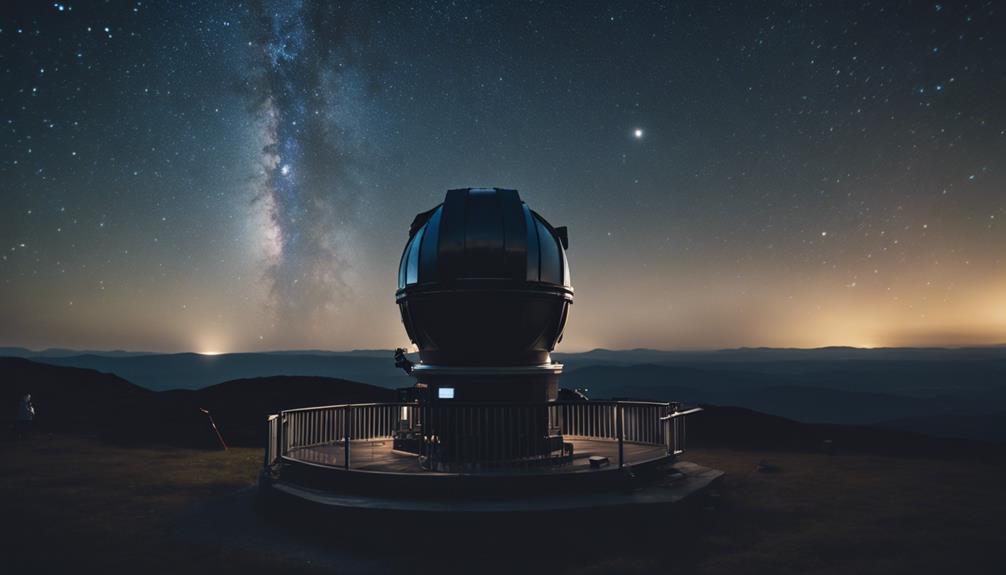
While national parks offer expansive skies for the casual stargazer, observatories provide professional and amateur astronomers alike with unparalleled access to the cosmos through advanced technological means.
Observatories, the temples of astronomical research, are equipped with powerful telescopes designed to reveal the veil of the night sky, excellent mysteries of celestial objects far beyond the reach of standard equipment. The strategic placement of these facilities in remote, high-altitude locations is no accident. It’s a deliberate choice to minimize light pollution and atmospheric interference, which can greatly degrade the quality of observations.
The advantage of stargazing at observatories doesn’t end with the advanced technology at your disposal. Many of these institutions offer public tours and viewing sessions, making the wonders of the universe more accessible to the community.
This educational aspect not only fosters a greater appreciation for the science of astronomy but also inspires the next generation of astronomers.
Furthermore, some observatories, like the renowned Mauna Kea Observatory in Hawaii, are situated in locations that boast exceptionally clear skies and high elevations. This combination of factors creates a stargazing experience that’s simply unmatched, offering you a front-row seat to the universe’s grand spectacle.
Remote Islands: Stargazing in Solitude
Remote islands serve as unparalleled sanctuaries for stargazing, offering minimal light pollution and a serene environment for clear celestial observations. These isolated locales provide a unique setting where the night sky reveals itself in full splendor, making them prime destinations for astronomers and enthusiasts alike.
When you’re considering remote islands for your next stargazing adventure, understanding what makes these locations so special is crucial:
- Minimal Light Pollution: The lack of urban development guarantees the skies remain untainted by artificial light, allowing for excellent visibility of the cosmos.
- Solitude and Serenity: The natural isolation of these islands offers a peaceful atmosphere, free from the distractions and noise of crowded places, perfect for focused telescope observation.
- Clear Visibility: The clean air and absence of atmospheric pollutants enhance the clarity of the night sky, making celestial phenomena like shooting stars and distant galaxies more visible.
- Designated Dark Sky Areas: Many remote islands have areas officially recognized for their exceptional night sky quality, providing protected spaces for stargazing.
Stargazing from remote islands not only offers clear visibility but also presents a unique perspective of the night sky due to their distinct geographical locations. The combination of solitude, minimal light pollution, and dedicated dark sky areas creates an ideal environment for deep-sky telescope observation, allowing you to explore the universe’s wonders in profound detail.
Desert Destinations: Clear Skies and Constellations
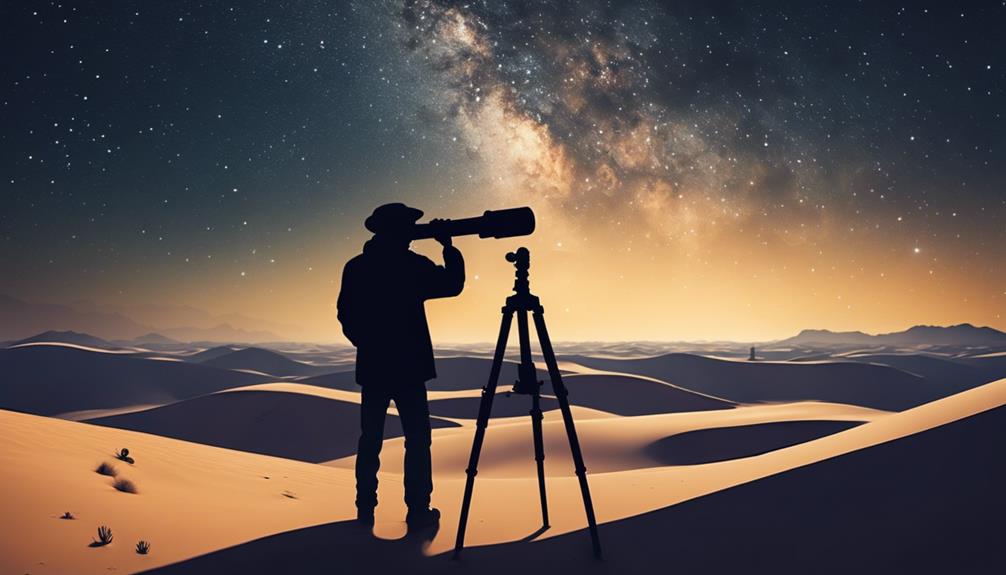
Shifting focus from the tranquil isolation of remote islands, desert destinations offer a distinct advantage for stargazing with their clear skies, minimal atmospheric interference, and unique celestial views. The desert’s intrinsically arid climate and remote location reduce light pollution and atmospheric distortions, providing an unobstructed window to the cosmos.
Here’s a detailed comparison of some premier desert stargazing spots:
| Location | Unique Features |
|---|---|
| Atacama Desert, Chile | Earth’s driest place, high altitude, is excellent for minimal interference. |
| Natural Bridges National Monument, Utah | First certified International Dark Sky Park, known for its dark, clear skies. |
| Iriomote-Ishigaki National Park, Japan | First in Japan with Dark Sky accreditation, up to 84 constellations are visible. |
| Namib Desert, Namibia | Part of a Gold-tier International Dark-Sky Reserve, showcases astronomical phenomena. |
| Aoraki Mackenzie, New Zealand | Largest dark-sky reserve globally, visible satellite galaxies like the Southern Cross. |
Each location offers a unique perspective on the night sky’s wonders, from the Atacama Desert’s high-altitude clarity to Aoraki Mackenzie’s expansive view of satellite galaxies. Choosing any of these destinations guarantees an unparalleled stargazing experience, where the mysteries of the universe unfold before your eyes under the clear skies and among the constellations.
Backyard Astronomy: Enjoying the Cosmos From Home
Exploring the cosmos needn’t require a journey to distant lands; your backyard offers a gateway to the stars, planets, and galaxies that fill our night sky. Backyard astronomy, the art of stargazing from the comfort of one’s own home, presents a cost-effective and convenient method to delve into the depths of space.
With just a telescope and a clear view of the sky, you can embark on a celestial journey that illuminates the wonders of the universe.
To optimize your backyard stargazing experience, consider the following:
- Minimize Light Pollution: Choose the darkest area of your backyard to reduce the impact of artificial light, enhancing the visibility of celestial objects.
- Select the Right Equipment: A quality telescope with appropriate specifications is crucial for observing distant galaxies, nebulae, and star clusters.
- Familiarize with Celestial Events: Keep track of astronomical events such as meteor showers, planetary alignments, and lunar phases to enrich your stargazing sessions.
- Educate Yourself: Understanding the scientific principles behind the celestial phenomena you observe will deepen your appreciation and knowledge of the cosmos.
Backyard astronomy not only allows you to probe the cosmos but also serves as an educational experience, bridging the gap between amateur observation and scientific discovery.
Planning Your Stargazing Adventure
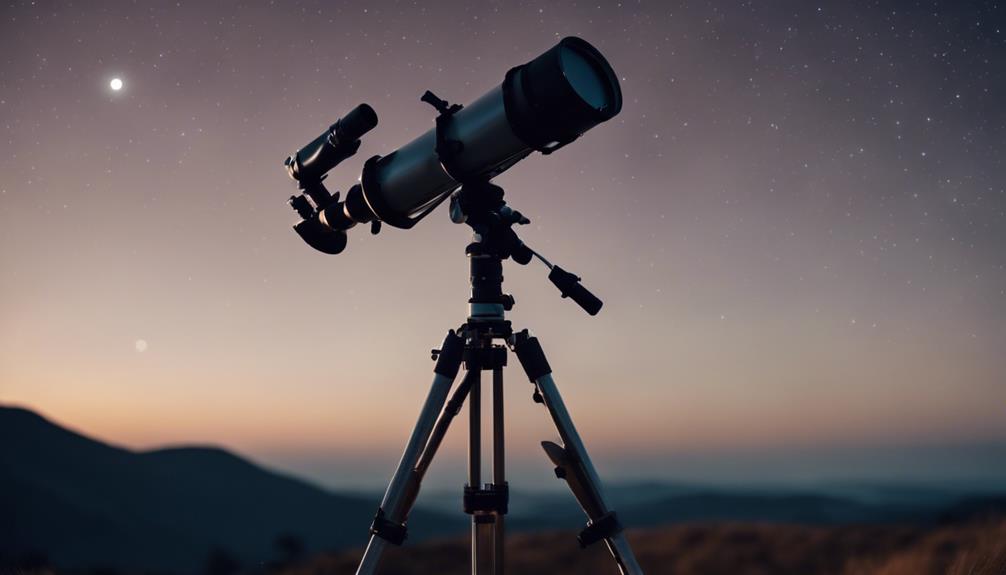
To optimize your stargazing adventure, it’s important to meticulously plan, taking into account the lunar cycle, seasonal variations, and local weather conditions to make clear, undisturbed views of the cosmos.
The best time for this activity aligns with the New Moon phase, when the sky is darkest, and during the fall or winter, when atmospheric clarity is at its peak due to low humidity levels. These conditions are critical for enhancing visibility and ensuring that celestial bodies shine their brightest against the night sky.
Select locations known for clear nights and minimal light pollution. Low humidity areas are preferable as they greatly reduce atmospheric distortion, allowing for sharper images through your telescope.
Besides, you’ll need to gather the necessary equipment, including a high-quality telescope, binoculars for wider field views, star charts for navigation, a red flashlight to preserve night vision, and comfortable seating for extended observations.
Engage with the astronomy community by attending stargazing events or astronomy festivals. Such gatherings not only enrich your experience but also provide opportunities to learn from seasoned astronomers. Remember, patience is key. Allow your eyes to adjust to the dark for at least 20 minutes. This adaptation enhances your ability to discern fainter objects, making your stargazing adventure truly remarkable.
Frequently Asked Questions
Which Location Is the Best for Stargazing?
You’ll find the best stargazing spots in Dark Sky Reserves, where light pollution’s minimal. Consider seasonal constellations, using stargazing apps. Prioritize spots favorable for night photography, celestial events, and always remember outdoor safety guidelines.
Where Is the Best Place for Telescope?
When choosing a telescope, consider light pollution effects, maintenance tips, and the right astrophotography equipment. Master night photography basics, consult a celestial events calendar, and learn to observe planetary movements to enhance your stargazing experience.
Where Is the Clearest Sky in the World?
You’re seeking the world’s clearest sky, where light pollution’s minimal and dark sky reserves shine. Urban areas contrast with rural areas’ atmospheric clarity. Seasonal changes, moon phases, and altitude play key roles in your quest.
Can You Stargaze With a Telescope?
Yes, you can stargaze with a telescope to explore celestial events, lunar eclipses, and planets more vividly. Guarantee proper telescope maintenance, use solar filters for sun viewing, and consult star charts for night photography and astrophotography basics.
Conclusion
So, after delving into the cosmos from various corners of the Earth, isn’t it ironic that the universe’s vast expanse can be admired from our tiny, spinning rock?
Whether you’re perched atop a high-altitude haven, nestled within a Dark Sky Sanctuary, or simply lounging in your backyard, the celestial dance remains unchanged.
As you plan your next stargazing adventure, remember, the universe doesn’t cater to our location. Instead, we’re mere spectators, granted a fleeting glimpse into infinity from wherever we choose to look up.
